Canadian Importers Test European and UK Supply Routes as U.S. Trade Friction Alters Freight Planning
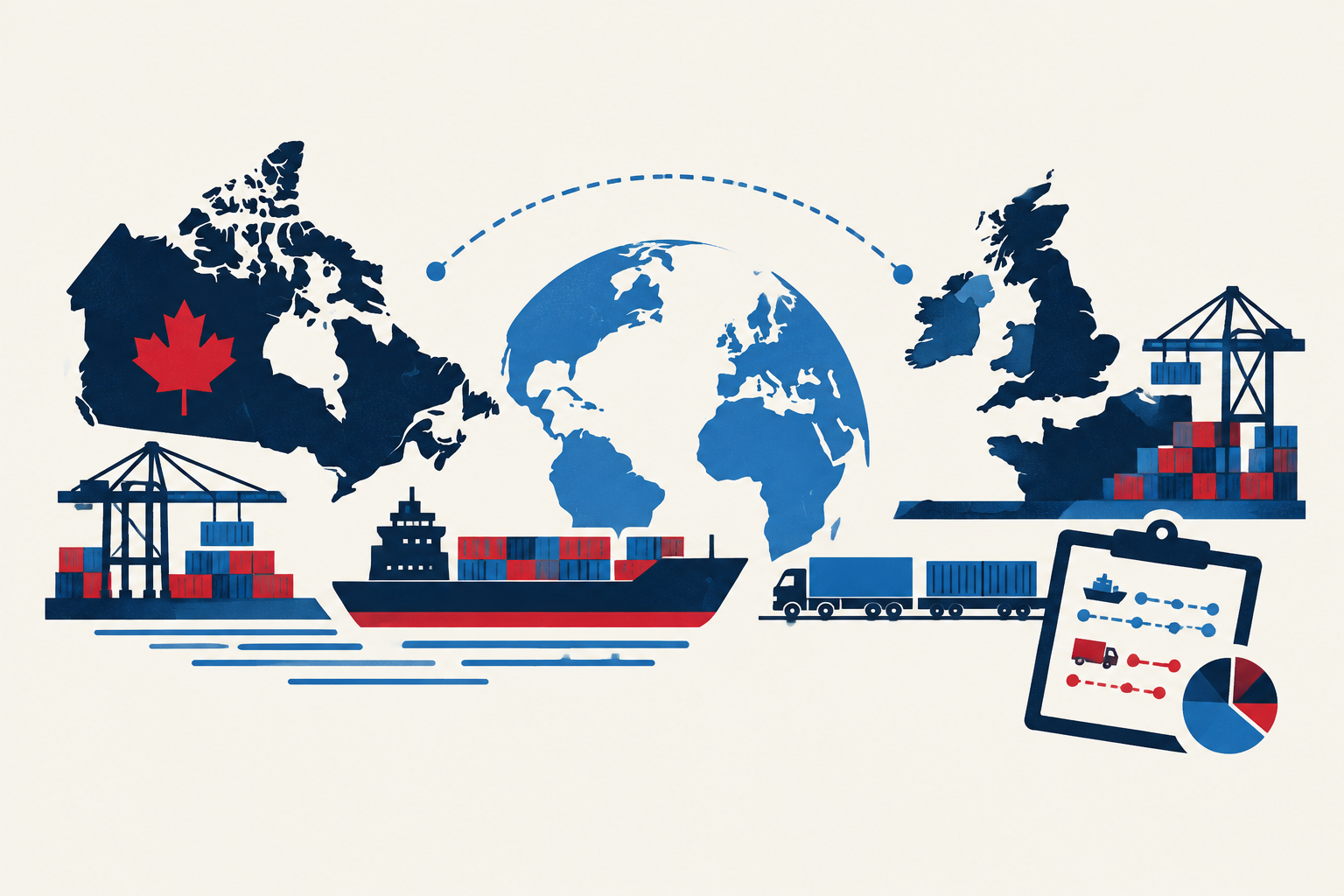
Canadian buyers are trialling European and UK sourcing, pushing freight planners to weigh longer transit times against reduced U.S. supply exposure.
Canadian importers are beginning to test small shipments from Europe as they assess alternatives to U.S. suppliers hit by bilateral tariff friction, according to Steffen Manz, founder and chief executive of freight forwarder Speed Global Logistics. Manz said the early activity is not yet a broad-based container-volume shift: shippers are using trial full-container and less-than-container loads to compare transit times and delivered costs before making larger sourcing commitments. [1]
The reported search for alternatives is most immediate in industrial manufacturing, automotive components and consumer packaged goods, where Manz said margins can be too narrow to absorb tariffs in the 25% to 50% range. For automotive supply chains, the finding points to a potential re-evaluation of component procurement rather than an established replacement of U.S. supply. Any move to European or British suppliers would require buyers to qualify vendors and ensure parts meet technical requirements. [1]
The transport trade-off is substantial. Manz contrasted a roughly two-day cross-border truck movement with an ocean voyage of about 14 to 21 days from Europe, a difference that can require importers to revise inventory holdings and warehouse capacity. He also described customs-processing friction and softer freight volumes on some Canada-U.S. lanes as companies pause shipments while assessing tariff treatment and exemptions. [1]
Existing trade arrangements may make transatlantic diversification more workable, Manz said. The article notes Canada’s CETA framework with the European Union and the UK’s entry into CPTPP on September 1 as potential regulatory support for Canadian importers considering British and European products. In his assessment, those arrangements could help make non-U.S. sourcing competitive even after accounting for ocean freight, though the report does not establish that buyers have completed a large-scale shift. [1]
For freight providers, the expected implication is a modal rebalancing rather than an immediate collapse in cross-border trade. Manz anticipated less over-the-road trucking across the U.S.-Canada border, more inbound maritime traffic through Montreal, Saint John and Halifax, and higher transatlantic air-freight demand for high-value or time-sensitive goods. He characterized supplier diversification as a risk-management response to uncertainty, with further acceleration expected through the fourth quarter and into the following year. [1]
This is a meaningful operational signal because Canadian importers are reportedly testing European and UK supply options, exposing automotive-component buyers and other margin-sensitive importers to longer lead times, inventory adjustments and new freight patterns. The significance is limited because the reported movements remain trial batches and the projected modal shift is an industry executive’s expectation, not confirmed aggregate trade-volume data. [1]