Carney outlines strategy to reduce Canada’s reliance on U.S. suppliers and relationships
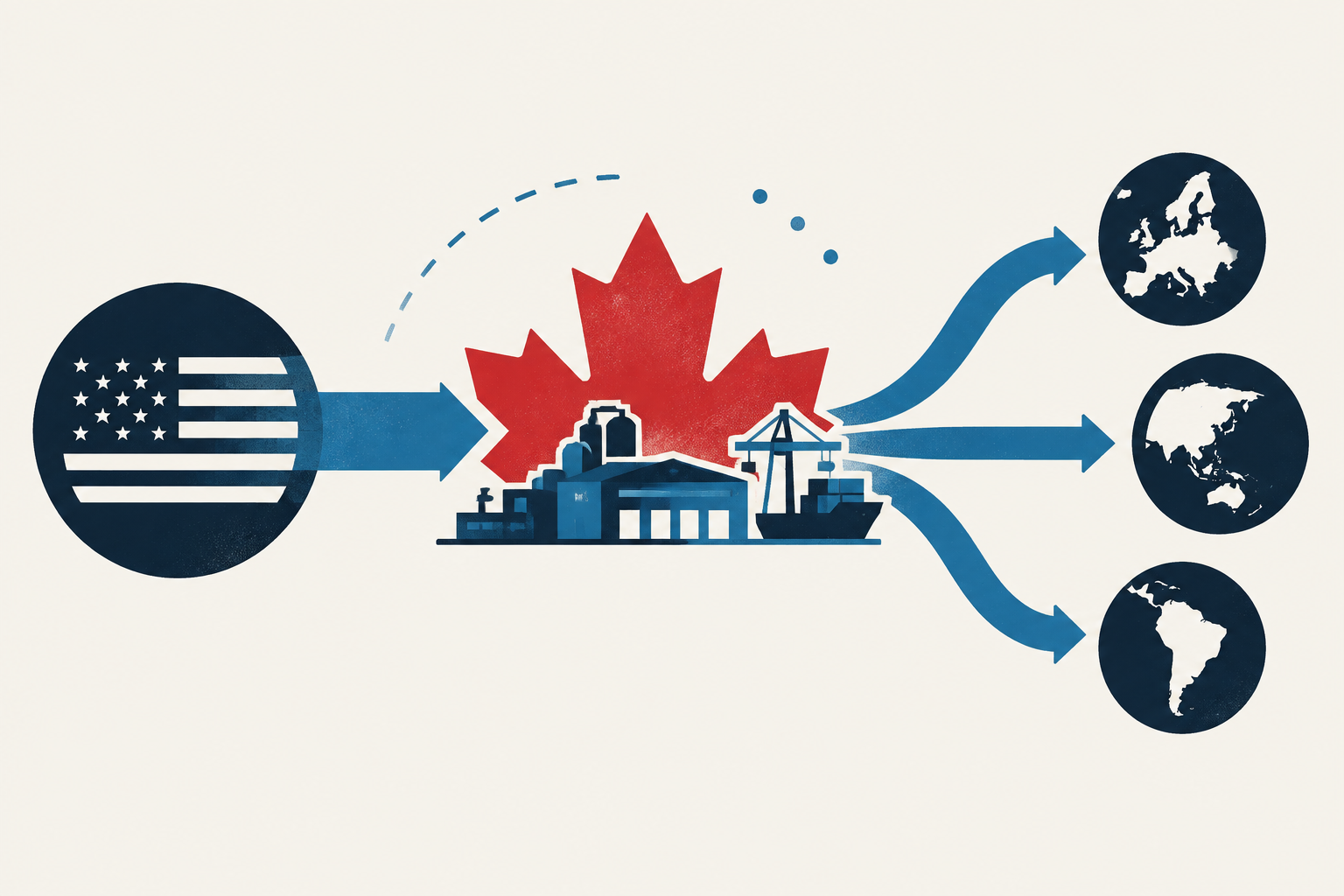
Carney’s diversification strategy signals a longer-term shift in Canadian procurement and external partnerships while leaving immediate trade measures unchanged.
Prime Minister Mark Carney used a Sept. 23 interview to set out a broad strategy for reducing Canada’s dependence on the United States in critical technologies, suppliers and international relationships. He said the approach was intended to make Canada less vulnerable to U.S. pressure, while maintaining that a more diversified Canada could remain a stronger partner for the United States. [1]
The strategy includes moving away from reliance on Starlink satellite services and seeking alternatives with other partners, even though Carney acknowledged competing satellite networks are presently less capable and resilient. He also said Canada is reassessing a planned purchase of 88 Lockheed Martin F-35 aircraft and is considering Saab’s Gripen proposal, with Arctic performance, strategic dependencies and domestic economic returns among the factors in the decision. No procurement decision was announced. [1]
Carney said he had also examined extreme contingency risks involving possible U.S. military action against Canada, framing that work as responsible risk management rather than an expected outcome. The comments underline that the government’s diversification agenda reaches beyond commercial sourcing into technology, defence and broader strategic resilience. [1]
On trade, Carney said he remains in frequent contact with President Trump and sees a path to restarting negotiations after talks broke down in late August. He pointed to potash as a possible component of a future agreement, arguing that Canada, the United States and potentially Mexico could strengthen fertilizer security through access to Canadian supply. He also reiterated that the integrated North American auto industry should not be dismantled through a push to relocate all production to the United States. [1]
The prime minister stopped short of proposing energy restrictions as leverage in the tariff dispute. While acknowledging domestic pressure to curb exports, he said Canada should begin from a position of being a reliable energy and food supplier, leaving any change subject to a very high threshold. The immediate business implication is strategic uncertainty around future sourcing and defence procurement, rather than a newly implemented tariff, export restriction or sector-specific trade remedy. [1]
This is a meaningful Canadian policy-direction signal because it broadens the government’s effort to reduce exposure to U.S. leverage across satellite services, fighter procurement and international partnerships. However, the significance is limited by the absence of announced procurement changes, new trade restrictions or implemented sector measures; Carney described a strategy and active considerations, while continuing to seek renewed trade talks and maintaining a high threshold for disrupting energy exports. [1]