Commentary flags domestic strain from Canada’s retaliatory tariff system
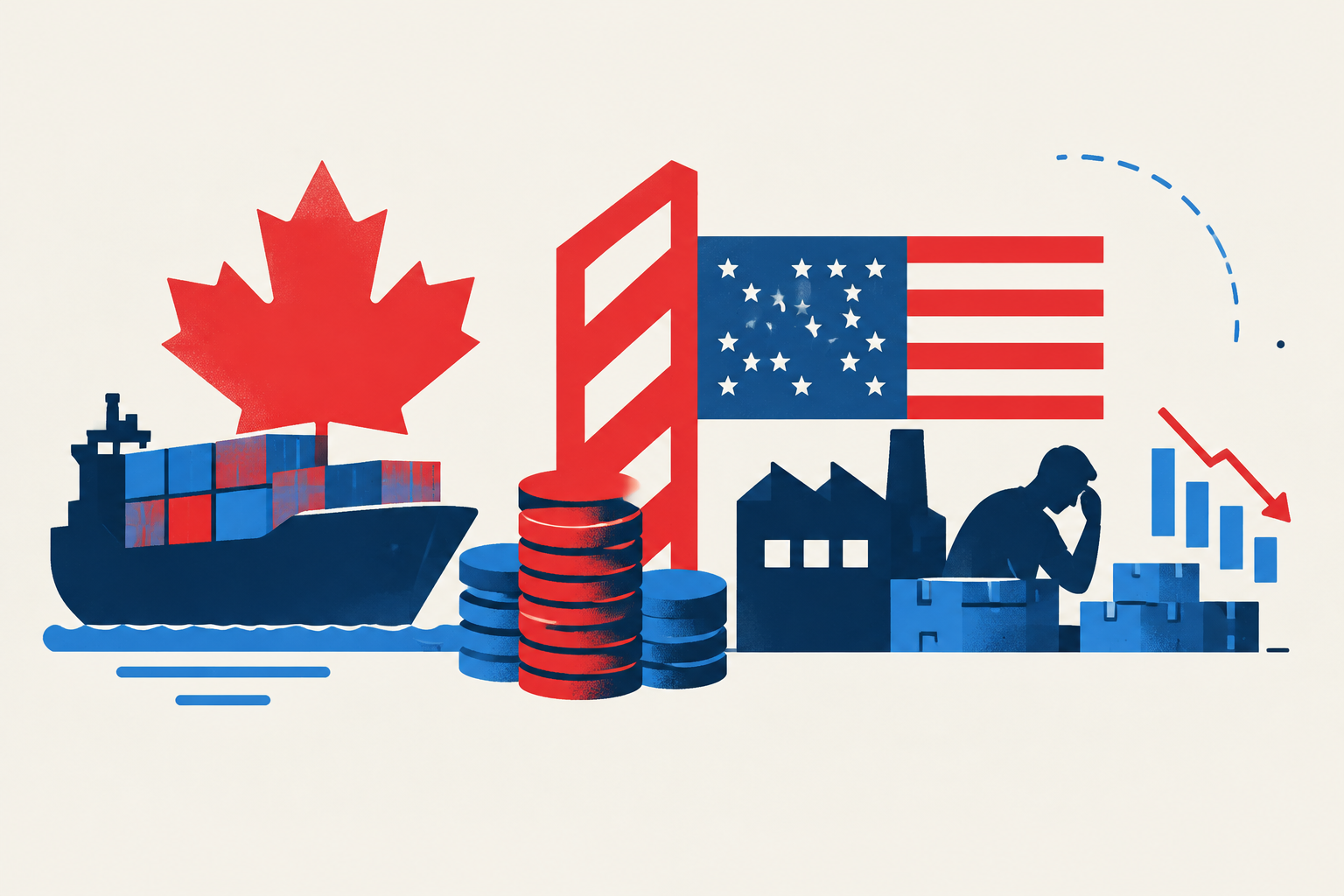
A new assessment argues that Canadian counter-tariffs and remission rules are adding costs for domestic firms already navigating cross-border trade disruption.
Laura Dawson and Ann Penner argue that Ottawa has room to reduce pressures it directly controls in the Canada-U.S. trade conflict: the costs and penalties borne by domestic companies through Canada’s retaliatory tariff and remission system. Their assessment, published Nov. 23, says the system is worsening conditions for businesses rather than adequately reflecting how modern supply and production networks operate. [1]
The authors’ central concern is not simply the existence of Canadian counter-tariffs, which Prime Minister Mark Carney has presented as a response to U.S. measures. It is the way the retaliatory framework and its relief mechanism are being applied to firms whose inputs, brands and production arrangements extend across borders. They contend that the policy does not sufficiently account for global supply chains, multinational brands or current production capacity. [1]
That distinction matters for companies that cannot readily replace imported inputs, shift sourcing, or alter production arrangements when a retaliatory duty applies. In the authors’ view, a tariff intended to answer an external trade action can also become a domestic operating cost when Canadian businesses must absorb the charge or navigate the remission process. The available source presents this as an assessment of business conditions, rather than evidence of a newly announced tariff or remission-policy change. [1]
The article therefore adds to scrutiny of how Canada administers its trade response while the wider dispute remains unsettled. Dawson and Penner argue that policymakers should distinguish between pressure directed at foreign trade partners and costs that fall on Canadian firms with constrained supply-chain options. The source does not quantify affected businesses, identify sector-specific exposure, or provide evidence of a change in tariff rates, so the immediate implication is a policy-design concern rather than a confirmed shift in sector-wide trade conditions. [1]
This is a moderate-significance business-impact development because the authors newly argue that Canada’s retaliatory tariff and remission system is imposing avoidable strain on domestic firms, particularly where global supply chains and production constraints limit adjustment. The source does not provide sector-level data, quantify costs, or report a new tariff action, limiting the case for a higher rating or forecast revision. [1]