Experts warn U.S.-controlled payment networks could become a new pressure point for Canada
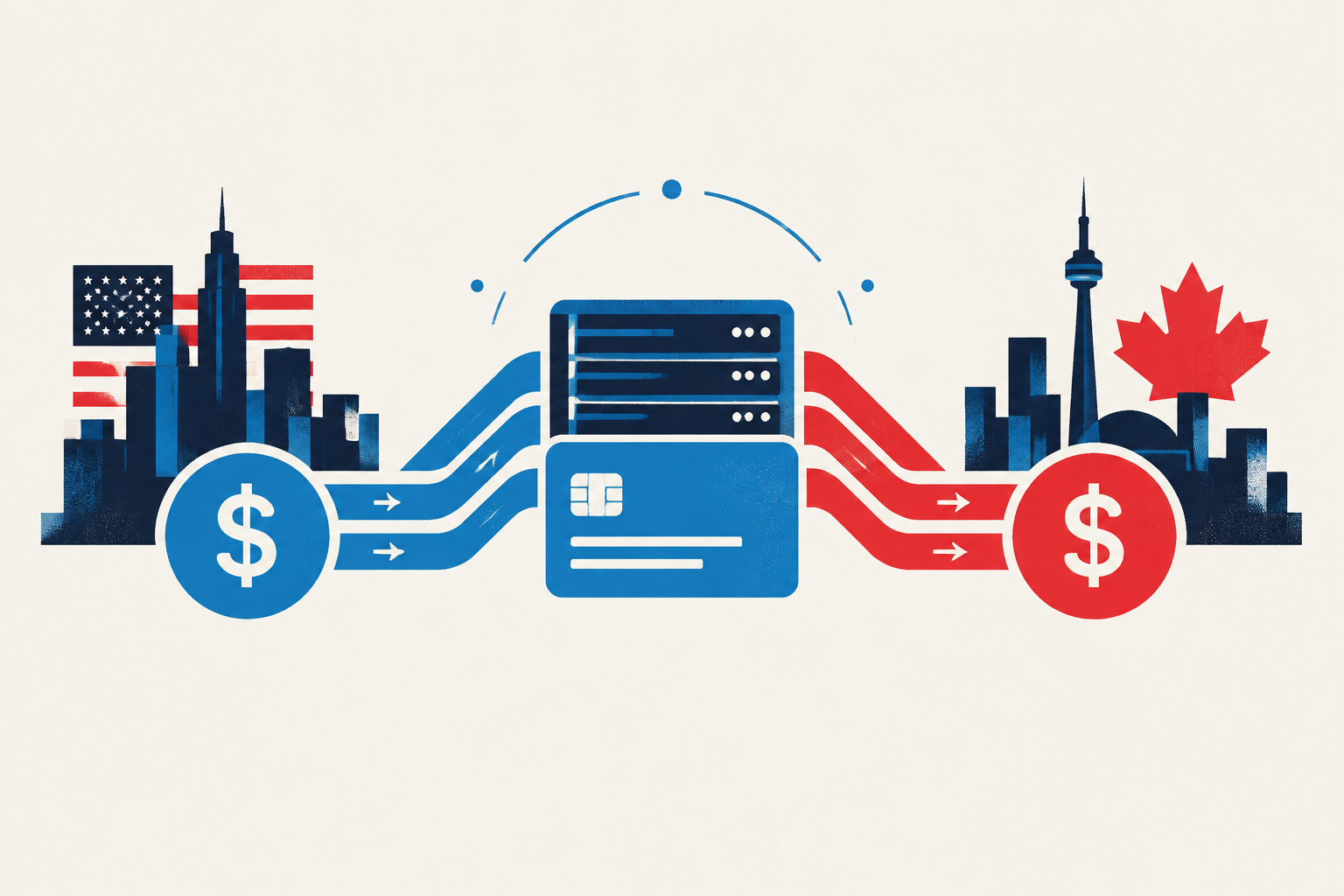
Experts say Canada’s reliance on U.S.-linked payments and dollar clearing could create a major vulnerability if bilateral tensions move beyond tariffs.
Canada’s exposure to U.S. economic pressure may extend beyond goods tariffs, according to experts cited by CBC, because key payment networks and U.S.-dollar transaction clearing remain heavily tied to American institutions. Fen Osler Hampson of Carleton University said Washington could seek financial leverage if tariff tools become more difficult to use, including by restricting U.S. financial institutions from processing Canadian transactions or attaching conditions to dollar-clearing access. [1]
The warning is prospective, not evidence that such restrictions have been imposed on Canada. Hampson described concern that a U.S. president could use executive authority over financial tools, while Canadian Shield Institute managing director Vass Bednar said a compelled withdrawal or geographic restriction of Visa or Mastercard services could interrupt a substantial share of economic activity. CBC points to the experience of Canadian International Criminal Court judge Kimberly Prost, whose cards and online accounts were cancelled after U.S. action against the court, as an example of how financial and digital dependencies can be used against an individual. [1]
The underlying exposure includes the central role of New York banks in validating many international U.S.-dollar transfers. Karl Schamotta, chief market strategist at corporate-payments company Corpay, said that concentration gives the United States influence not only over domestic institutions but also over foreign financial institutions connected to them. Visa and Mastercard process about US$32 trillion annually and account for 90 per cent of card transactions outside China, according to the CBC report. [1]
Canada is preparing to launch its Real-Time Rail payment system later in 2026, but Bednar said it was designed principally for efficiency rather than protection against external financial coercion. Domestic systems such as Interac can reduce reliance on U.S. banking infrastructure for transactions within Canada, Schamotta said, but do not remove the need for cross-border arrangements. He said Canada and Europe could technically connect their respective systems to clear payments more directly, while Hampson characterized the objective as adding an alternative route rather than ending dealings with U.S. banks. [1]
For Canadian companies, the immediate issue is contingency planning rather than a confirmed change in market access. Firms with cross-border sales, U.S.-dollar settlement, card-dependent customer payments or international supplier relationships could face operational risk if financial restrictions were ever used as leverage. The report does not identify a U.S. measure directed at Canada or an agreed Canada-Europe payment alternative, leaving the warning as a strategic vulnerability assessment rather than a current disruption. [1]
This is significant as a newly reported assessment of a potential economy-wide exposure: U.S. influence over payment processing and dollar clearing could affect Canadian firms that rely on cross-border settlement and card networks. The rating remains limited because no restriction has been announced or applied to Canada, and possible Canadian-European alternatives remain conceptual rather than operational. [1]