Fine Cotton Factory shifts processing toward U.S. as tariff uncertainty reshapes investment plans
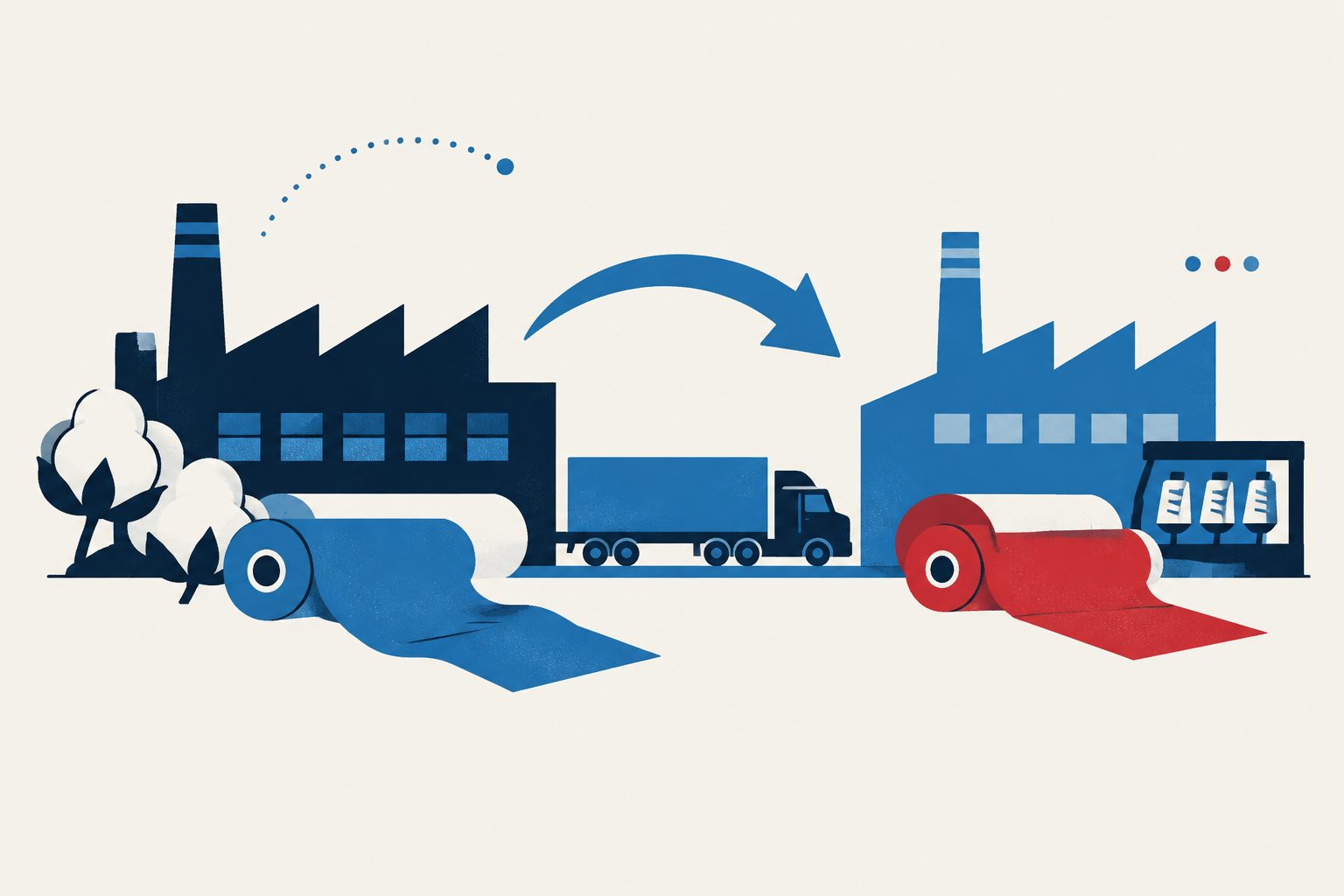
Toronto textile producer Fine Cotton Factory is shifting some processing to the United States, signalling investment decisions may outlast current tariff disruptions.
Fine Cotton Factory Inc., a Toronto-based producer of fabrics used in clothing, mattresses and bedding, has begun moving part of its production process to U.S. contractors after tariff-related disruption cut into its American business. About half of the company’s sales are tied to U.S. customers, and its executive vice-president of sales and marketing, Skip Kann, said tariffs reaching as high as 50 per cent on some products led buyers to postpone orders and reduce inventories. [1]
The company is sending unfinished fabric to U.S. contractors for further processing, a structure intended to reduce its exposure to duties applied to finished goods. Fine Cotton Factory plans to establish a U.S. warehouse, then source equipment and begin production there early next year. Kann characterized the expansion as a long-term risk-management decision rather than a temporary response to weak orders, saying the company wants a U.S. presence so a similar disruption does not again threaten its business. [1]
That planning may persist even if tariffs are removed or a new bilateral trade agreement is reached. Kann said customer confidence in Canadian supply chains has been damaged, leaving a residual concern that could influence purchasing decisions. McMaster University economist Pau Pujolás said uncertainty itself can distort investment choices, because firms may factor a future trade interruption into decisions on where to locate production even without certainty that additional barriers will be imposed. [1]
The report points to a company-level shift rather than evidence of a broad relocation of Canadian manufacturing. HEC Montréal international-business professor Ari Van Assche said firms initially delayed expansion and adjusted supply chains after U.S. tariffs on Canadian goods took effect in March 2025, but some are now reaching decisions that cannot be deferred indefinitely. He said he knows of another manufacturer considering a U.S. plant, while also noting that aggregate data do not yet show a substantial movement of Canadian manufacturing investment to the United States. [1]
Statistics Canada data cited in the report showed Canadian direct investment in the United States was slightly lower at the end of 2025. That limits the case for treating Fine Cotton Factory’s move as proof of a sector-wide investment migration. Still, its planned warehouse, equipment purchases and production footprint demonstrate how prolonged policy uncertainty can convert short-term supply-chain adjustments into longer-lived location decisions for individual exporters serving the U.S. market. [1]
This is a meaningful business-response signal because a Canadian manufacturer with substantial U.S. sales is moving processing south of the border and planning a U.S. warehouse and production capacity to reduce tariff exposure. The significance is limited to a single reported company decision: the same report says aggregate data do not yet show a major Canadian manufacturing-investment shift to the United States. [1]