Freight conditions diverge across modes as Canada-U.S. cross-border uncertainty grows
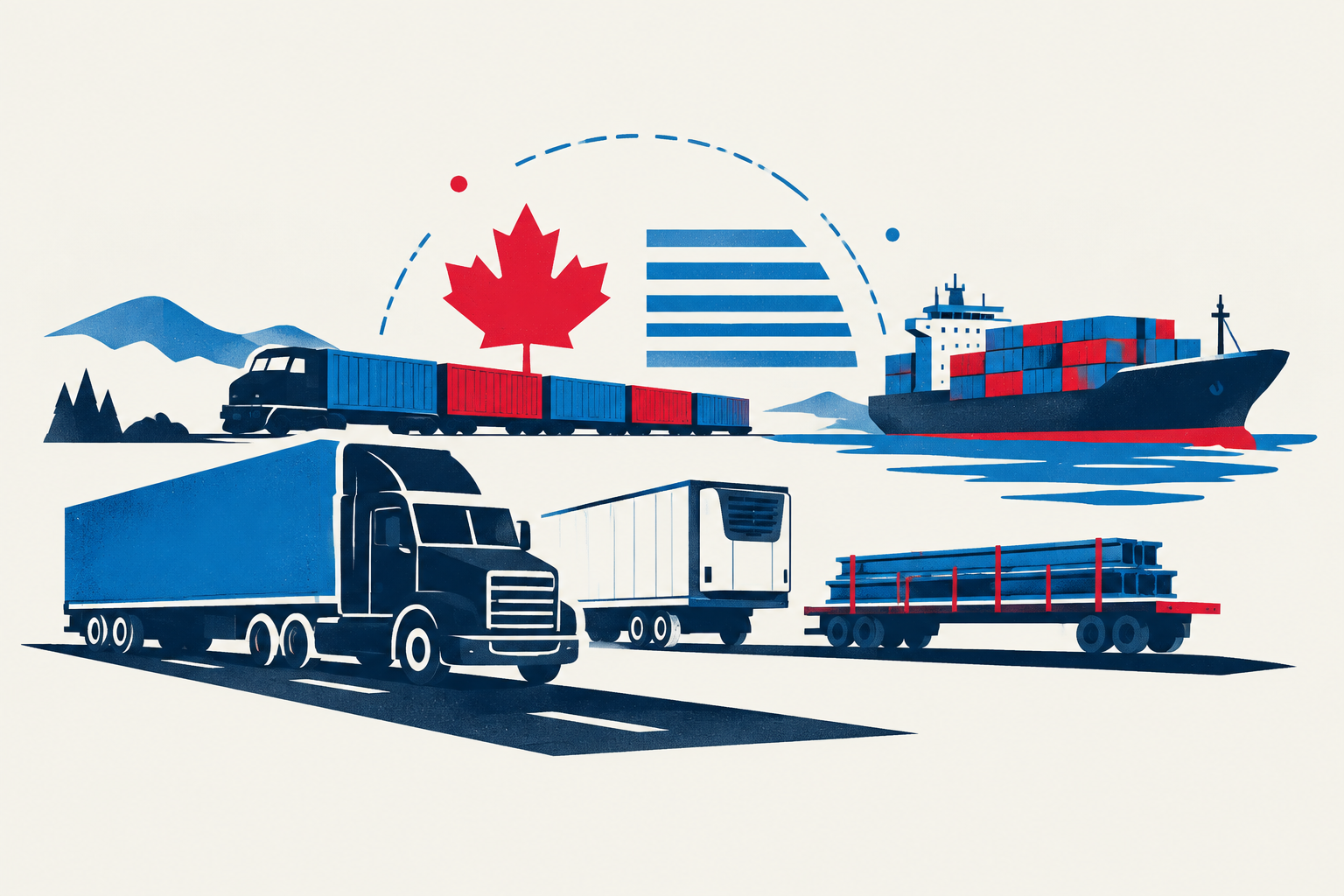
Easing truckload strain and improving refrigerated availability contrast with tighter flatbed pockets and uneven cross-border, ocean and intermodal conditions.
C.H. Robinson’s October freight assessment points to a more mixed North American logistics environment rather than a single capacity trend. The company said truckload route-guide tension remained elevated but had eased from the tightness seen around Labor Day. At the same time, flatbed availability was unexpectedly tightening in some areas, while refrigerated capacity conditions were improving except in the Pacific Northwest. The update was published on October 1, 2026. [1]
For shippers, the differing truckload signals mean equipment planning may need to remain route- and commodity-specific. C.H. Robinson also reported that freight was continuing to move from truckload into the less-than-truckload market, where it expects increased demand and fuel costs to matter through year-end. The source does not quantify rate changes or identify a uniform shift in capacity across North America. [1]
Other transport modes face separate constraints. October ocean-freight conditions were expected to vary by lane, with capacity reductions during China’s Golden Week, possible connection risks for India-origin freight, Suez Canal developments and Panama Canal restrictions affecting usable capacity. The company said air-freight demand after Golden Week would overlap with technology cargo and inventory builds for early Black Friday sales, while intermodal demand was rising as shippers sought diversified long-haul options. [1]
Canada-U.S. cross-border freight is part of that uneven outlook. C.H. Robinson said both Canadian and Mexican cross-border markets faced growing policy uncertainty even as U.S.-Mexico trade set new records. It also flagged that a new U.S. ban on some Canadian imports, alongside other trade-policy developments, added complexity for supply chains; the readable update does not specify the products covered or quantify the resulting effect on Canadian freight volumes. [1]
At ports and inland transfer points, the company said container recovery and movement could depend on local drayage capacity, chassis availability and railcar shortages in certain locations, potentially affecting dwell times. It separately reported that diesel prices were rising faster than crude oil amid refining disruptions, export demand and global supply chokepoints. These observations indicate operational and cost variables that remain uneven across freight networks, rather than evidence of a sector-wide change in trade exposure. [1]
This is a modest industry-impact development because it supplies a newly dated logistics reading relevant to Canada-U.S. freight planning: truckload tension had eased from Labor Day conditions, but flatbed availability tightened in some areas and cross-border conditions remained policy-sensitive. The source describes directional operating conditions rather than measured trade-volume, tariff, pricing or industry-output effects, limiting the significance rating. [1]