U.S. Proposes New Section 301 Tariffs on China, EU and Asian Trading Partners
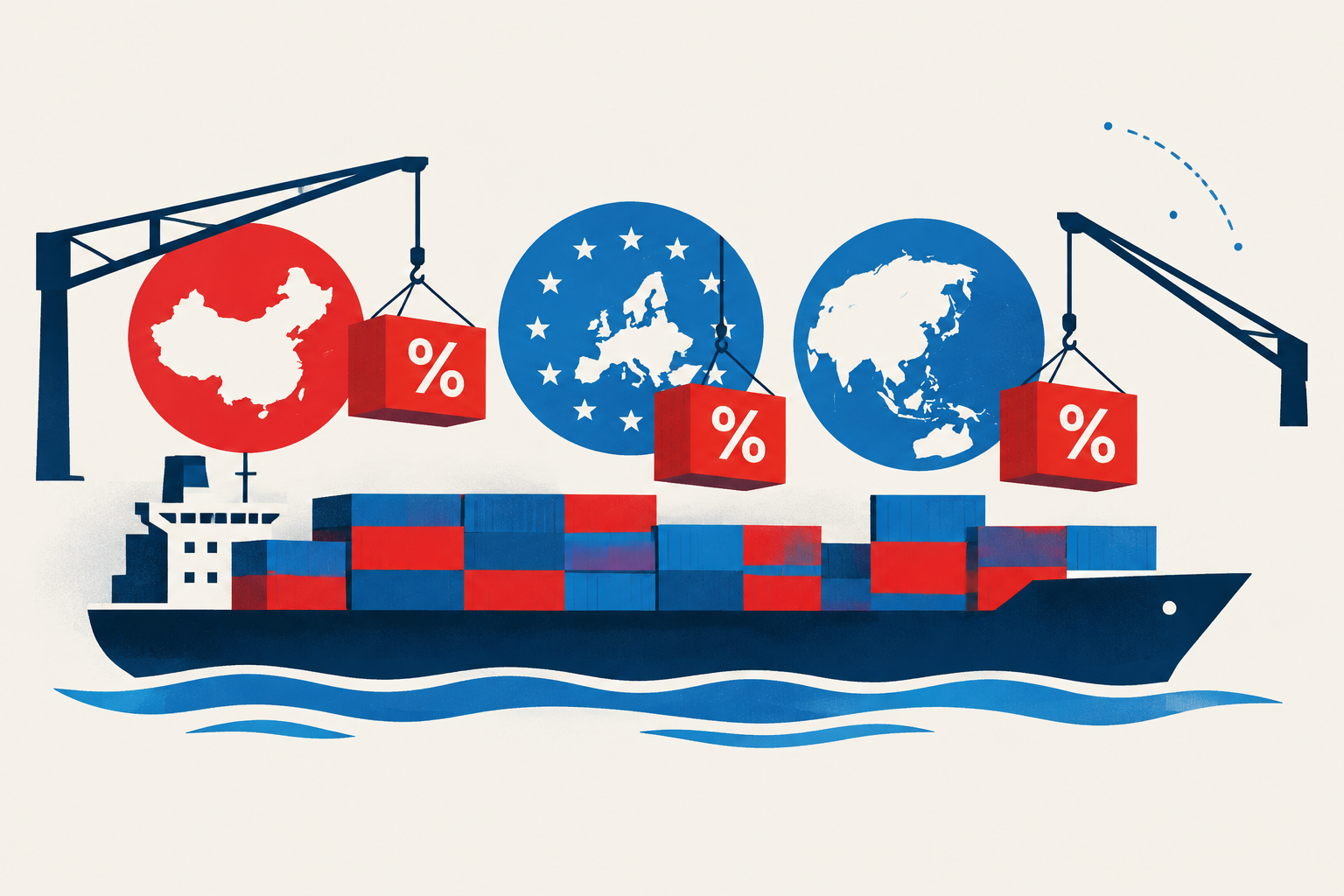
Washington’s proposed targeted tariff wave broadens trade-policy uncertainty for global supply chains, but no implementation date has been set.
The Trump administration said it will propose a new set of targeted tariffs under Section 301 of the Trade Act of 1974, covering China and a range of other major U.S. trading partners. The announced package includes a further 20% tariff on Chinese goods, which the administration said would bring the stated total tariff rate on those imports to 45%. [1]
Beyond China, the administration plans product-specific tariff increases affecting the European Union as well as Singapore, Switzerland, Indonesia, Malaysia, Cambodia, Thailand, Korea, Vietnam, Taiwan, Bangladesh, Japan and India. Brazil would face planned tariff increases on raw and refined sugar, alongside a proposed 10% levy on aircraft. [1]
The administration framed the action as a response to industrial and trade practices it says disadvantage U.S. producers. The measures follow USTR investigations into 12 countries, the 27-member European Union and Taiwan; USTR investigations involving Mexico and Norway remain underway, but no new tariffs were announced for those countries. [1]
The package is not yet in force. A senior administration official said the duties remain in the proposal phase and did not provide an implementation timetable. The official also said the new measures would target specified products and would not be added on top of existing tariffs. An economist cited by CBS similarly assessed that the new tariffs would effectively replace previously announced Section 301 duties rather than stack with them. [1]
For businesses trading across North American and global supply chains, the immediate consequence is continued uncertainty over which products may ultimately be covered and when any new duties could begin. The report does not identify Canada as a proposed target or specify Canadian products, and it provides no announced implementation schedule. It does, however, place another broad Section 301 initiative alongside an already elevated U.S. tariff environment; Yale Budget Lab estimated the average statutory U.S. tariff rate on imports at 11.2%. [1]
The proposal arrives amid domestic concern over tariff-related costs. CBS reported that 66% of respondents in a post-midterm poll said the president’s tariffs had hurt the national economy, while a small-business coalition warned that further duties could add to price pressures. Those views are assessments and warnings rather than evidence that the newly proposed measures have taken effect or produced realized price changes. [1]
This is a significant escalation in proposed U.S. trade policy because it expands planned Section 301 coverage across China, the EU and numerous Asian trading partners, including a proposed additional 20% duty on Chinese goods. The rating is not higher because the package remains a proposal, has no implementation timeline, is described as product-specific, and is not intended to stack on existing tariffs; the source does not identify Canada as a target. [1]