Calgary estimates up to $466 million in tariff-related costs across active procurement contracts
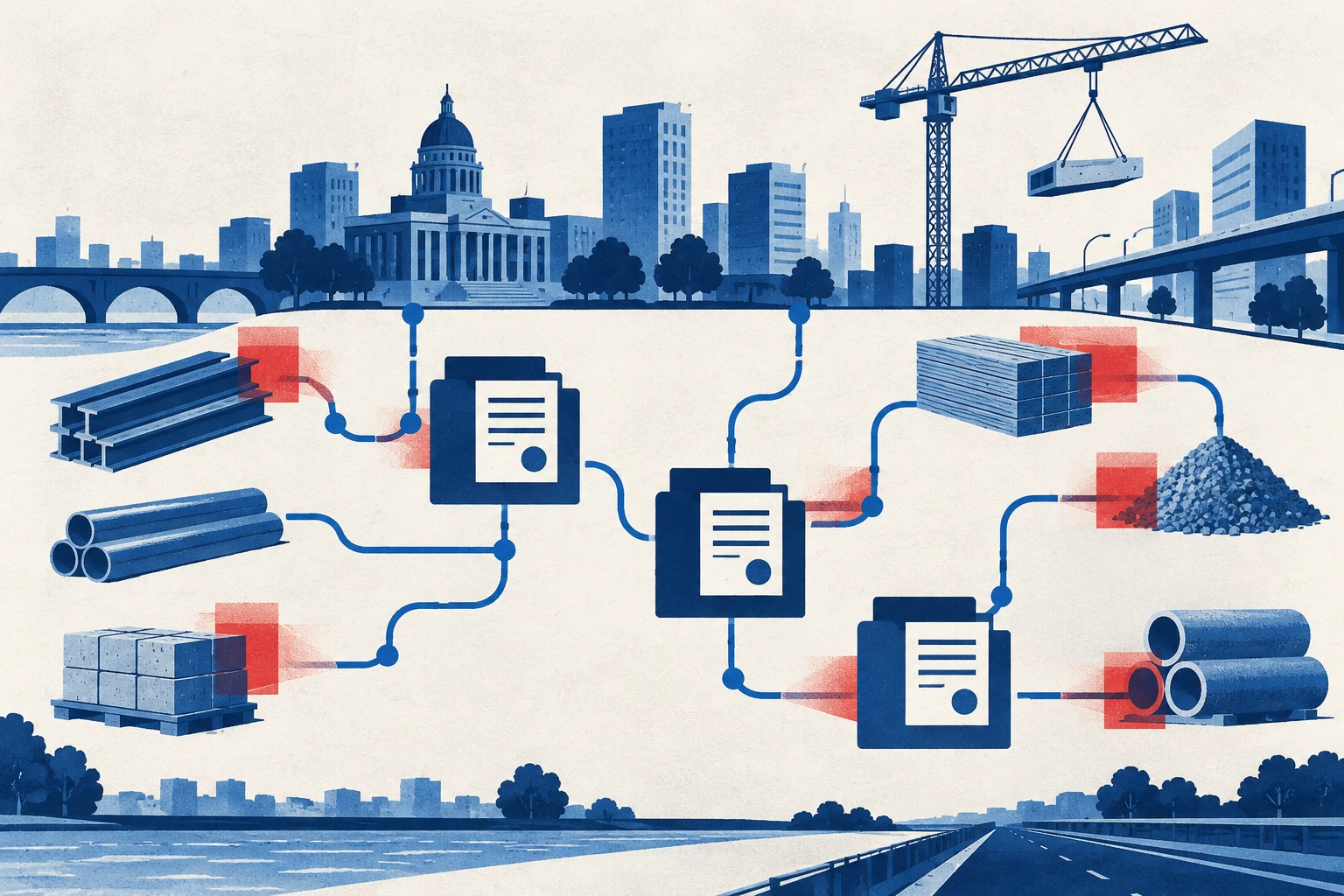
Calgary projects tariffs could add as much as $466 million to active contracts, increasing pressure on infrastructure and essential-service purchasing.
Calgary officials told the city’s Executive Committee on Sept. 8 that tariffs could raise costs by an estimated $315 million to $466 million over the life of the municipality’s active procurement contracts, which are valued at $5.3 billion. The estimate is scenario-based and reflects a point-in-time assessment without mitigation measures, according to Amit Patil, the City of Calgary’s director of supply management. [1]
The projected exposure is concentrated in infrastructure projects, utilities, transit and technology, areas where the city must continue purchasing equipment, materials and services despite trade-related cost risks. Calgary said 95% of its contracts are with Canadian suppliers, but city officials indicated that this does not eliminate tariff exposure embedded in supply chains. Suppliers are being asked to provide detailed quote breakdowns so the city can identify the tariff-related portion of contract costs and assess affected agreements individually. [1]
City officials said Canadian retaliatory tariffs account for most of the modeled increase, rather than U.S. tariffs directly. The city has already incurred $1.2 million in tariff costs and has a further $5.7 million under negotiation. A councillor cited fire engines, bought in Canada but built in the United States, as an example of procurement where counter-tariffs could raise the price of essential municipal assets and potentially constrain the number the city can purchase. [1]
Calgary is using supplier diversification, changes in delivery timing and reviews of product specifications to limit exposure and identify possible local alternatives. Its procurement team also uses an in-house supply-chain risk dashboard combining spending, geographic, market and scenario data to support adjustments as conditions change. Officials stressed that these steps can reduce, but cannot fully remove, the added costs. [1]
The Executive Committee approved a request for Mayor Jeromy Farkas to seek a rapid municipal tariff-remittance program through the Federation of Canadian Municipalities and the Big City Mayors’ Caucus. The proposed approach would enable municipalities to submit receipts and charges incurred by the city or aligned contractors for recovery, while Calgary works to diversify sourcing for projects it considers necessary to continue. [1]
The significance is moderate because Calgary has provided a concrete estimate of $315 million to $466 million in potential added costs across $5.3 billion of active municipal procurement, with infrastructure, utilities, transit and technology exposed. It is not rated higher because the estimate is scenario-based, applies to one municipality’s contracts over their full life, and Calgary reports mitigation options that may reduce the eventual cost. [1]