Canada-U.S. tariff standoff seen persisting through year-end
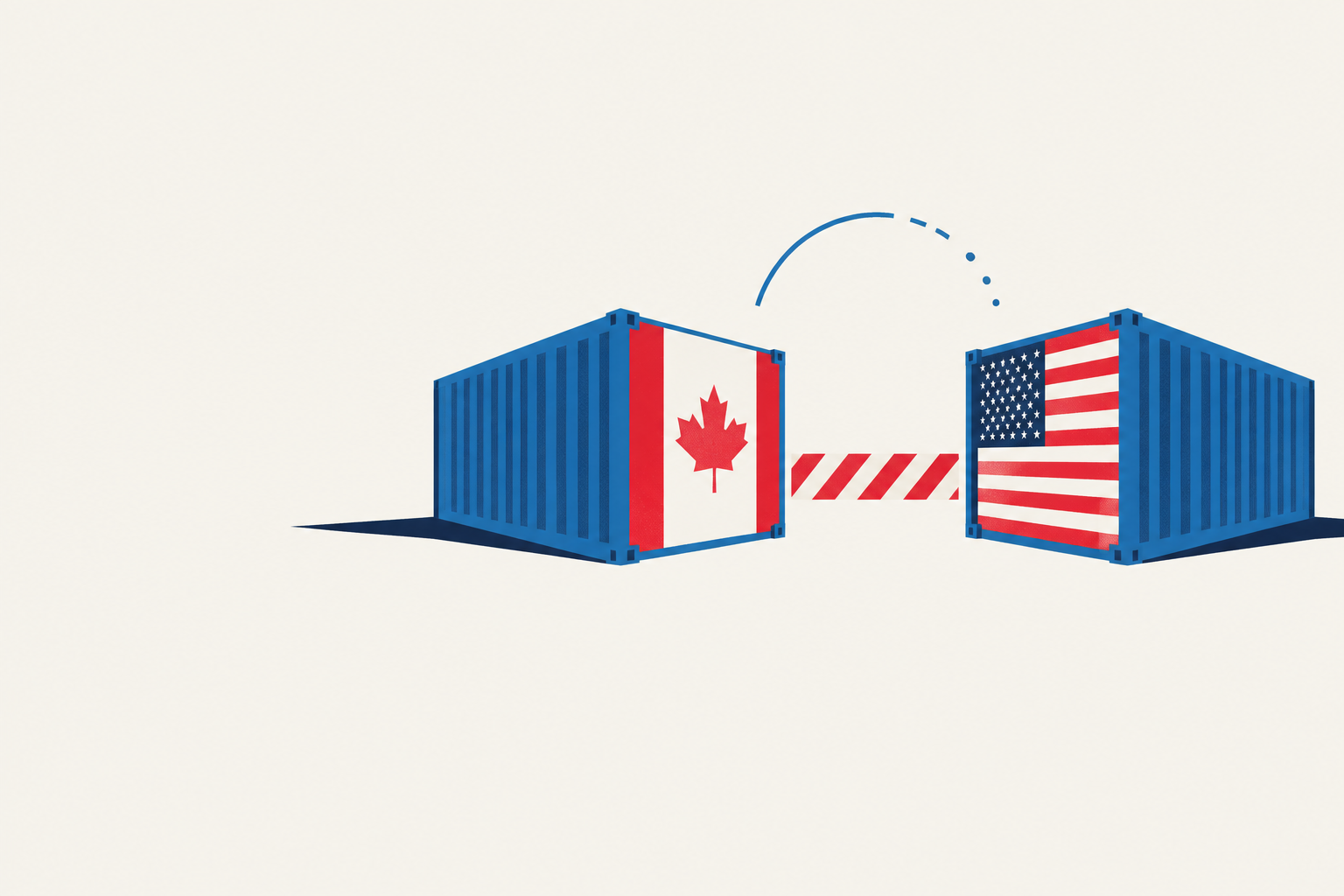
An expert sees little prospect of a Canada-U.S. tariff breakthrough this year, extending uncertainty for companies exposed to cross-border trade measures.
Canada and the United States appear set to remain in a tariff impasse for at least the next several months, according to Wolfgang Alschner, a University of Ottawa business and trade law professor. He said it was more likely than not that current conditions would continue through the end of 2026 because, while a possible basis for agreement exists, the two sides’ negotiating positions are still too far apart for an easy settlement. [1]
The assessment follows the latest U.S. measures affecting Canadian imports, including bans on most Canadian alcohol products and new 50 per cent tariffs on a range of products. Prime Minister Mark Carney said the government was examining those actions and acknowledged that they could be significant for particular companies and sectors, even as he characterized the latest U.S. tariffs as relatively modest compared with other actions by the administration. [1]
Carney’s remarks point to a restrained immediate Canadian posture rather than an announced new retaliatory step. He said Canada remained ready to reach a fair agreement, but CBC’s account describes the recent escalation as having reached a tentative equilibrium: the commercial costs are apparent, yet neither government appears under enough pressure to shift its position quickly. [1]
There are still possible openings for negotiations. Meredith Lilly, a Carleton University professor and former trade adviser, said the professionalism of the main negotiators could help preserve a channel for talks. She identified a potential U.S.-Mexico agreement, U.S. midterm-election results and further U.S. tariff threats as events that could alter the political calculation in coming months. [1]
For automotive supply chains, a key unresolved risk remains the U.S. threat of new automobile and truck tariffs beginning Jan. 1, 2027. That deadline is not a newly imposed measure, but it adds to the incentive for companies and governments to monitor whether stalled discussions resume before year-end. The current reporting does not establish a settlement, a fresh Canadian countermeasure or a change in sector-level tariff exposure; it instead indicates that businesses should plan around continued policy uncertainty. [1]
This is a moderate-significance negotiation development because it adds a current expert assessment that the tariff status quo is likely to persist through year-end, extending planning uncertainty for cross-border businesses. The rating is not higher because the report identifies no new agreement, tariff implementation, retaliation or confirmed sector-level commercial effect; Carney described the latest measures as relatively modest in the broader U.S. policy context. [1]