Canada wraps Europe agriculture mission with G7, EU and market-outreach steps
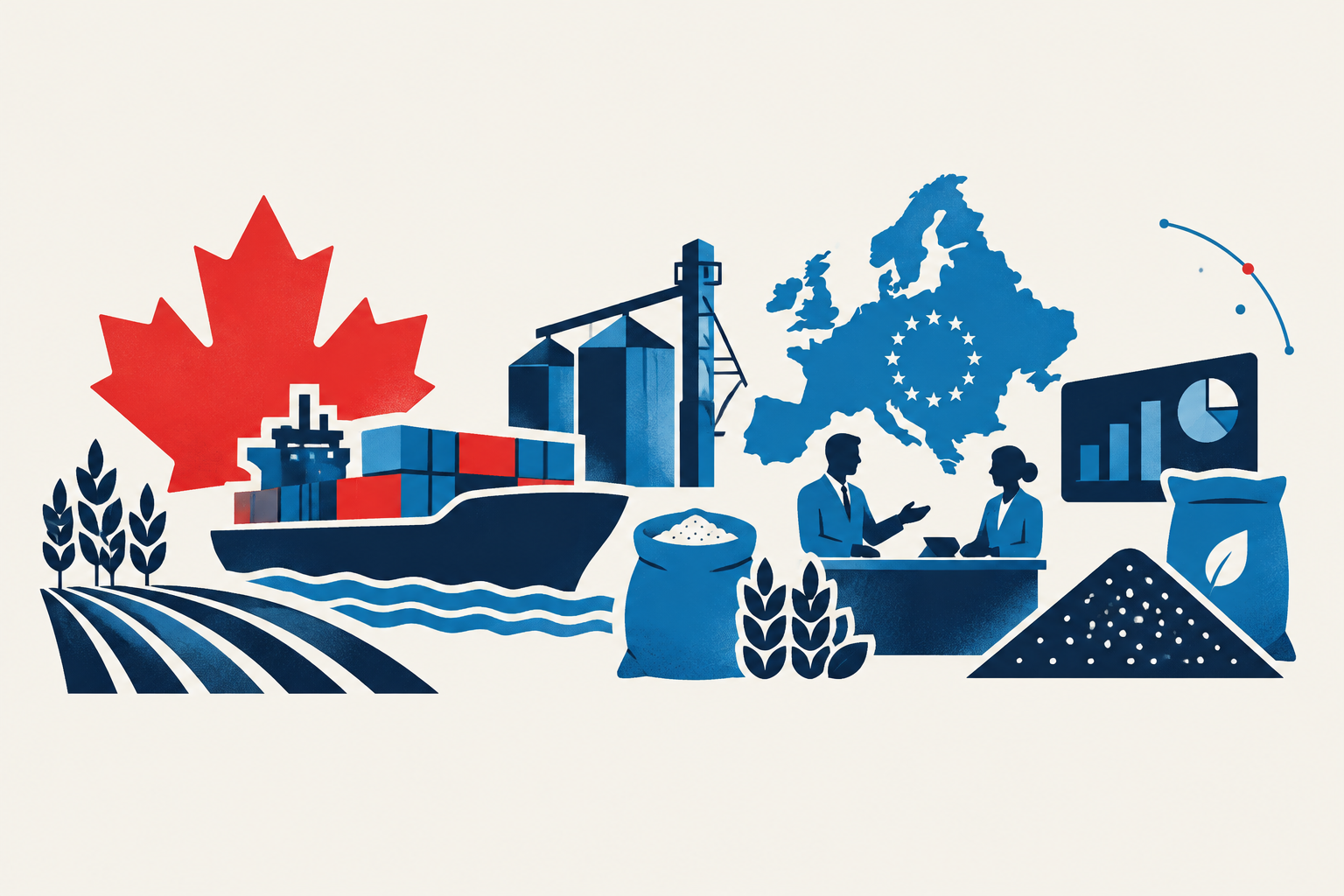
Canada completed a Europe agriculture mission, pairing EU trade outreach with market-promotion activity and new funding for global fertilizer-market monitoring.
Agriculture Minister Heath MacDonald has concluded a European mission that combined participation in the G7 Agriculture Ministers’ Meeting in France with political and industry outreach in Brussels. Agriculture and Agri-Food Canada said the mission was intended to promote opportunities for greater market access, investment and partnerships for Canadian agriculture and agri-food businesses. [1]
In Brussels, MacDonald met political leaders from the European Commission and European Parliament to discuss Canadian agricultural interests, cooperation and bilateral trade opportunities. He also led a roundtable involving Cereals Canada, Pulse Canada and the Canola Council of Canada, alongside European importers and other stakeholders, focused on common trade and regulatory priorities for grain and oilseed products. [1]
At the G7 meeting, the minister discussed longer-term agri-food system resilience, promoted Canadian products and explored areas of mutual interest with counterparts. Fertilizer challenges were among the topics raised by ministers, including fertilizer efficiency, nutrient-cycle management and soil-health practices. Canada also announced an additional $250,000 contribution to the Agricultural Market Information System, which the department said will expand fertilizer monitoring and analysis to help farmers identify shortages and reliable input supplies. [1]
The visit included the opening of the Canada Pavilion at SIAL Paris, where more than 45 Canadian companies were showcased. The outreach targets a significant export market: Canadian agri-food and seafood exports to the European Union totalled $6.7 billion in 2025, making the bloc Canada’s third-largest destination for those products, according to the federal release. The announced engagements do not establish a new market-access agreement or alter tariff treatment, but they extend government and industry contacts intended to support future commercial opportunities. [1]
The development is a modest agriculture-sector trade-diversification and relationship-building step: it connected Canadian grain, oilseed and food businesses with EU stakeholders, promoted Canadian exhibitors in Paris, and added funding for fertilizer-market intelligence. Its significance is limited because the release reports outreach and cooperation rather than a concluded market-access deal, tariff change or immediate export commitment. [1]