Carney says Canada has not approached U.S. Democrats on tariff repeal
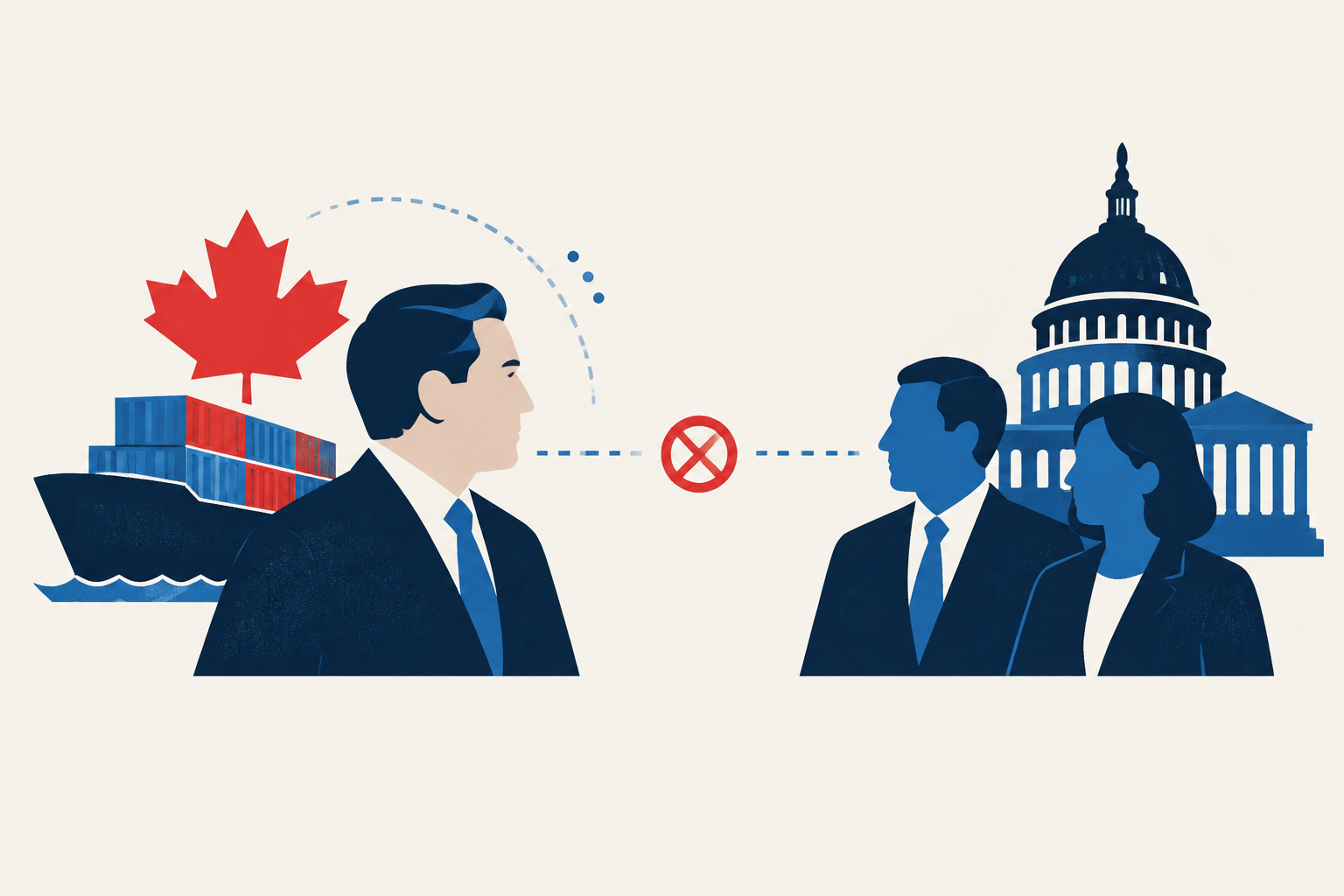
Canada has not opened talks with incoming congressional Democrats on tariff-repeal legislation, limiting near-term expectations of a political route to relief.
Prime Minister Mark Carney said on Nov. 6 that he had not spoken with U.S. Democrats about pursuing legislation to remove tariffs on Canada. He said Ottawa would welcome a return to freer trade and would continue working with U.S. counterparts toward an agreement for Canada. [1]
The statement comes after Democrats won control of both chambers of Congress in the midterm elections and ahead of their taking office in January. Several newly elected or returning Democrats have publicly called for Canadian tariffs to be repealed, including representatives associated with Oregon, Massachusetts and Vermont, while Michigan senator-elect Abdul El-Sayed has criticized the trade conflict. [1]
However, the report describes a constrained legislative path. The Section 232 and Section 338 measures affecting Canada were imposed through executive orders rather than congressional legislation, leaving their removal substantially under presidential control. The article says the Section 338 action includes 50 per cent tariffs on more than $20 billion in Canadian products. [1]
A prior Senate attempt illustrates the limit of congressional pressure: in April 2025, senators passed a 51-48 resolution seeking to end the national-emergency declaration used to justify tariffs on Canada, but it did not produce a change. University of Calgary policy director Carlo Dade said congressional hearings and similar actions could be largely symbolic without the 67 Senate votes needed to override a presidential veto; Democrats hold 54 Senate seats, according to the report. [1]
For Canadian firms facing the existing measures, Carney’s comments do not indicate a new bilateral channel through the incoming Democratic majority or an imminent rollback. They instead leave tariff relief tied to negotiations with the U.S. administration, while congressional advocacy may add political pressure but lacks a demonstrated route to compel executive action. [1]
The report also cautions against assuming a unified Democratic position on trade. Dade said some incoming lawmakers may oppose tariffs yet still favour worker- and job-protection policies, potentially limiting the scope for a broader shift away from protectionism even if Congress seeks a more active role. [1]
This is a low-significance negotiation update: Canada has not engaged incoming U.S. Democrats on tariff-repeal legislation, and the reported executive basis of the Section 232 and Section 338 measures limits Congress’s ability to deliver rapid relief. Businesses remain exposed to existing tariffs, but the article reports no new duty, countermeasure, agreement or realized sector effect. [1]