Carney says Canada-U.S. trade teams will keep working after call with Trump
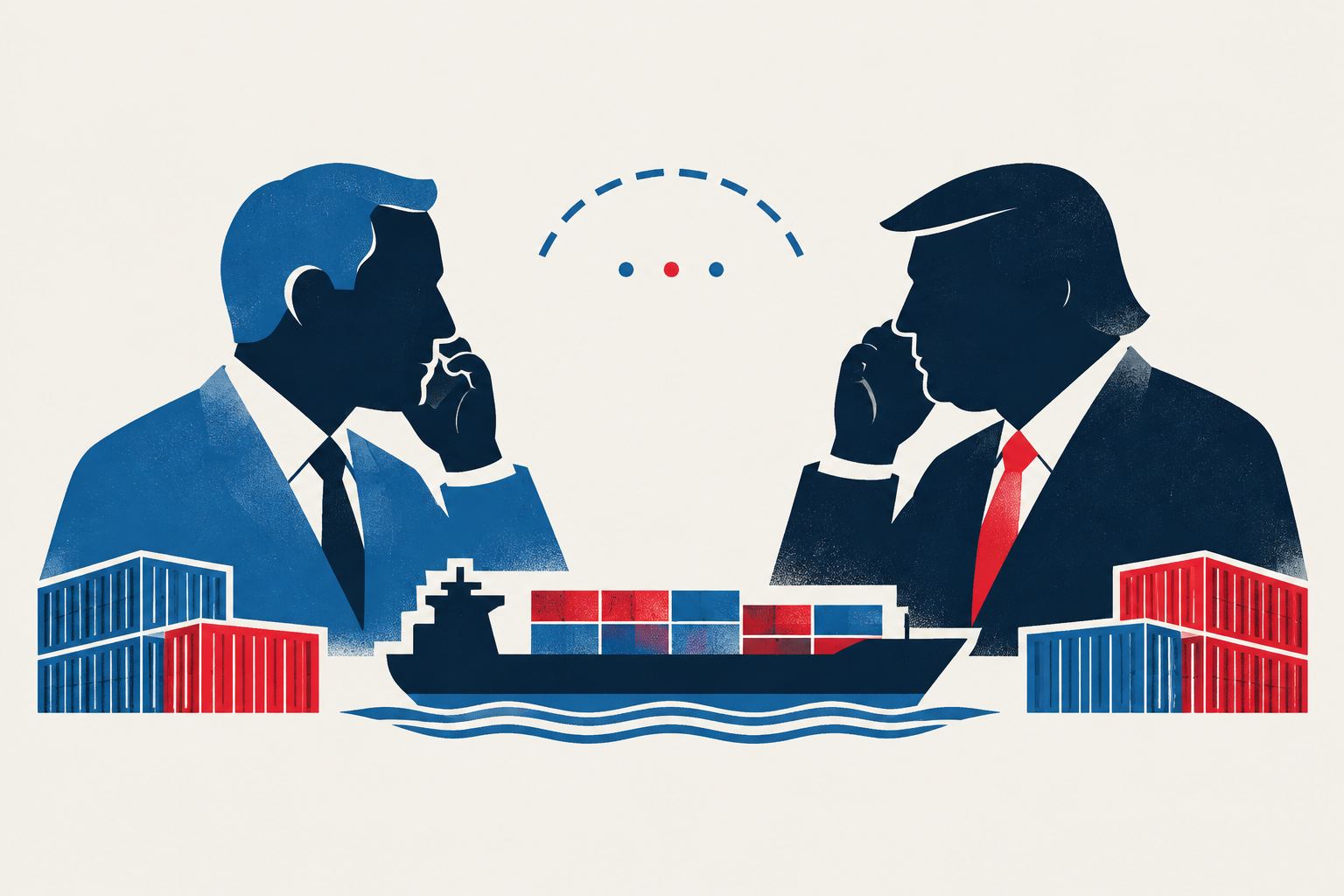
A new leader-level conversation restores a public negotiation signal, but businesses still lack a deal, timeline or confirmed tariff relief.
Prime Minister Mark Carney said November 1 that he had a “good conversation” with U.S. President Donald Trump on the future of Canada-U.S. trade. In a social-media post, Carney said the exchange built on recent discussions over the outlines of a mutually beneficial agreement and that the two countries’ teams would continue working together in the coming weeks. [1]
The statement marks a renewed public signal of engagement at the leaders’ level after a period of strained negotiations. Carney framed a potential agreement as one that could support employment and affordability while respecting Canada’s languages, culture and sovereignty. The source does not report a concluded agreement, a negotiating timetable, or agreed terms for reducing existing trade restrictions. [1]
The talks resume against the backdrop of formal discussions that Canada left in August, when Carney said the United States had made unreasonable last-minute demands. The subsequent dispute included U.S. tariffs on billions of dollars in Canadian goods and Canadian retaliatory tariffs on U.S. products, according to the report. [1]
For importers, exporters and manufacturers, the immediate consequence is continued uncertainty rather than a confirmed change in market-access conditions. Carney had described progress toward a new deal as limited only a week earlier, while maintaining that Ottawa was prepared to reach an agreement only when it served Canadian interests. His latest comments indicate that official work will continue, but do not establish that outstanding issues have been resolved. [1]
The report also says Trump recently lifted some 50 per cent tariffs on Canada at the end of October while extending tariffs to dozens of additional products, including Canadian garbage and sewage. That mixed tariff backdrop means companies exposed to cross-border trade cannot yet treat the leaders’ conversation as a broad de-escalation or as assurance that sector-specific costs will decline. [1]
The political timing may add pressure for visible progress: the conversation occurred ahead of U.S. midterm elections, with the Canada-U.S. trade dispute featuring as an issue for some candidates. Still, the available account offers no evidence of a deal being tied to the election or of any imminent policy implementation. [1]
This is a modest but relevant negotiation development because Carney publicly confirmed a direct conversation with Trump and continued work by both negotiating teams, providing a signal of diplomatic engagement for firms facing the bilateral dispute. The rating remains limited because no agreement, timetable, tariff rollback commitment or implementation detail was announced; reported progress had been characterized as limited the previous week. [1]