Carney Says U.S. Trade Terms Would Undermine Canadian Industry as Talks Remain Suspended
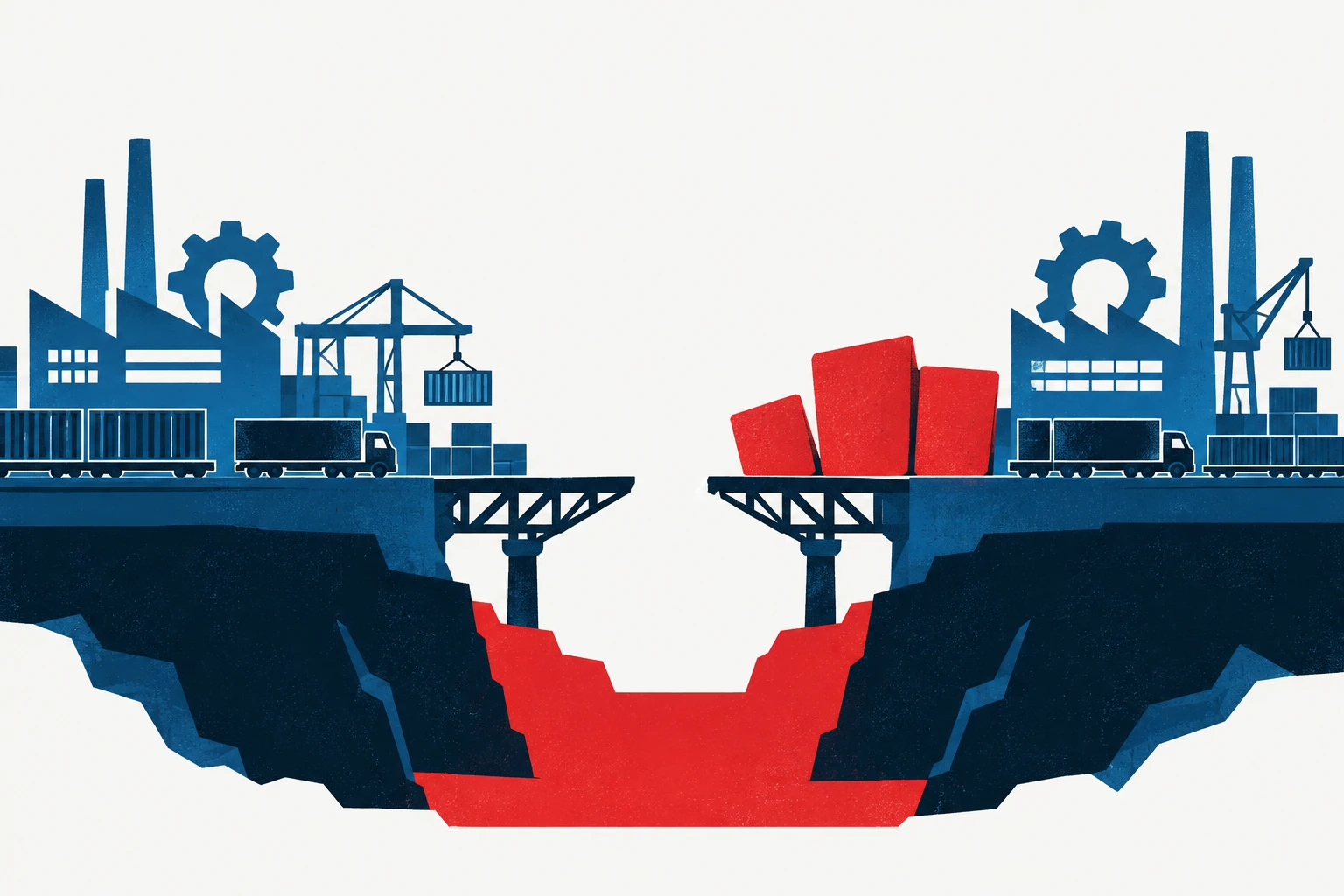
Carney said Canada rejected U.S. conditions on industrial competitiveness and trade autonomy, extending uncertainty ahead of scheduled Canadian counter-tariffs.
Prime Minister Mark Carney said Canada could return to trade discussions with the United States if Washington pursued substantive negotiations, but he maintained that the terms raised before the talks’ August 21 collapse were unacceptable. He said the proposed approach risked hollowing out Canadian industrial activity instead of creating a balanced commercial arrangement. [1]
Carney identified the automotive sector as one of the key industries affected by the disputed U.S. conditions. According to his account, Washington sought an arrangement that would make Canadian industries less competitive or leave them effectively dependent on U.S. companies; he said Canada would not accept conditions that could progressively reduce domestic production capacity. [1]
The prime minister also cited proposed changes affecting French-language and cultural protections, as well as apparent U.S. efforts to limit Canada’s ability to negotiate future free-trade agreements with other countries. Carney said those issues were independently sufficient to prevent an agreement, although he acknowledged that negotiators had found some elements of a potential deal that could benefit both sides before discussions ended. [1]
The remarks add detail to the policy differences keeping bilateral talks stalled rather than announcing a reopening of negotiations or a revised tariff schedule. The source reports that, following the breakdown, the United States imposed 50% tariffs on roughly US$20 billion in Canadian goods, while Canada planned duties of 15% to 50% on nearly US$20 billion in U.S. goods beginning September 8. [1]
For cross-border firms, the immediate consequence is continued planning uncertainty, particularly for automotive businesses exposed to unresolved conditions on production and competitiveness. Carney’s comments indicate that a future deal would need to address Canadian policy autonomy and sectoral terms, not simply settle the tariffs already announced by both governments. [1]
This is a verified but incremental negotiation update: Carney detailed Canada's objections to reported U.S. demands, but there was no new agreement, tariff change, or formal resumption of talks, so the immediate trade impact remains limited. [1]