Ontario Chair Maker Weighs U.S. Production Shift as 50% Duty Hits Exports
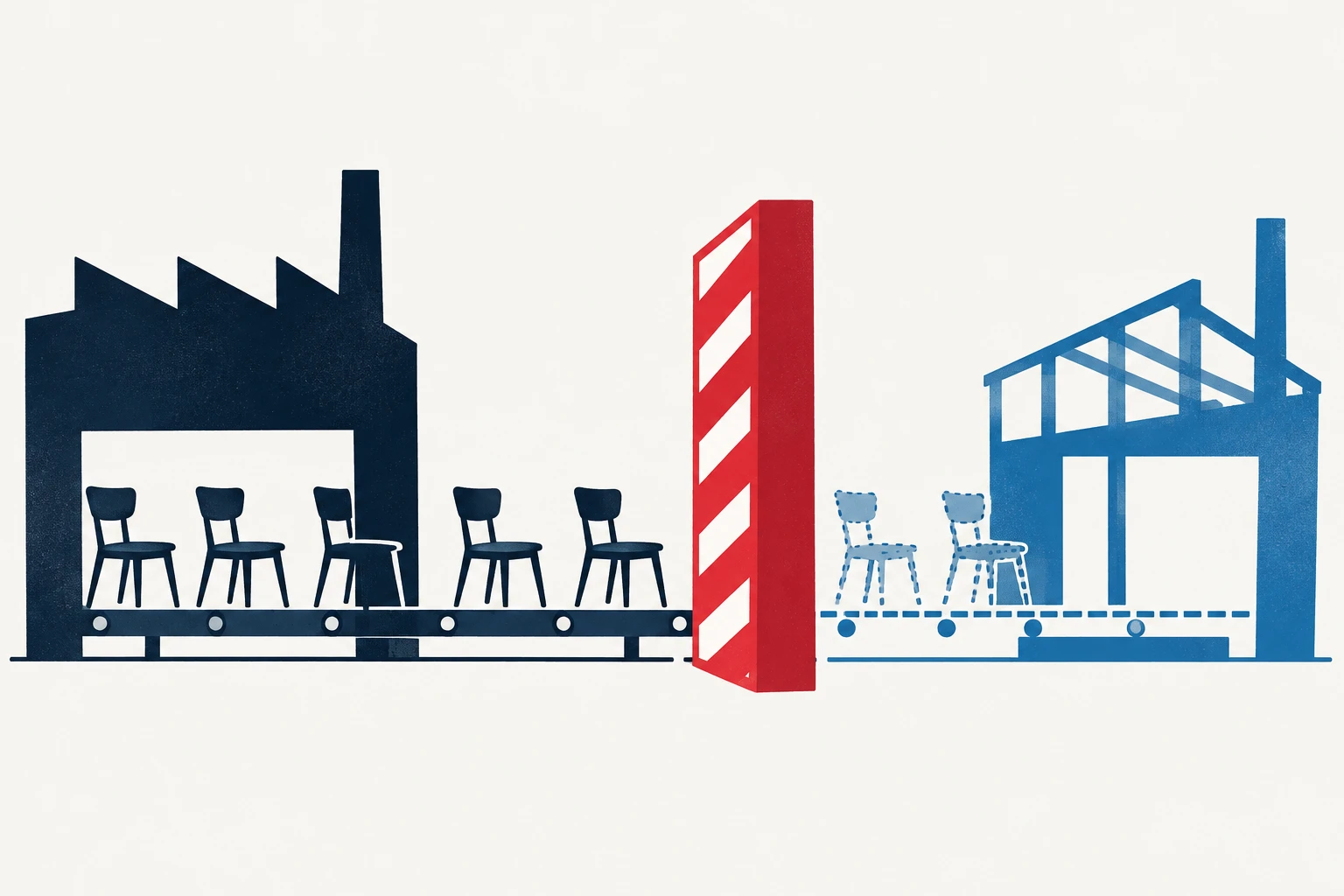
A Kemptville furniture exporter is weighing a U.S. manufacturing move as tariff costs threaten margins and sales in its main market.
DFC Woodworks Inc., a family-run Kemptville, Ontario producer of Muskoka and Adirondack outdoor furniture, is considering shifting most manufacturing to the United States after its Canadian-made exports became subject to a 50% U.S. duty. The company, founded in 1955, sends about 70% of its furniture to U.S. customers, making the new cost exposure consequential for its existing production model. [1]
President François Bruneau identified three difficult paths for the business: absorb the tariff bill, raise U.S. prices, or relocate most production south of the border. Passing through the cost could severely reduce demand and potentially eliminate U.S. sales, while continuing to absorb it would leave the company carrying a substantial expense. No final decision to relocate, cut Canadian jobs, alter prices, or make a U.S. investment has been announced. [1]
The company’s situation is a concrete example of the constraints confronting smaller export-oriented manufacturers when a major share of sales depends on one foreign market. Carleton University professor Fen Hampson said small and medium-sized firms can have fewer financial resources, less market diversification, and less access to specialized trade expertise than larger companies, limiting their ability to manage a tariff shock. [1]
The latest pressure also contrasts with DFC Woodworks’ earlier effort to reinforce Canadian production and local inputs. In a February 2025 company release, The Best Muskoka Chair Company, associated with DFC Woodworks, said it was prioritizing Canadian wood and recycled plastics and expanding capacity in Eastern Ontario to reduce dependence on imported materials. That approach may reduce input-supply exposure, but it does not eliminate the tariff burden on finished furniture sold into the United States. [2]
For now, the development is a localized business-response signal rather than confirmation of a wider migration of Canadian wood-products manufacturing. The immediate commercial risk is that the duty could be reflected in lower margins, higher U.S. customer prices, weaker bilateral sales, or eventually a transfer of production activity; which outcome occurs remains unresolved because the company has not selected among those options. [1]
The report confirms immediate 50% duty exposure for a Canadian exporter whose U.S. market represents about 70% of sales, creating a credible risk to pricing, margins, and production location. It is rated 2 because the company is still evaluating options and no relocation, employment change, price action, or broader sector effect has been confirmed. [1]