Small exporters warn tariff costs are shutting them out of the U.S. market
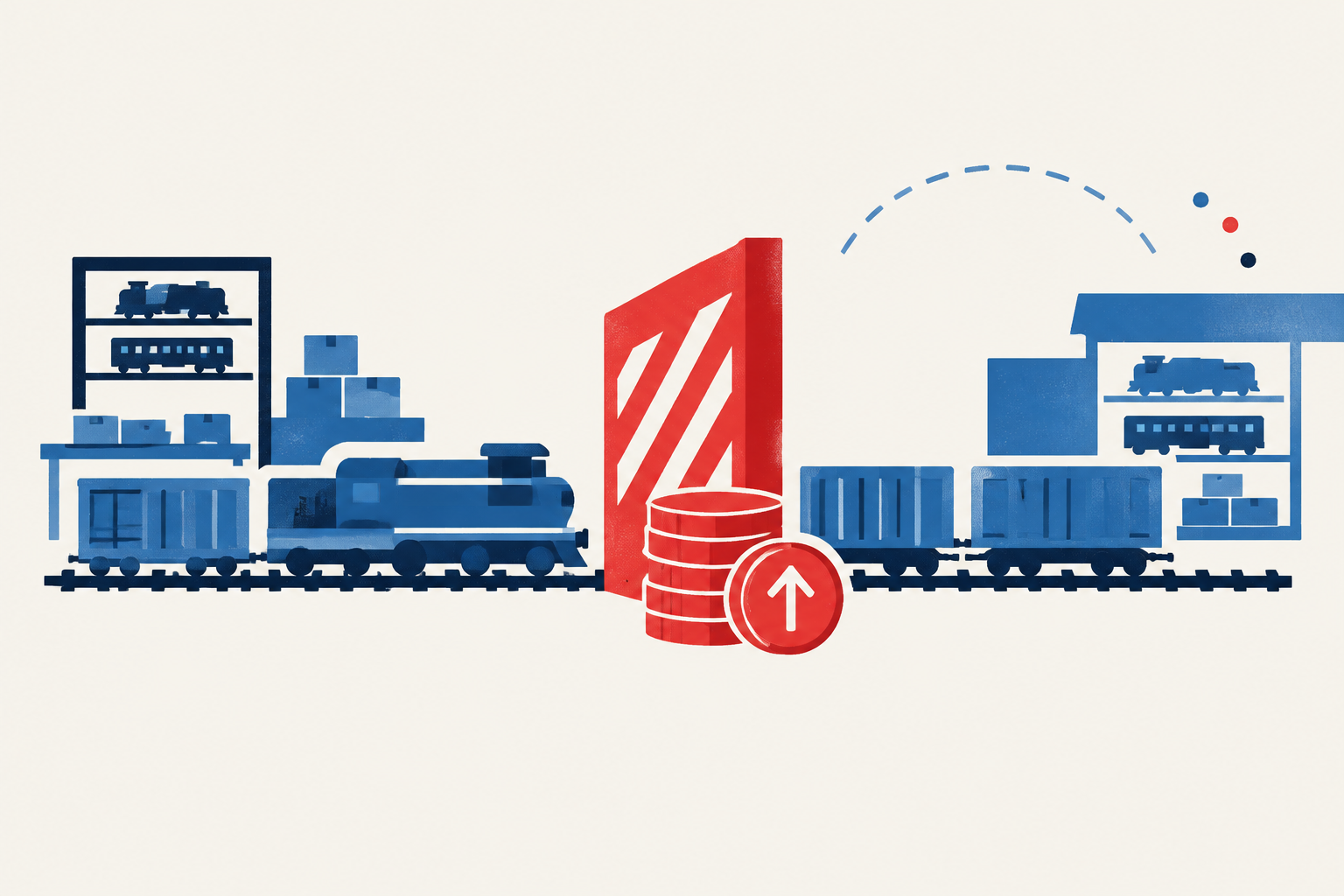
A Toronto model-train supplier says new U.S. tariff exposure has cut its American customer base, highlighting support gaps for smaller exporters.
Toronto-based Miniprints, a supplier of handcrafted model-railroad figures and accessories, says the latest tariff disruption has sharply reduced its access to its largest export market. The company had sent roughly 85 per cent of its shipments to the United States and had previously moved about 400 boxes a week there, but says more than 40 per cent of its U.S. customer base has disappeared since the new levies took effect. [1]
The business was previously exempt from Section 232 tariffs through CUSMA coverage, according to the report. Its products were subsequently classified under HTS code 9503, a category covering toys, dolls, puzzles and scale models, in the U.S. Section 338 tariff round. Miniprints has begun passing the 50 per cent levy on to U.S.-bound buyers, retaining some sales but at a lower level than before. [1]
The case illustrates how a tariff aimed at specified product categories can affect smaller firms whose sales are concentrated in the United States, even where they export globally. Miniprints ships to 36 countries, but its owner said the loss of U.S. customers cannot readily be offset elsewhere and warned that a prolonged disruption could become existential for the business. [1]
The Financial Post reports that the Canadian Federation of Independent Business estimates more than 53,000 small and medium-sized businesses are directly affected by the levies. It also reports that Miniprints does not qualify for the federal government's $7.5 billion aid package announced August 25 because its annual revenue is below $1 million and its supply chain has not been meaningfully affected under the program's criteria; the CFIB said about half of small businesses face similar eligibility constraints. Provincial relief programs exist in Alberta, British Columbia, Manitoba and Ontario, though qualification rules differ. [1]
The report also points to wider concerns over the duration of the dispute. University of Saskatchewan business-school dean Keith Willoughby said an extended absence of a Canada-U.S. trade agreement could weaken investment access to the U.S. market, raise layoff risk in more exposed sectors and force businesses to reduce operations if alternative markets cannot be developed quickly. He also argued that Canadian counter-tariffs can add to consumer prices. These are assessments of potential outcomes rather than reported economy-wide results. [1]
This is a localized but concrete industry-impact development: a small Canadian exporter reports that Section 338 tariff exposure has eliminated more than 40 per cent of its U.S. customer base and required it to pass a 50 per cent levy through to buyers. Its significance is limited because the evidence concerns one firm and does not establish a new, independently corroborated change in conditions for any of the dashboard’s five tracked industries. [1]