Tariff uncertainty disrupts Canadian machinery sales even before duties apply
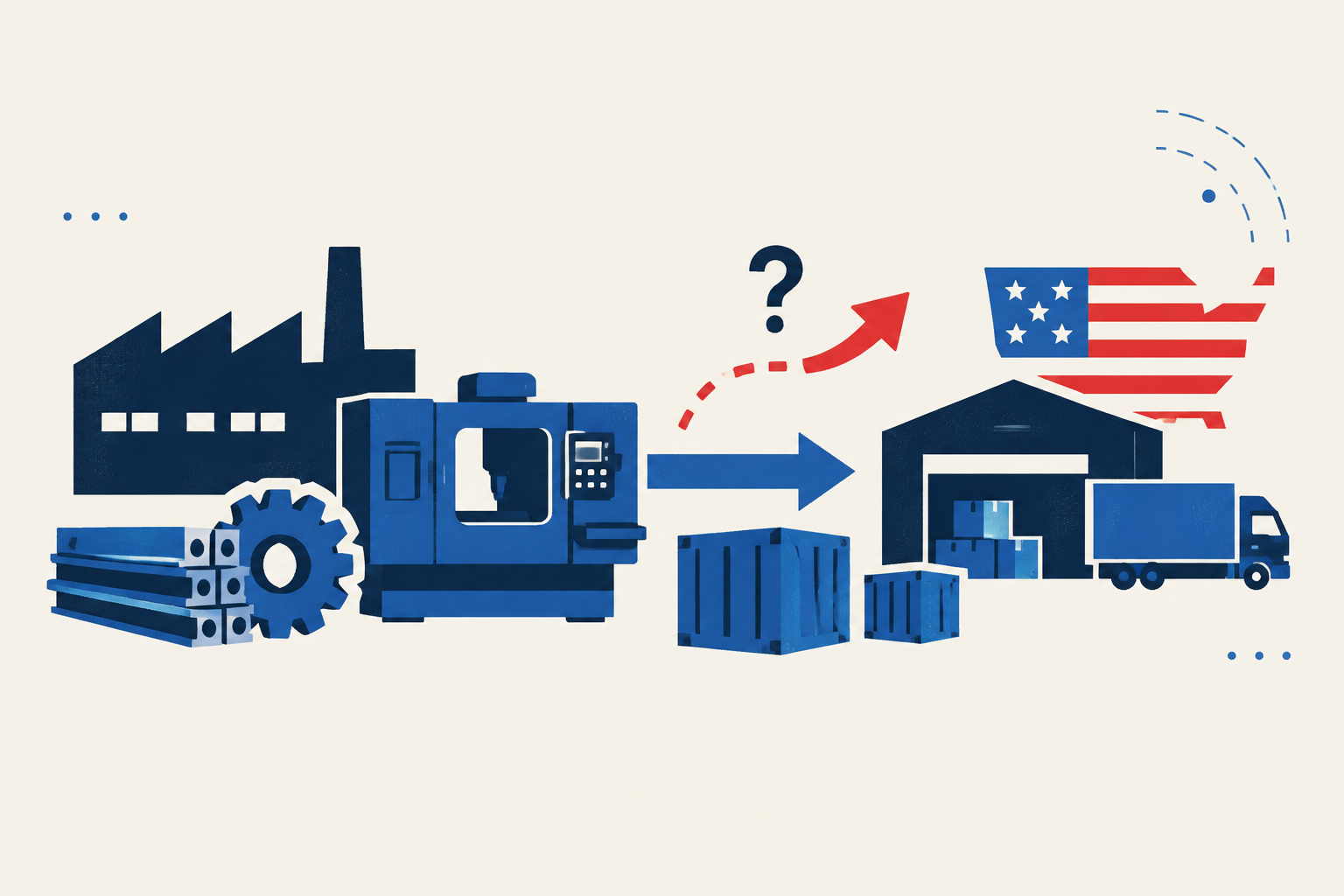
U.S. buyers are deferring or redirecting orders from Canadian manufacturers over possible future tariffs, forcing suppliers to absorb risk to preserve sales.
New reporting published November 10 shows that uncertainty over possible U.S. tariffs is affecting Canadian manufacturers’ commercial decisions even where their products are not initially covered by duties. Control GMC Inc., a Quebec maker of specialized food-packaging machinery, went about six months in 2025 without selling a new machine into the U.S., a market that has traditionally accounted for roughly 70 per cent of its sales. The company said prospective buyers were concerned that tariffs might be imposed between placing an order and receiving equipment. [1]
Control GMC responded by offering customers protection against unexpected tariffs arising during the period between an order and delivery. The company’s founder said that guarantee helped secure machinery orders worth about a couple of million dollars and restored sales to approximately their earlier pace. Its machines generally cost US$100,000 to US$400,000, while production can take several months and highly customized equipment can require up to a year, leaving purchasers exposed to policy uncertainty over a long ordering cycle. [1]
The guarantee did not fully prevent business losses. Control GMC’s operations vice-president said some prospective U.S. customers had already moved to other suppliers, with fewer than 10 customers estimated to have been lost. The company’s concern later proved material when additional 50 per cent duties were imposed in late August on certain machinery, including the category through which it normally exports equipment. [1]
The report also points to a wider manufacturing effect beyond a single exporter. It says U.S. customers are delaying purchases or changing suppliers because of the prospect of future duties, including where goods are not currently tariffed. Canadian manufacturing activity weakened in October, with the S&P Global Canada manufacturing purchasing managers’ index falling to 49.6 from 51.5 in September; manufacturers cited tariffs and customer uncertainty, particularly in the U.S., as a drag on sales. An Export Development Canada survey released in September found that nearly one-third of Canadian exporters had reported lower U.S. orders over the preceding six months. [1]
For suppliers serving food producers and other U.S. industrial customers, the immediate exposure is not solely the tariff rate itself but the cost of guaranteeing delivered prices, longer sales cycles and the risk that buyers establish relationships with U.S.-based alternatives. The report also cites a CFIB survey in which nearly one-quarter of respondents had delayed, or planned to delay or cancel, investment because of tariff uncertainty. Those findings indicate a broader confidence and investment constraint, but do not establish that all affected sales or investments will be permanently lost. [1]
This is a meaningful industry-impact development because it documents U.S. order delays and supplier switching caused by the risk of future tariffs, including for Canadian goods not initially subject to duties. Control GMC recovered about a couple of million dollars in orders only after assuming tariff risk, while still losing some customers; the evidence points to material commercial disruption but is limited to reported company examples and surveys rather than a quantified sector-wide loss. [1]