TD says elevated crude prices provide Canada a net economic benefit despite fuel-cost strain
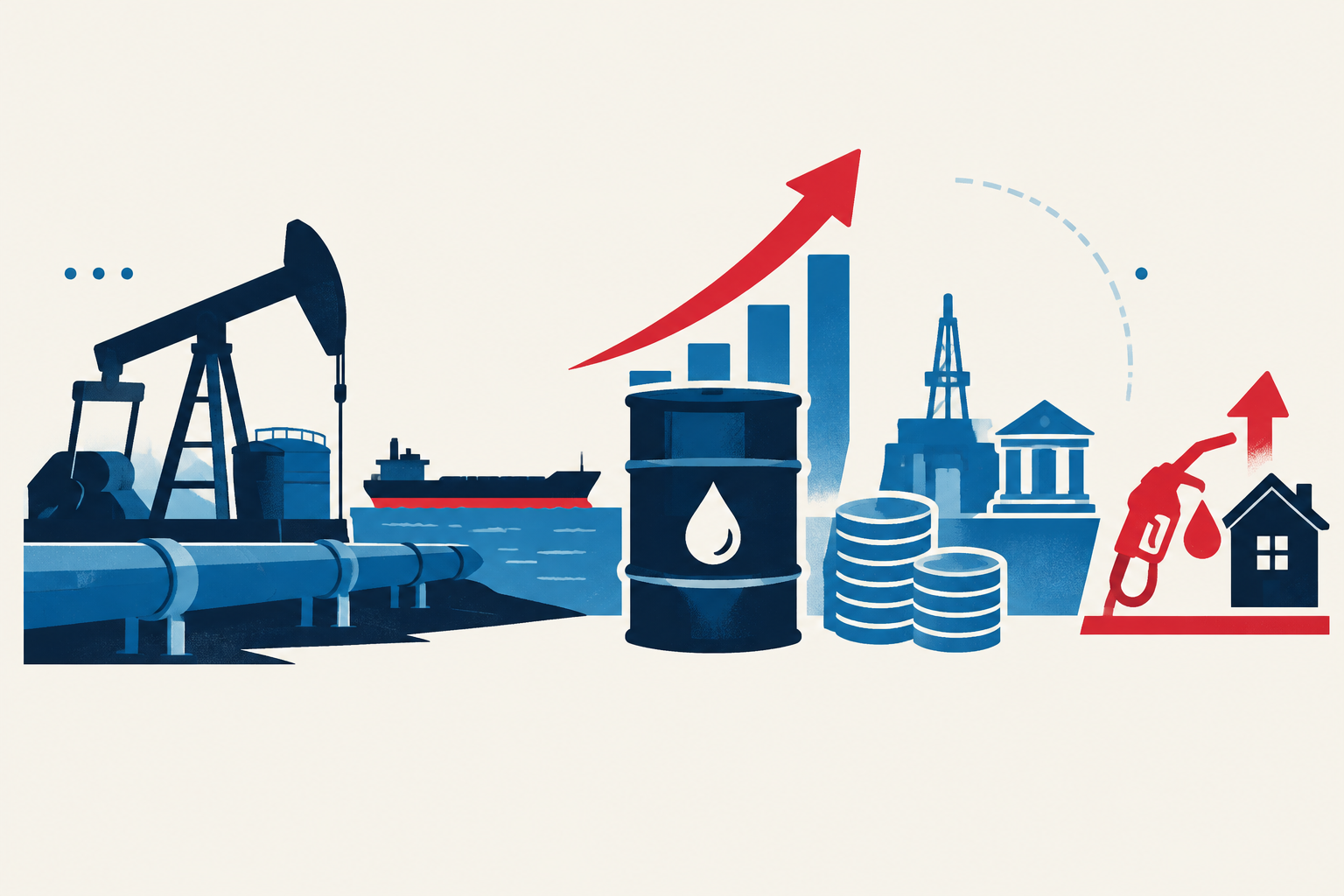
TD Economics says stronger energy export receipts, incomes and public revenues can outweigh the household hit from higher diesel and gasoline prices.
TD Economics’ latest assessment finds that Canada’s status as a major crude producer is cushioning the country against an energy-price shock, even as the same conditions raise diesel and gasoline costs for households. The report, released Tuesday and reported on October 14, says higher crude prices are a net positive nationally through stronger exports, incomes and government revenues. [1]
The analysis comes against a backdrop of conflicts in the Middle East and Ukraine that CTV says have sharply lifted diesel and gasoline prices. TD economist Marc Ercolao said higher prices give Canada an income and revenue buffer, while cautioning that oil production does not insulate the country from tighter fuel markets. [1]
TD’s case rests in part on export performance. The report says Canadian energy exports have increased by an average of $4.5 billion per month over the previous six months, adding to the receipts of oil and gas producers. That export channel means the economic effects of higher crude prices are uneven: producers and public revenues can benefit while consumers face higher costs at the pump. [1]
For trade monitoring, the development is an updated economic-impact assessment rather than a newly reported tariff, import restriction or bilateral trade action. It reinforces the importance of energy export receipts to Canada’s broader exposure to global oil-price movements, but does not itself establish a change in market access, trade rules or energy-export volumes beyond the figures cited by TD. [1]
The near-term business implication is therefore mixed. Energy producers and related public revenue streams may receive support from elevated crude values, whereas transport-dependent households and businesses remain exposed to more expensive refined fuels. TD’s conclusion is a national, net assessment and should not be read as a finding that higher fuel costs have ceased to weigh on consumers. [1]
Significance is limited to a bounded, newly reported economic assessment: TD says higher crude prices support Canadian exports, incomes and government revenues, while higher diesel and gasoline prices strain households. The finding is relevant to the energy sector and fuel-exposed businesses, but it does not announce a trade-policy change or independently verify a lasting shift in energy-market conditions. [1]