Trump says U.S. nearing Canada trade deal, with tariff-free fertilizer proposed
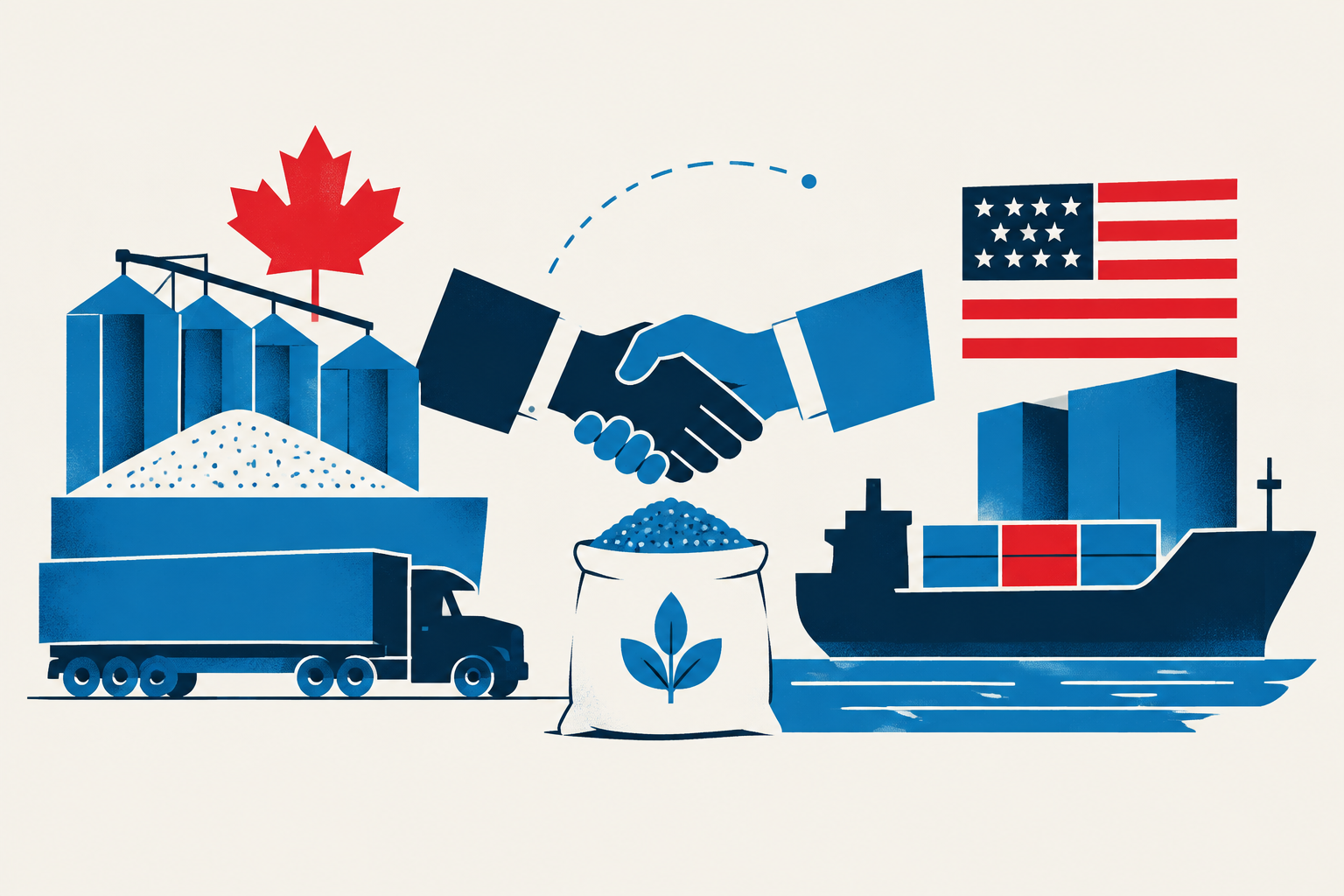
Trump floated duty-free Canadian fertilizer in a prospective trade deal, but the absence of terms leaves cross-border businesses without firm relief.
President Donald Trump said on November 3 that the United States was nearing a trade agreement with Canada and identified fertilizer as a possible component. In remarks to Fox News, he said Canada would supply fertilizer to the U.S. without tariffs under the prospective arrangement, but gave no details on coverage, conditions or timing. [1]
The statement is a negotiation signal rather than an announced policy change. The source says neither government had released finalized terms, leaving unclear whether a fertilizer provision would be limited to particular products, apply broadly to Canadian shipments, or be connected to wider changes in the countries’ tariff dispute. Businesses therefore cannot yet treat the comment as a revision to current border costs or customs treatment. [1]
Fertilizer has particular relevance for agricultural supply chains because U.S. farmers rely heavily on Canadian supplies, especially potash. A tariff-free arrangement, if concluded and implemented, could lower an important farm input cost and support cross-border trade. For now, that potential benefit remains contingent on an agreement whose scope and timetable have not been disclosed. [1]
The comments came as Trump and Prime Minister Mark Carney sought to resolve a broader dispute that has strained bilateral economic relations. The source reports that Carney described a recent conversation with Trump as constructive and focused on the outlines of a mutually beneficial agreement, while noting that retaliatory tariffs between the two countries have affected steel, automobiles and agriculture. [1]
For Canadian exporters and U.S. agricultural buyers, the immediate development is greater visibility that fertilizer is being discussed in negotiations, not a confirmed change in market access. The lack of published terms means other sectors exposed to bilateral tariffs have no stated basis to expect relief, while fertilizer participants still face uncertainty over whether a proposed concession will be finalized. [1]
This is a meaningful but preliminary negotiation development because the U.S. president publicly identified tariff-free Canadian fertilizer as part of a prospective agreement, directly relevant to agricultural supply chains and U.S. farm input costs. The significance is limited because neither government has announced a completed agreement, product coverage, implementation date or final terms. [1]