U.S.-Built Vehicles Lose Share of Canadian New-Car Market in First Half of 2026
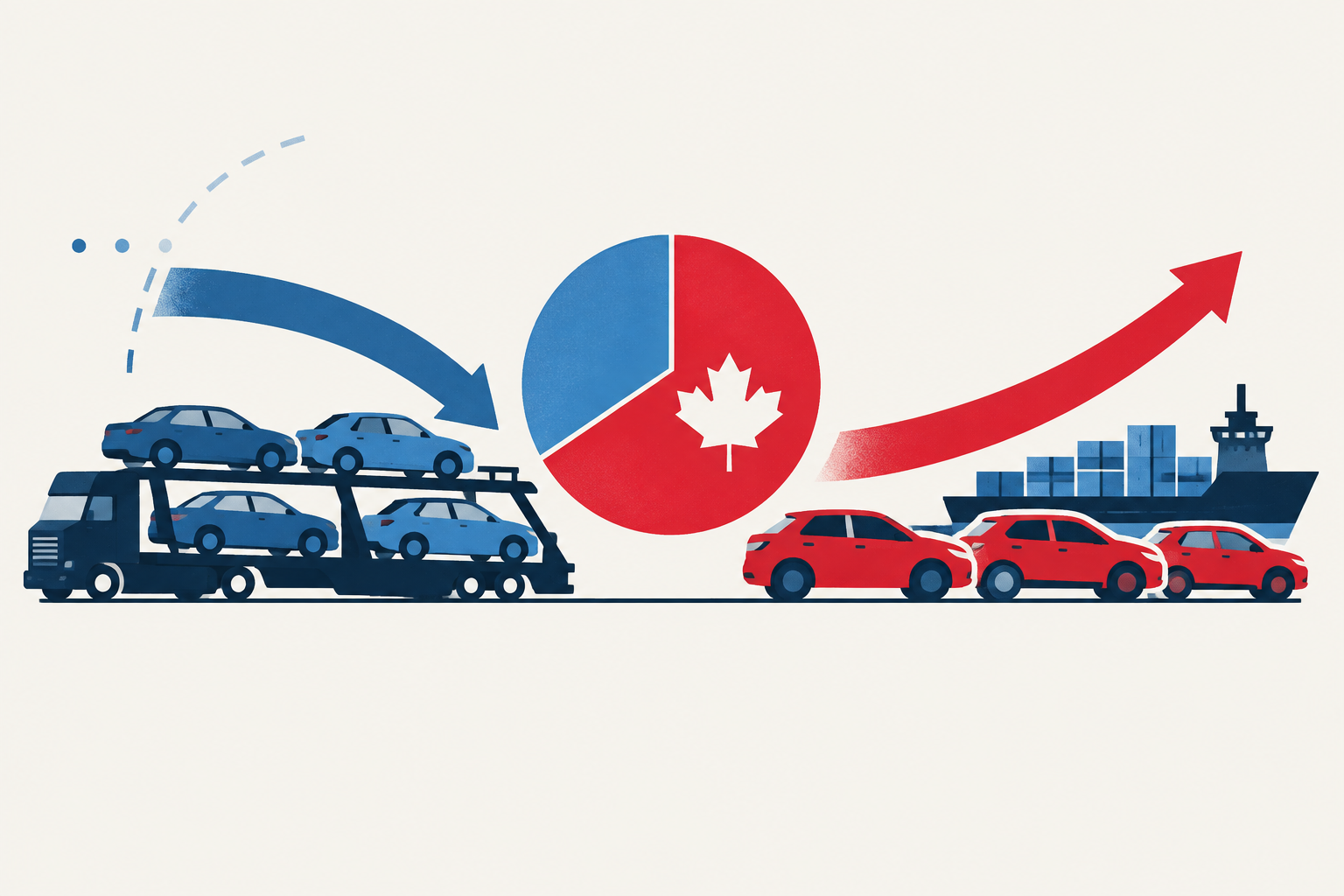
The U.S. share of Canadian new-vehicle sales fell sharply, adding evidence that cross-border tariffs are shifting purchases toward overseas suppliers.
New-vehicle sales data point to a marked retreat for U.S.-built models in Canada. Vehicles made in the United States represented 28.4% of Canadian new-vehicle sales in the first half of 2026, down seven percentage points from 35.4% in the same period of 2025, according to JD Power Canada data reported by Fortune. The share had generally been about 40% between 2021 and 2025. [1]
The decline comes after a series of U.S. import taxes affecting Canada, including a 25% tariff on Canadian-made vehicles. Fortune reported that the levy is expected to double and extend to Canadian auto parts, steel and vehicles on January 1, 2027. Canada has responded with retaliatory tariffs on U.S.-made autos as well as steel and aluminum, increasing trade friction in a vehicle market built around integrated North American production. [1]
The reported shift matters because Canada remains the largest export destination for U.S. automakers, exceeding the next 10 export markets combined, according to an RBC analysis cited by Fortune. Bilateral auto trade has surpassed US$100 billion this year. The Canadian Vehicle Manufacturers' Association said the available measures of jobs, output, prices and tariff costs indicate that U.S. trade policy is damaging the U.S. auto industry. [1]
Cost pressures are central to that assessment. Modern vehicles draw on thousands of parts that move among countries before final sale, leaving U.S. manufacturers exposed to tariffs even when their vehicles are marketed as American-made. Fortune reported that GM and Stellantis have disclosed multibillion-dollar tariff losses, while Kelley Blue Book estimated tariffs could add as much as US$6,000 to vehicle prices, with related effects on taxes, financing and insurance. [1]
The lost U.S. share has coincided with gains for Asian suppliers in Canada. Japanese imports rose to 16.6% of Canadian new-vehicle sales in the first six months of 2026 from 13.7% a year earlier, while South Korean imports increased by one percentage point to 15.6%; European imports were broadly unchanged. The data do not establish the full cause of each shift, but analysts cited in the report said tariff costs and less integrated North American supply chains have made alternatives from Japan, Germany, South Korea and Mexico more competitive. [1]
This is a material automotive-market signal: the U.S.-built share of Canadian new-vehicle sales fell to 28.4% from 35.4% year over year, while Japanese and South Korean suppliers gained share. It reinforces the sector’s already severe disruption and price exposure, but does not warrant a forecast-score change because the packet provides only one readable publisher for the new data and analyst assessment. [1]