Wisconsin agricultural exports top $2 billion in first half despite tariff disruptions
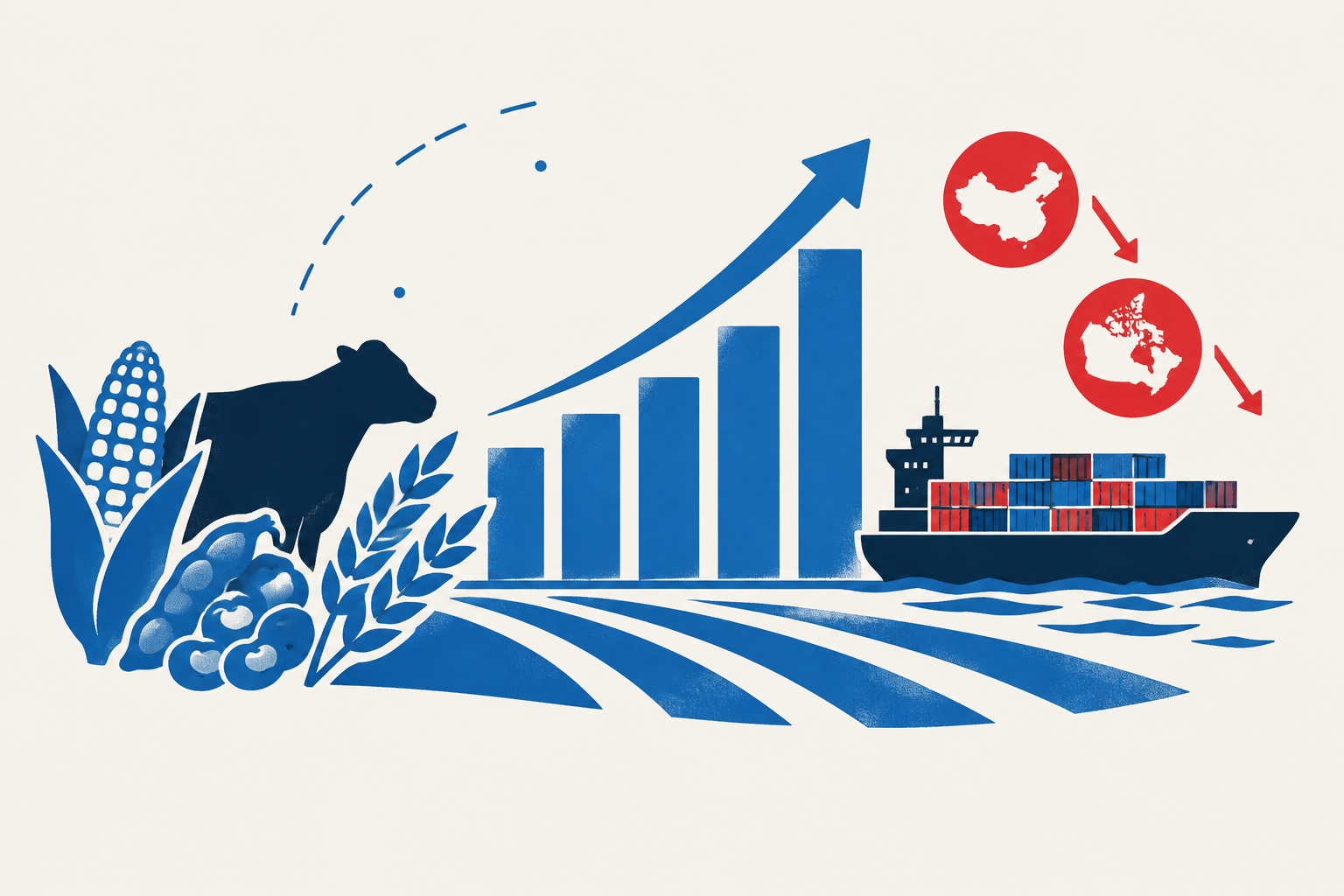
Wisconsin’s first-half agricultural exports reached a record above $2 billion, but sharp declines in China and Canada exposed mounting market risks.
Wisconsin agricultural exports exceeded $2 billion in the first half of 2026, the highest total recorded for that period and 5% above the prior year, according to the state Department of Agriculture, Trade and Consumer Protection’s International Agribusiness Center. The result shows aggregate export growth continued even as changing tariff policies complicated access to important overseas buyers. [1]
The gains masked a substantial pullback in sales to China. Wisconsin exports to that market fell by $41 million, or 45%, from a year earlier. China has been a leading destination for Wisconsin dairy cow genetics and an important soybean market, although an agricultural economist cited by WPR noted that the state’s China sales had already been declining for several years following earlier U.S.-China tariff retaliation and shifts in Chinese purchasing. [1]
Canada also remained a pressure point. It was Wisconsin’s largest agricultural customer in 2025, accounting for roughly one-third of the state’s agricultural exports, but first-half sales fell by nearly $16 million. A state export official said the decline may deepen after U.S. tariffs announced in September following stalled trade talks prompted Canada to impose additional taxes on U.S. dairy products and other goods; the official characterized earlier demand as potentially supported by front-loaded buying. Those views are assessments rather than confirmed full-year trade outcomes. [1]
Trade diversification and product-specific demand partly offset those losses in the reported period. Ethanol exports to Canada rose 71%, while exports to Mexico increased, including a 135% increase in corn sales and a 125% rise in soybean exports versus the same period a year earlier. Dairy remained Wisconsin’s largest export product, representing more than 12% of total sales, with demand from countries with growing middle-income populations helping support shipments. [1]
For Canadian and U.S. agricultural businesses, the data underline how a positive statewide export total can coexist with increased exposure in core bilateral markets. The first-half figures do not establish whether Wisconsin’s export growth can be sustained: the report captures a period before the state official expected all effects of the latest Canada-related measures to be reflected, while China’s decline has both current trade-policy and longer-running market drivers. [1]
This is a significant localized agriculture trade signal because Wisconsin’s record first-half export total conceals a 45% drop in China sales and a nearly $16 million decline in shipments to Canada, a market that represented about one-third of the state’s agricultural exports in 2025. The rating is not higher because the source reports first-half state-level results, identifies offsetting growth in Mexico and selected Canadian products, and does not establish a sustained broader sector deterioration. [1]