Alberta heavy crude discount to WTI doubles as tanker constraints reshape export economics
A widening freight- and quality-driven discount is cutting Alberta heavy-crude realizations despite elevated global oil prices.
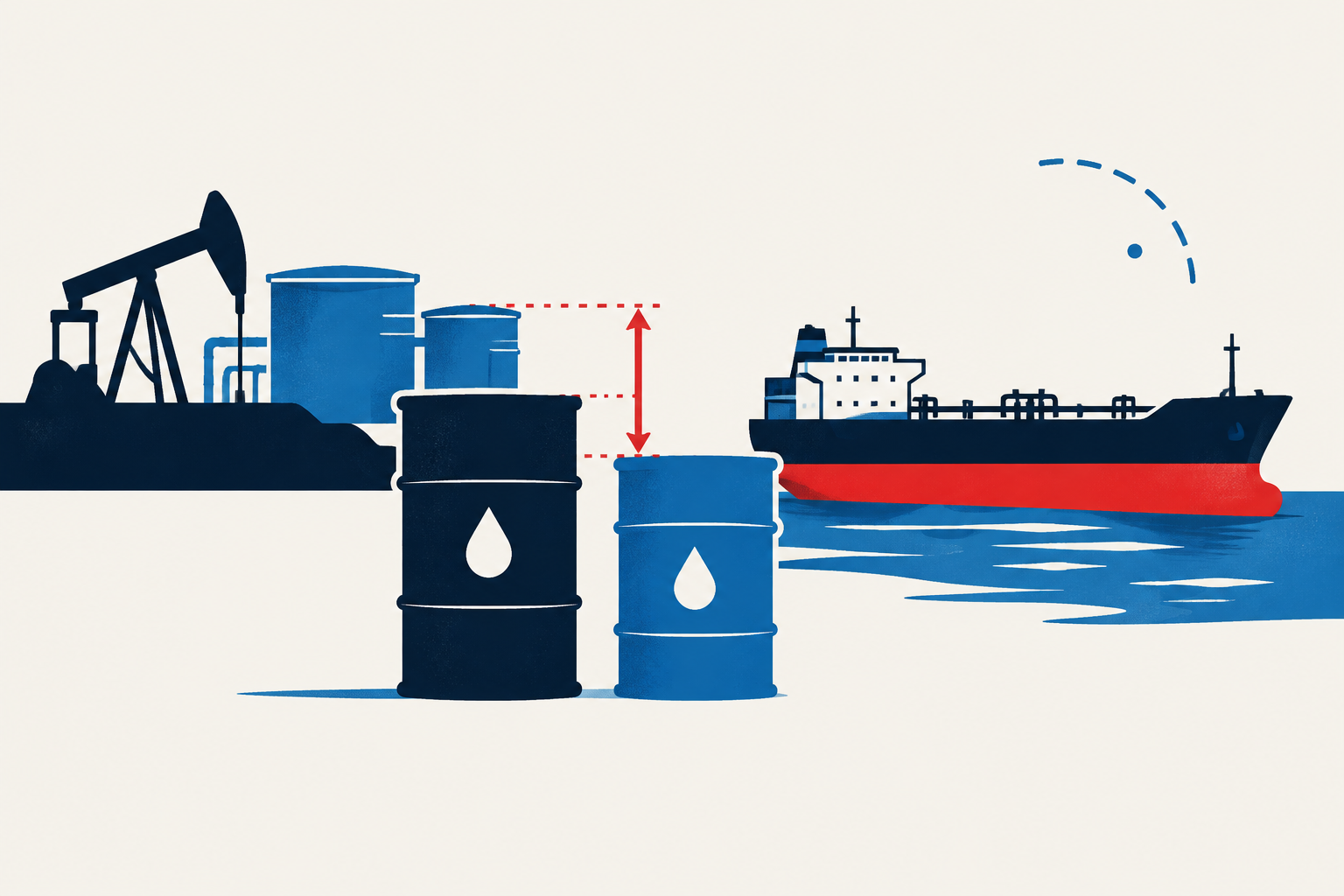
Western Canadian Select (WCS), Alberta’s benchmark heavy crude, was trading at roughly US$20 a barrel below West Texas Intermediate (WTI) on Oct. 15, compared with about US$10 in mid-September. The sharper discount has emerged even while broader crude prices remain high, reducing the value received for Canadian heavy-oil barrels relative to the U.S. benchmark. [1]
The change is not being attributed to a new shortage of pipeline capacity out of Alberta. Instead, market participants cited a combination of constrained tanker availability, larger Venezuelan heavy-crude exports to the U.S. Gulf Coast and refinery demand for lighter crude that produces more of the diesel currently in demand. Venezuelan supply gives refiners additional heavy-barrel options, while Alberta’s heavier, higher-sulphur crude is more costly to process than lighter grades. [1]
Transport costs are a central pressure. The source reports that very large crude carriers have become scarce after attacks and disruptions linked to conflicts involving Iran, Russia and Ukraine, with some vessels out of service. Higher freight costs affect Alberta barrels headed to Asian buyers directly from the B.C. coast and barrels that reach Asian markets after moving through the U.S. Gulf Coast, widening the discount buyers require to absorb shipping costs. [1]
The Trans Mountain expansion, which entered service in May 2024, had improved Canadian producers’ access to Pacific markets and pricing alternatives. But the report says the system is essentially full, increasing the importance of tanker logistics once barrels reach the coast. Smaller vessels can load at Trans Mountain’s Westridge terminal, while the proposed Pacific Link project is framed by an industry analyst as a potential route to a terminal capable of handling the largest tankers serving Asian markets. [1]
The immediate consequence is weaker realized pricing for Alberta heavy-oil producers, rather than a confirmed decline in physical production or exports. Analysts quoted in the report expect tanker conditions to take time to normalize and link meaningful relief largely to a reduction in Middle East conflict risks; that outlook remains conditional rather than a confirmed market recovery path. [1]
The development is significant because WCS’s discount to WTI widened from about US$10 to US$20 per barrel in less than a month, directly weakening realized revenue for Alberta heavy-crude producers. The pressure is tied to tanker scarcity, freight costs, competing Venezuelan heavy supply and refinery preferences, while the source does not establish a new tariff, pipeline outage, production cut or durable structural loss of export access; that limits the rating to a moderate significance level. [1]