Beer-can costs rise for Ontario craft brewer as aluminum tariffs move through supply chain
Walkerville Brewery reports higher tall-can costs and expects retail beer prices could rise within months as cross-border aluminum tariffs accumulate.
Windsor’s Walkerville Brewery says its cost for a 473-millilitre beer can has increased from roughly 31 cents to 35 cents, a rise the company attributes directly to the tariff dispute. Owner Mike Brkovich said the brewery has so far absorbed higher input costs, but expects it will have to raise prices in the next three or four months while trying to preserve customer value. [1]
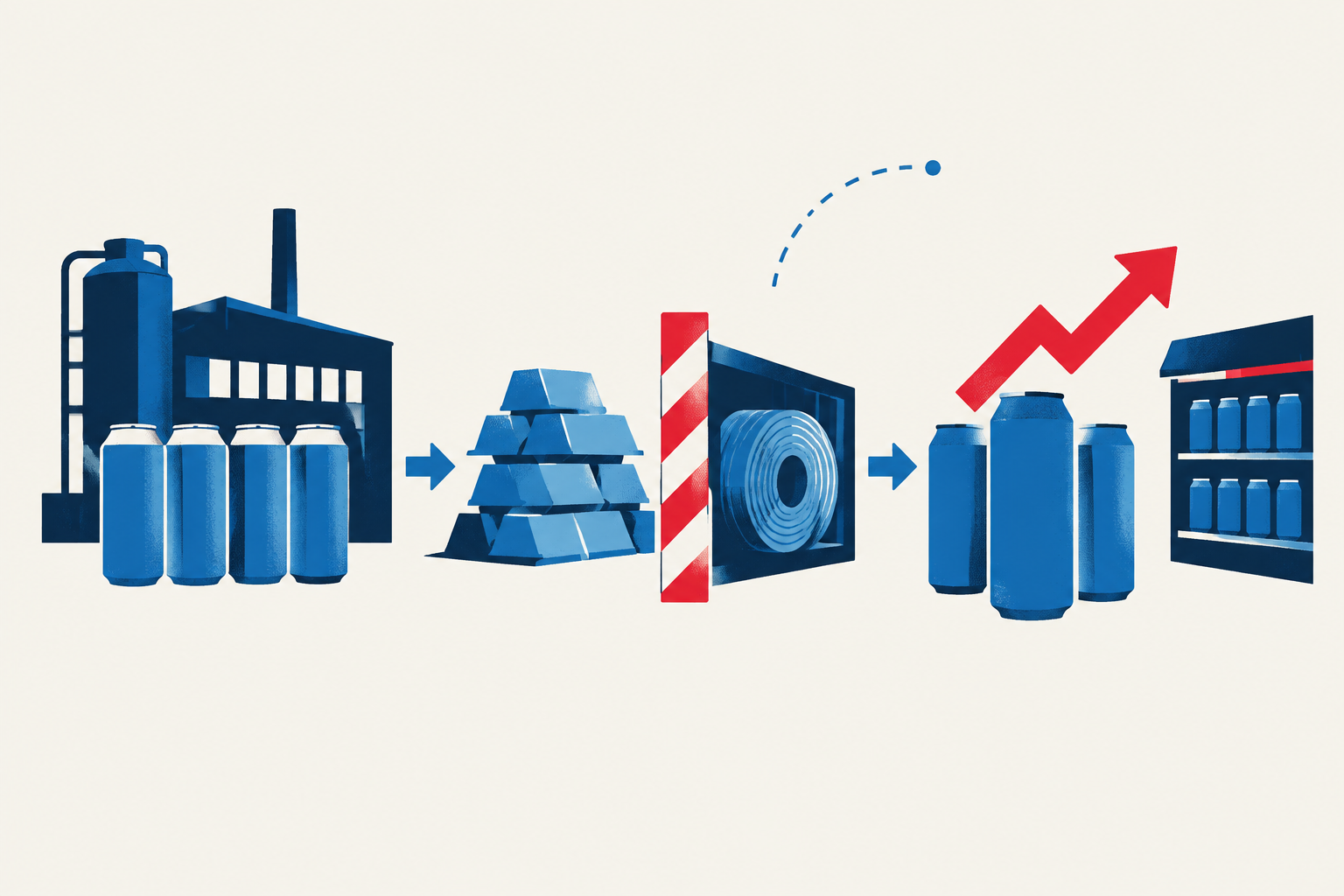
The cost pressure reflects the structure of the beer-can supply chain rather than a purely domestic purchase. Walkerville buys cans from a Canadian supplier, but the brewery believes many of those cans originate in the United States. Canada produces aluminum, yet the report says it lacks domestic rolling-mill capacity for specialized can sheet and does not make the widely used 473-millilitre tallboy format, leaving producers reliant on cross-border processing and manufacturing. [1]
The report links that exposure to tariffs applied at multiple border crossings. It says U.S. steel and aluminum tariffs first imposed in March 2025 were met by Canada with dollar-for-dollar retaliation, and that aluminum tariffs in both directions had reached 50 per cent after a late-August U.S. escalation. A Wayne State University supply-chain professor said higher aluminum costs can be passed through by can makers, raising prices for shipments into both Canadian and U.S. markets. [1]
For a small brewer using about 40,000 cans a month, the per-can increase compounds with broader operating-cost pressures. Brkovich also received notice that apple juice used in the brewery’s cider would rise from $1.80 to $2.05 per litre, although the supplier did not specify a tariff cause. He said constrained consumer discretionary spending is already challenging hospitality businesses, prompting the brewery to use case specials and free-admission events as it delays a price increase. [1]
The immediate evidence is a narrow but concrete example of tariff-related price transmission: a Canadian brewery’s packaging cost has risen despite purchasing through a Canadian supplier. It does not establish an economy-wide beer-price increase or quantify the tariff share of every input cost, but it illustrates how integrated aluminum conversion and can-making routes can expose downstream food-and-beverage businesses to metal tariffs and retaliatory duties. [1]
This is a modest but specific downstream price-pressure signal for aluminum users: Walkerville reports a roughly four-cent increase in its 473-millilitre can cost and anticipates consumer price increases within three or four months. The significance is limited because the evidence concerns one brewery and does not demonstrate sector-wide pass-through, even though the reported cross-border can supply chain explains the exposure. [1]