Canada, China expand trade arrangement with new export relief and metal remissions
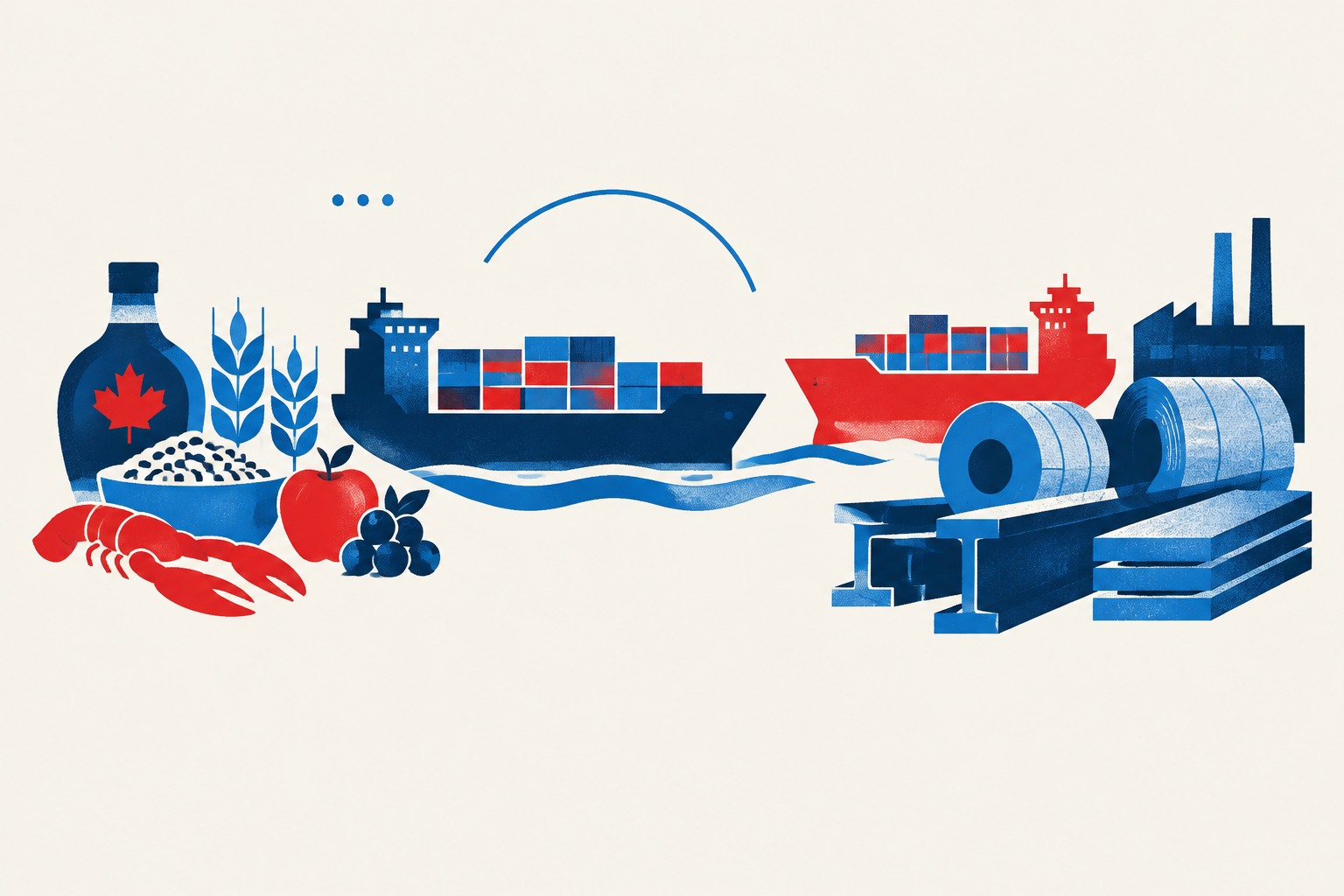
New Chinese tariff relief broadens market access for Canadian food exporters while Ottawa prolongs and expands selected steel and aluminum remissions.
Prime Minister Mark Carney and Chinese President Xi Jinping agreed in Shenzhen on November 17 to extend and broaden a preliminary bilateral trade arrangement, adding tariff relief for roughly C$400 million in Canadian exports. The announcement pairs new Chinese market-access measures for food products with a two-year extension of Canadian remissions on specified Chinese steel and aluminum goods. [1]
The additional Chinese relief covers about C$116 million in frozen pork-cut exports and C$285 million in fish and seafood exports. Products identified by the federal government include certain frozen cold-water shrimp and prawns, including Pacific spot prawn; certain molluscs, including geoduck; sea cucumber; and Greenland halibut. The arrangement is intended to improve access to China for Canadian farmers and seafood harvesters. [1]
These concessions build on a previously announced two-year extension of tariff relief for Canadian canola meal, peas, lobster and crab. The government says that, under the broader Canada-China strategic partnership launched in January, more than 90% of trade previously affected by tariff action—nearly C$7.5 billion in Canadian exports—has regained market access. Those figures provide context for the new relief but do not establish how much of the newly covered trade will be shipped or sold. [1]
Canada’s reciprocal action extends existing remission measures for certain Chinese steel and aluminum products that had been due to expire at the end of 2026. Ottawa will also add 32 steel and aluminum tariff items to the remission coverage where it says Canadian supply is insufficient or unavailable. For Canadian importers and downstream users of those specified products, the measure maintains tariff relief for a further two years and widens the list of eligible inputs. [1]
The agreement also includes non-tariff commercial initiatives: a planned Canadian trade mission to China in 2027, a Canada-China Year of e-Commerce intended to support small and medium-sized enterprises, and a proposed CEO roundtable. The leaders discussed cooperation involving oil and gas, renewable energy and nuclear industries, but the release does not announce a specific energy trade concession. [1]
China accounted for C$35.1 billion in Canadian merchandise exports in 2025, while two-way merchandise trade reached C$125.6 billion, according to the federal release. The latest arrangement therefore creates a targeted diversification opening for pork and seafood exporters and eases access to certain metal inputs, rather than changing the Canada-U.S. tariff measures that remain the dashboard’s core exposure. [1]
This is a meaningful but targeted diversification development: approximately C$400 million in Canadian pork and seafood exports receive additional Chinese tariff relief, while Canadian firms using specified Chinese steel and aluminum products gain extended and expanded remissions. Its significance is moderated because the action is limited to named product categories and does not alter the much larger Canada-U.S. tariff pressures affecting the dashboard’s principal sector outlooks. [1]