Canada Trade Dispute Adds Affordability Pressure to U.S. Senate Campaigns
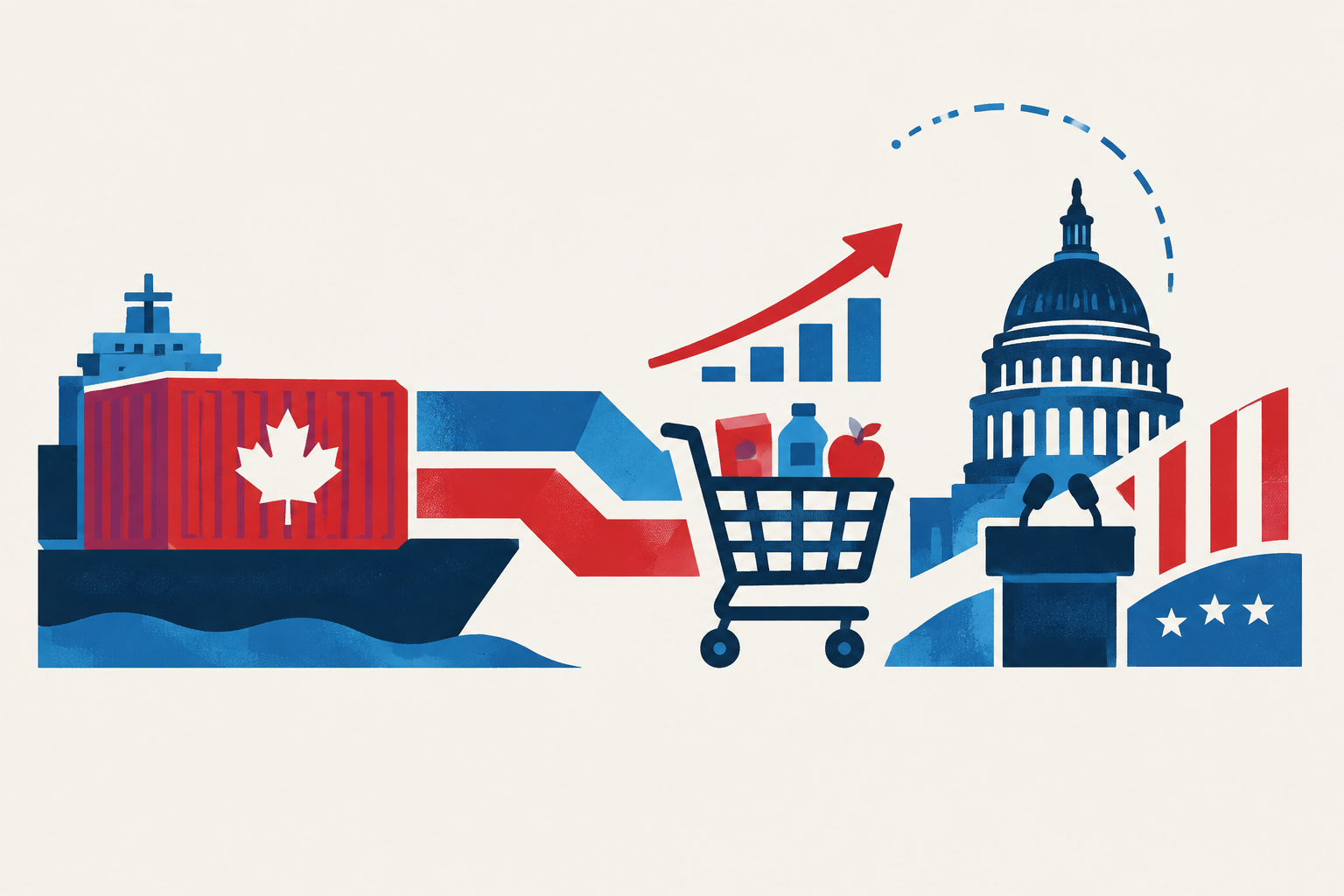
New polling and analyst assessments suggest the Canada trade conflict is sharpening affordability concerns in closely contested U.S. Senate states.
A Sept. 25 Los Angeles Times analysis says the escalating U.S.-Canada trade conflict could add a political cost for Republicans in Senate contests less than six weeks before the U.S. midterm election. Analysts cited by the newspaper said the dispute may reinforce voter concerns about prices and the broader economy, even if its direct consumer-price effect is not expected to be dramatic. [1]
The exposure is politically relevant because five of the nine states viewed as most likely to determine Senate control—Alaska, Ohio, Michigan, New Hampshire and Maine—border Canada, while Texas and Iowa also conduct substantial trade with Canada. A University of Michigan public-policy professor said candidates in tight races need flexibility on issues including prices and Canada tariffs as they seek independent and swing voters. [1]
Polling reported by the Los Angeles Times indicates broad independent-voter resistance to additional tariffs on Canadian goods. An Economist/YouGov poll found that 64% of independents opposed higher tariffs on Canadian products, while a late-August Ipsos poll recorded 14% support among independents for additional U.S. tariffs on Canada. In Michigan, 68% of independents disapproved of the tariffs in a Washington Post/Schar School poll conducted this month. [1]
The article identifies automobiles and other manufacturing, dairy, and alcohol and spirits as sectors where tariff costs are likely to be concentrated. The Tax Foundation’s Alex Durante told the newspaper that the measures were unlikely to create a major consumer-price shift, but that public perceptions of tariffs as an added affordability burden could still matter to voters already focused on inflation. Michigan focus-group participants similarly linked reciprocal tariffs to rising prices, with 11 of 13 describing the trade war as bad for the state. [1]
The reporting places those assessments against a recent escalation in which the United States imposed tariffs on roughly US$20 billion of Canadian goods after bilateral talks broke down in late August, followed by Canadian counter-tariffs on roughly US$20 billion of U.S. goods that took effect Sept. 8. The United States then announced import bans on certain Canadian alcohol and dairy products set to begin the following week. The political implications remain assessments from analysts and voters rather than evidence of a realized election effect or a quantified new sector-wide price increase. [1]
This is a modest but relevant cross-border business-impact development: new polling, focus-group views and analyst commentary indicate that the dispute may deepen affordability concerns in competitive U.S. Senate states, with automotive manufacturing, dairy, alcohol and other manufacturing identified as concentrated exposure points. The rating is not higher because the article reports political perceptions and prospective electoral implications, rather than a newly measured trade-flow, production, employment or price outcome. [1]