Canadian ambassador urges tariff removal, citing investment uncertainty
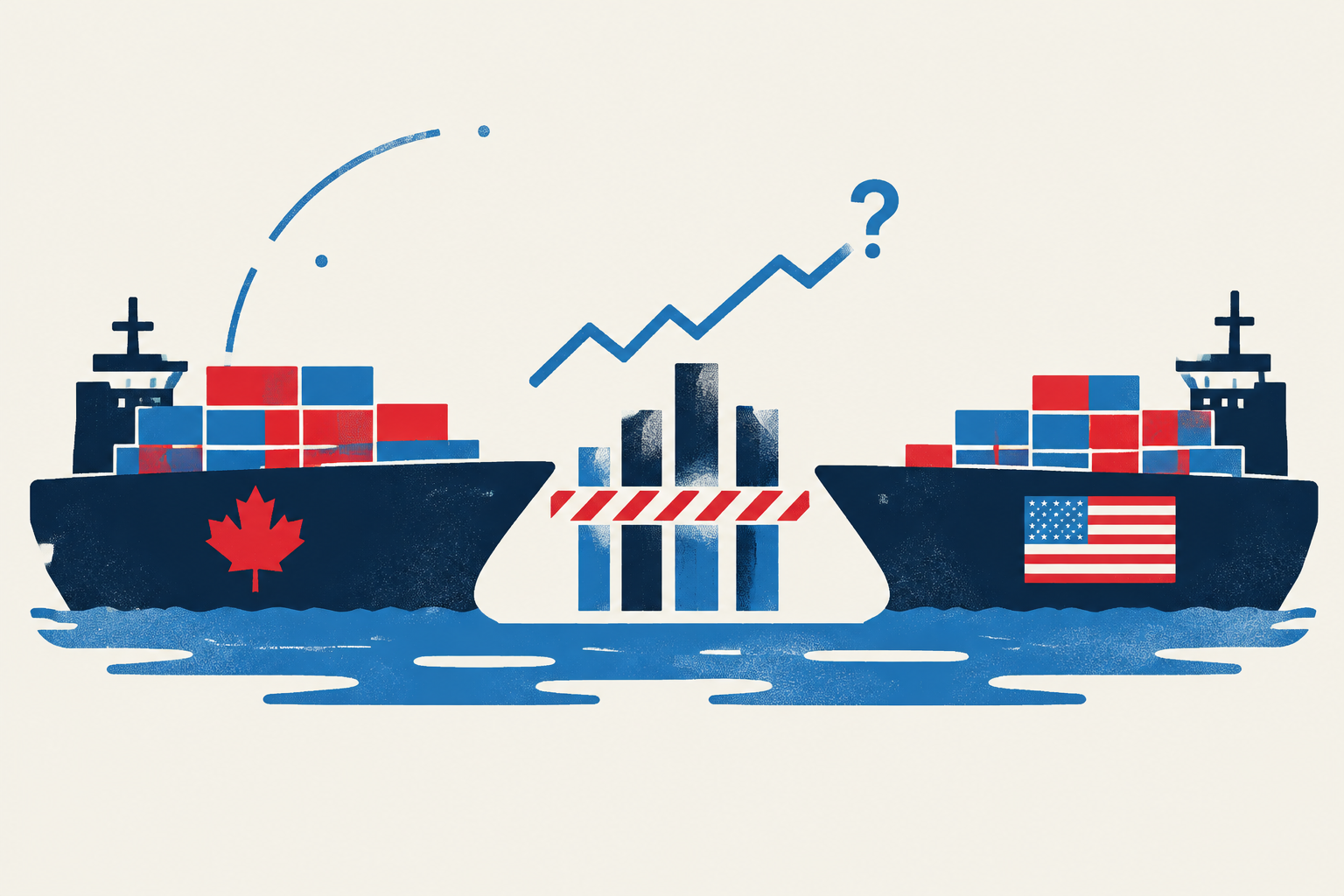
Canada’s ambassador said U.S. tariff uncertainty is raising financing costs and could deter cross-border investment, adding urgency to resumed talks.
Canada’s ambassador to the United States, Mark Wiseman, used a Nov. 11 appearance at the B20 summit in Washington to press for the removal of U.S. tariffs imposed under Sections 232 and 338. He said businesses are less likely to commit to a new plant, vessel capacity or research spending when the trade environment is uncertain, because uncertainty raises their cost of capital. [1]
The remarks add a public investment-focused argument to the Canada-U.S. tariff dispute rather than announce a change in duties or a negotiated outcome. CNBC reported that Ottawa and Washington have resumed negotiations after talks collapsed in August, with discussions centred on reducing tariffs affecting Canadian steel and automobiles. Wiseman said resolving the measures would give companies greater confidence to make long-term decisions. [1]
The exposure is broadest for industries directly caught in the bilateral dispute, particularly steel and aluminum and automotive supply chains, where tariff treatment can affect sourcing, production location and investment timing. The article says the United States has imposed duties of up to 50% on certain Canadian products and that Canada has responded with measures targeting billions of dollars of U.S. exports. [1]
Wiseman’s intervention comes against a backdrop of elevated tariff costs and concern over consumer-price effects in the United States. U.S. customs duties on Canadian imports rose to $10 billion in 2025 from $400 million in 2024, according to Congressional Research Service data cited by CNBC. The report also cited New York Federal Reserve research finding that nearly 90% of tariff costs were passed to U.S. importers, with some increases reaching consumer prices and further pressure expected in 2027. [1]
The immediate significance is diplomatic rather than operational: the ambassador has publicly framed removal of Sections 232 and 338 tariffs as necessary for investment certainty, while negotiations continue without a reported agreement. The article does not establish actual cancelled projects, changed corporate investment plans, or new tariff terms, so the warning should be treated as an assessment of risk rather than evidence of realized investment losses. [1]
This is a modest negotiation development because Canada’s ambassador publicly called for removal of Sections 232 and 338 tariffs and linked their uncertainty to higher capital costs and weaker appetite for plants, shipping capacity and R&D. Steel, aluminum and automotive businesses are the most directly exposed given the reported focus of resumed talks, but no tariff policy changed and no measured investment loss was reported. [1]