Canadian Protein Makers Stockpile U.S. Whey as Tariffs Disrupt Supply Chains
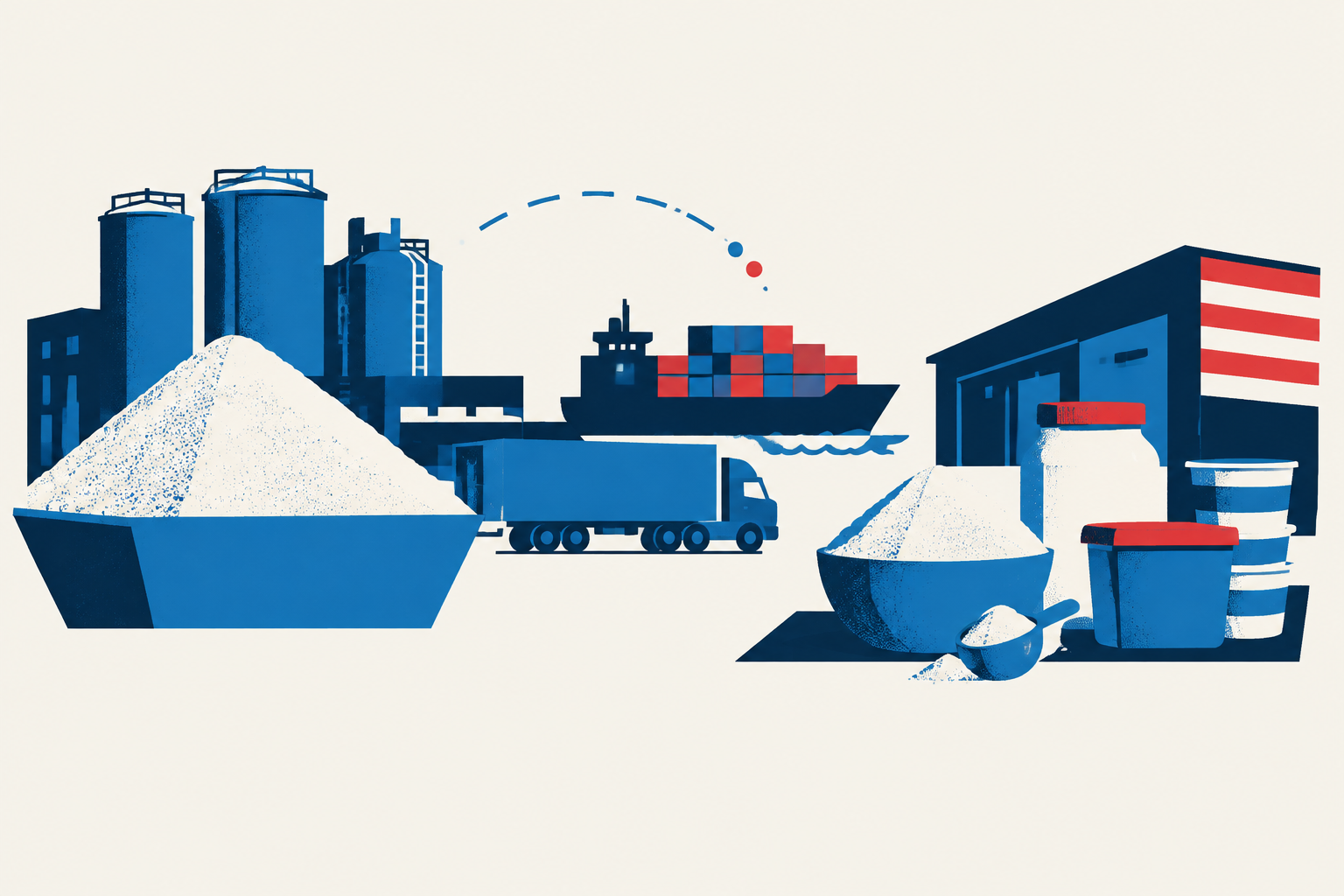
Canadian protein-food producers are financing larger whey inventories and considering costly reformulations, raising the risk of higher consumer prices and supply constraints.
Canadian manufacturers of protein powders and related foods are facing a supply-chain squeeze after Canada imposed a 50% tariff on U.S. whey and the United States moved to bar purchases of certain Canadian whey products. Fit Foods LP, a British Columbia protein-powder producer, says the processed whey it needs is scarcely available domestically because Canada has relatively limited capacity to convert whey into higher-protein forms. [1]
Before Canada’s tariff took effect on September 8, Fit Foods chief executive Jim McMahon said the company accelerated purchases of U.S. whey to build roughly six months of inventory. He said the company borrowed funds to finance the stockpile, including expedited procurement and warehousing costs. The episode illustrates how a tariff can create immediate working-capital and storage pressures even when a manufacturer can temporarily secure supplies. [1]
The disruption extends beyond one producer, according to the Canadian Health Food Association, which represents small and medium-sized businesses in natural, organic and wellness foods. Its president told CNN that members are assessing available substitutes, but replacing whey with ingredients such as pea protein can require a full product reformulation and changes across sourcing and production. Those adjustments could raise costs and change the supply chains on which high-protein products depend. [1]
The bilateral measures arrive while whey markets were already tight. CNN reported that some U.S. whey-protein-concentrate suppliers had sold out for the year by April, while USDA data showed the product reaching a record US$13 per pound in June, up 250% from a year earlier. Although wholesale prices later eased to roughly US$10 to US$11 per pound, an agricultural-data executive said retail whey products could see price inflation through year-end and into early next year. [1]
For Canadian food manufacturers, stockpiling may defer rather than resolve the exposure: inventory can cushion short-term shortages, but it adds financing costs and does not create a domestic substitute for specialized U.S. whey inputs. Reformulation is an alternative, yet it is operationally difficult and could translate tariff and supply disruptions into higher prices for protein powders, snacks and ready-to-eat products. The reported effects are business responses to existing trade restrictions rather than evidence that the broader tariff dispute has been resolved or expanded further. [1]
This is a material but targeted agriculture and food-manufacturing impact: Canadian protein-product makers reliant on U.S. processed whey are incurring inventory financing and storage costs while evaluating expensive reformulations. The rating is not higher because the evidence describes exposure concentrated in whey-dependent products and firms, rather than verified disruption across Canada’s wider agricultural sector. [1]