Canadian steel output and U.S. shipments weaken as producers restructure
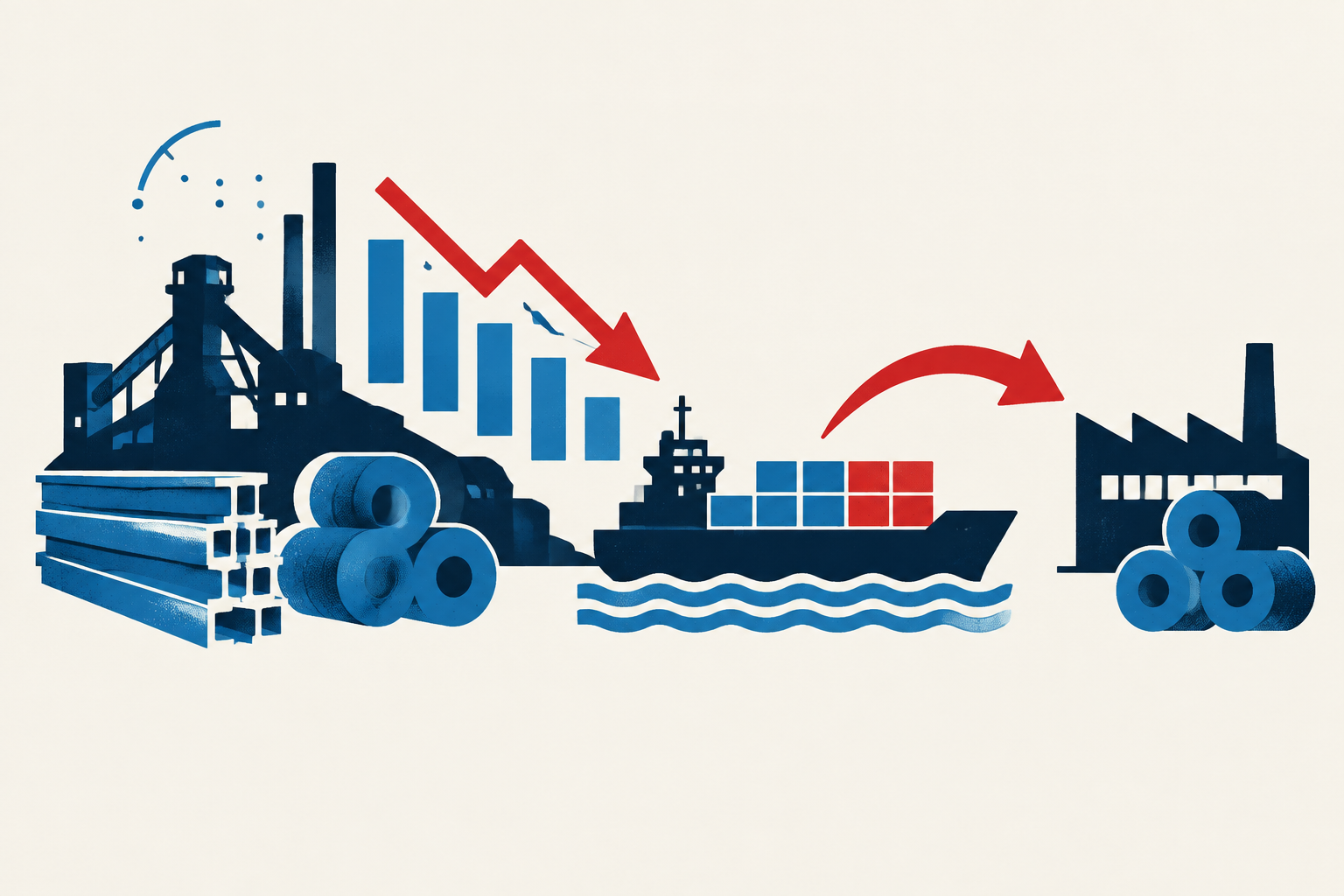
New data point to a steep contraction in Canadian steel output and U.S.-bound exports, accelerating costly producer shifts toward domestic markets.
Canadian steel production was reported to have fallen 15% year over year in May, with output down 14% on a year-to-date basis, according to Earth-i’s Savant Global Monitoring Index cited by Il Sole 24 Ore. The report links the contraction principally to reduced U.S. demand after Section 232 tariffs reached 50% on steel imports, alongside broader tariff coverage of steel products. [1]
U.S. International Trade Administration data cited in the report show Canadian steel exports to the United States fell 31% during 2025 and were down a cumulative 55% in the first three months of 2026. The figures describe a substantial loss of access to the sector’s largest export market, rather than a new tariff action, and help explain why producers are prioritizing Canadian sales and protected local end markets. [1]
Algoma Steel illustrates the adjustment pressure. The company traditionally sells roughly half of its primary commercial products into the U.S. market, according to the report, and has brought forward blast-furnace closures to January while investing about C$1 billion in electric-arc-furnace facilities. The transition is reducing capacity in the near term; the report says Algoma is expected to post negative EBITDA in 2026 after reporting approximately C$450 million in negative adjusted EBITDA for its financial year ended March 31. [1]
The effects are uneven across the industry. ArcelorMittal’s Montreal operation, which supplies long products into eastern Canadian construction and infrastructure markets, has been comparatively insulated but closed a rolling mill in June to consolidate production; its finance chief said U.S. tariffs were costing the group US$150 million per quarter. Dofasco’s long-term supply agreements with Ontario automotive customers supported a reported 3% year-over-year increase, while Cleveland-Cliffs’ Stelco Lake Erie operation has shifted toward domestic supply but surrendered higher-margin U.S. sales. [1]
The report also places the production losses amid a wider bilateral steel dispute. Canada imposed counter-tariffs on September 8 on more than 300 U.S.-derived steel and aluminum products, raising the tariff rate to 50%, while additional restrictions are either in place or anticipated from 2027. These measures heighten uncertainty for a sector already altering plant configurations, sales channels and cost structures in response to lost U.S. business. [1]
Significance is high because the newly reported data indicate material realized harm in steel: production fell 15% year over year in May and U.S.-bound exports were reported sharply lower, while a major producer is closing blast furnaces early and undertaking a costly capacity conversion. The rating is not higher because the evidence is drawn from one report and shows uneven outcomes, with some domestic-market-oriented operations retaining relative resilience. [1]