Canadian tariff impacts deepen as steel and lumber exports fall, prices rise
Newly reported data point to weaker Canadian steel and lumber trade, declining industrial activity and higher prices for tariff-affected household goods.
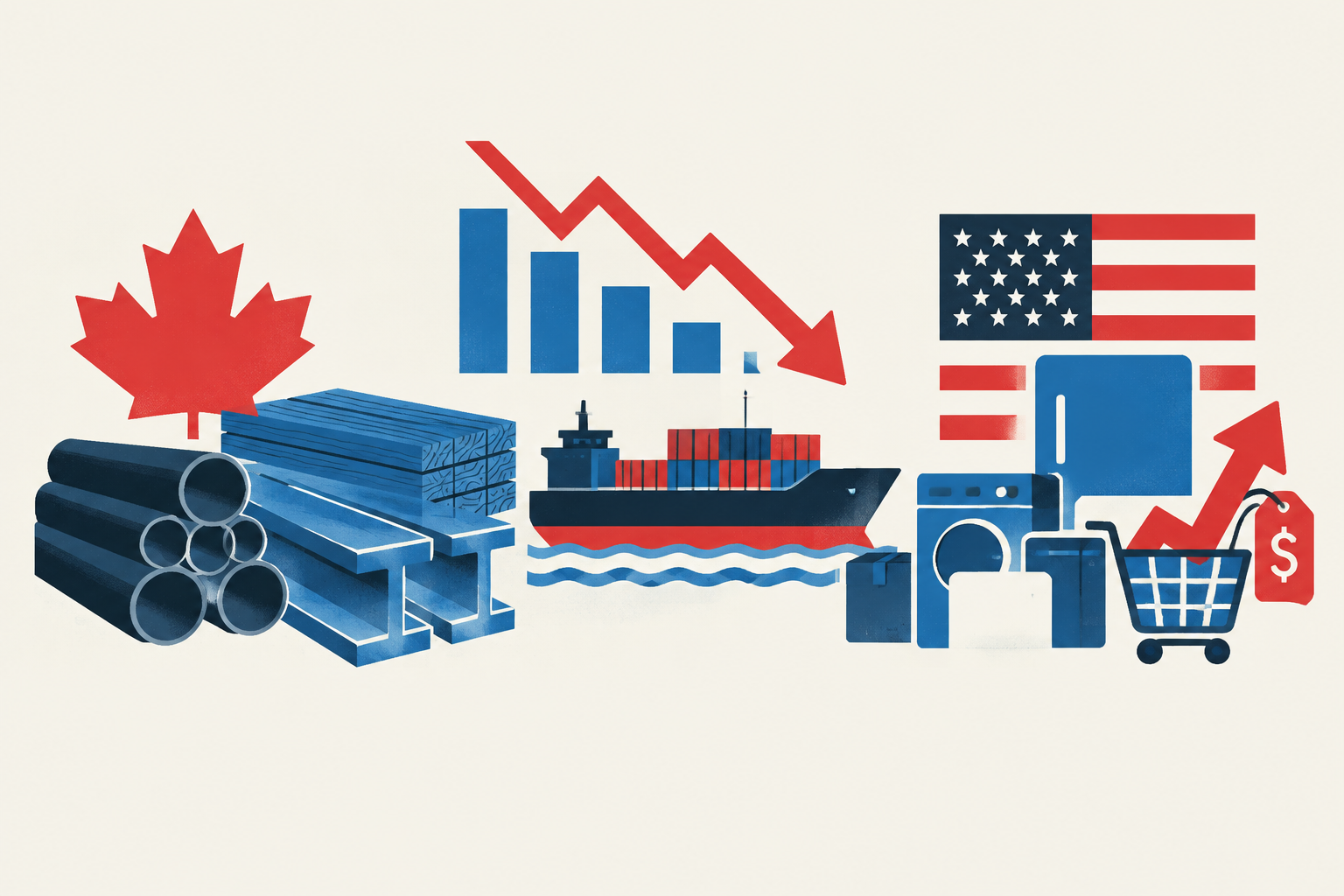
Newly reported Canadian data indicate that the bilateral tariff dispute is producing measurable pressure across trade-exposed industries and household spending. The report cites Bank of Canada figures showing Canadian steel exports down by roughly half since the tariffs took effect, while lumber exports earlier in 2026 were about 20% below their 2024 level. It also says output and employment have declined in some of the most exposed sectors. [1]
The export losses underscore the vulnerability of Canadian producers that sell heavily into the United States, particularly in steel, aluminum, lumber and automotive supply chains. The reported figures do not isolate the effect of individual tariff programs or individual companies, but they add fresh evidence of reduced cross-border shipments and softer activity among affected industries. [1]
The cost effects are also reaching consumers. Canadian government data cited in the report put overall consumer-price inflation at 3% year over year in August, with grocery prices up 2.8% and transportation costs up 7.5%. The Bank of Canada found that goods affected by tariffs—including groceries, household products, furniture, electronics and appliances—rose roughly 6% more than comparable unaffected products. [1]
The article attributes part of that household pressure to Canadian retaliatory tariffs on U.S. products, alongside the effects of U.S. measures on Canadian exporters. It places the current dispute in the context of longstanding disagreements over dairy market access and softwood lumber, while noting that more than 99% of bilateral trade had been duty-free before 2025, according to a Cato Institute economist quoted in the report. [1]
For businesses, the new figures point to a two-sided exposure: exporters face lower U.S.-bound sales, while importers, retailers and households contend with higher prices on affected goods. The report does not establish that every increase in consumer costs or industrial decline is tariff-driven, and it also cites higher energy prices as a separate source of pressure on transport and distribution costs. [1]
This is a significant economic-data update because it supplies newly reported measurements of trade and consumer effects: steel exports fell by roughly half, lumber exports were about 20% below 2024 levels earlier in 2026, affected industries saw production and employment declines, and tariff-affected goods rose about 6% more than comparable products. Exposure is broad across steel, forestry, automotive-linked manufacturing and consumers, but the rating is not higher because the report does not isolate effects by specific tariff measure, firm or sector, and it identifies other cost pressures such as energy prices. [1]