Canadian wine sales rise at home as U.S. restrictions threaten export market
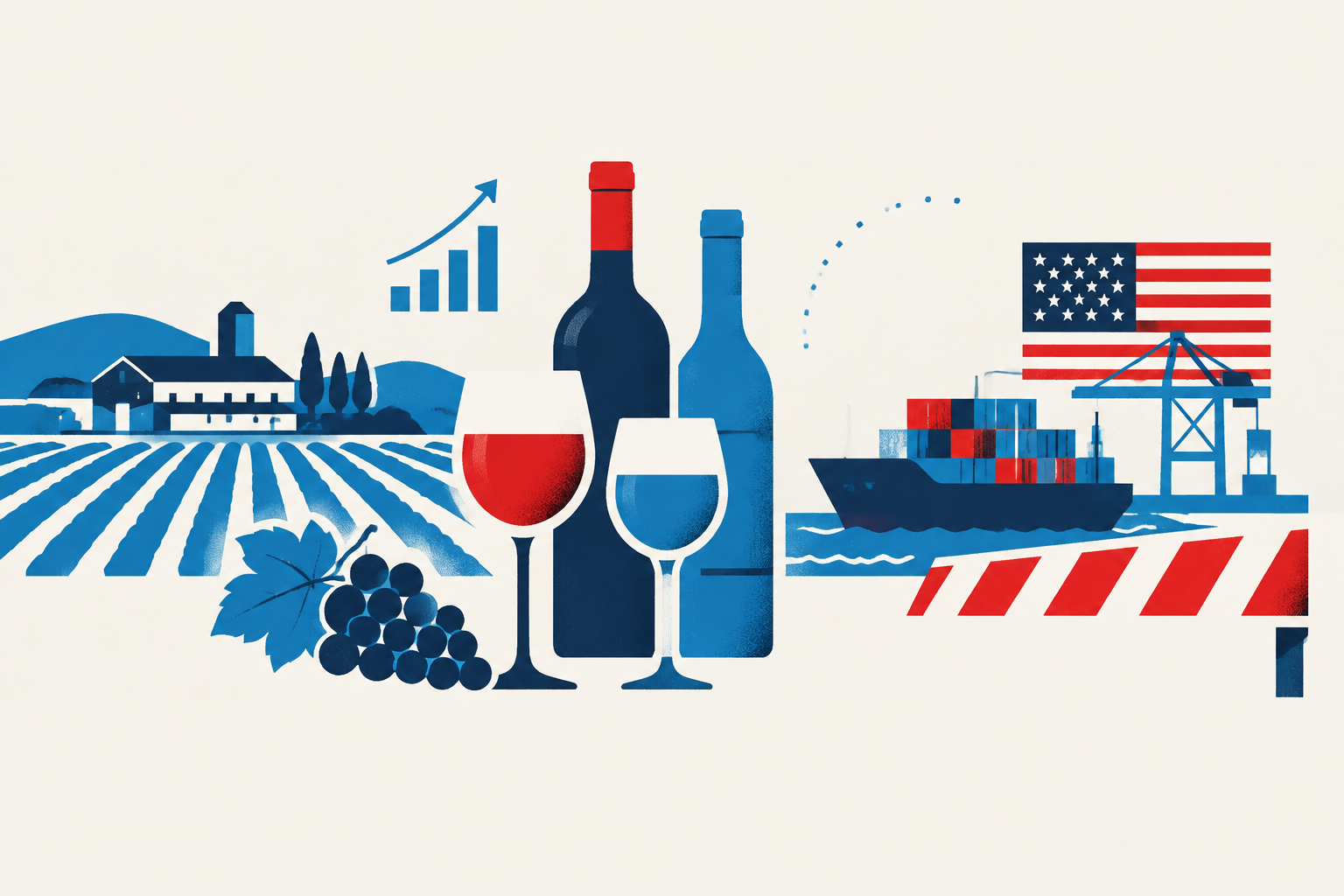
Canadian wineries report stronger domestic demand, but looming U.S. restrictions threaten Ontario-led exports and icewine sales.
Wine Growers Canada says Canadian wineries have recorded a 45 per cent increase in domestic wine sales since tariffs took effect, offering a partial domestic-market offset as U.S. trade restrictions disrupt exports. The industry group’s president, Dan Paszkowski, said the shift shows consumers will choose Canadian products when they are visible and available, while domestic producers still hold only about 30 per cent of Canada’s wine market. [1]
Export exposure is concentrated in Ontario: Paszkowski said the province produces 90 per cent of Canadian wine shipped to the United States. He characterized the 50 per cent tariff as a serious obstacle to U.S. sales, while executive orders signed on September 8 are scheduled to bar imports of Canadian alcoholic beverages from September 29. The measures could therefore hit Ontario wineries especially hard, alongside producers in the Okanagan Valley and eastern Quebec. [1]
Icewine faces a particular risk because it accounts for 60 per cent of Canadian wine exports to the United States, according to Wine Growers Canada. Paszkowski illustrated the pricing pressure by saying a US$40 bottle would incur a US$20 tariff before importer, distributor and retailer margins, raising its final consumer price. He also said the planned import prohibition would prevent U.S. winery visitors from taking Canadian bottles home, potentially affecting tourism-linked sales in Ontario wine regions. [1]
The domestic-sales gain does not remove the risk of losing U.S. commercial relationships. Paszkowski said that even a temporary interruption could take years to reverse because wineries would have to rebuild consumer recognition and importer, distributor and retailer networks. His organization is seeking an extension of the Wine Sector Support Program, which is due to expire in 2027, as well as federal excise-tax changes, fewer provincial trade barriers and more shelf space for Canadian wine. [1]
Ontario retail data cited in the report point in the same direction as the industry group’s domestic-sales assessment: the LCBO said Ontario wine sales rose 44 per cent between April 1, 2025 and June 2026, and announced an expanded “We’re all in on Ontario” marketing campaign. The reported sales momentum may help wineries redirect some volume locally, but it is not equivalent to replacing the U.S. market for export-oriented products such as icewine. [1]
This is a meaningful agriculture-sector impact report because Wine Growers Canada identifies a 45 per cent rise in domestic wine sales while describing U.S. restrictions as severely disruptive to exports, with Ontario and icewine particularly exposed. The significance is limited because the reported domestic-sales gain may cushion some losses and the packet does not establish realized sector-wide export, employment or price effects. [1]