China Extends Tariff Relief for Canadian Canola, Lobster and Crab Through 2028
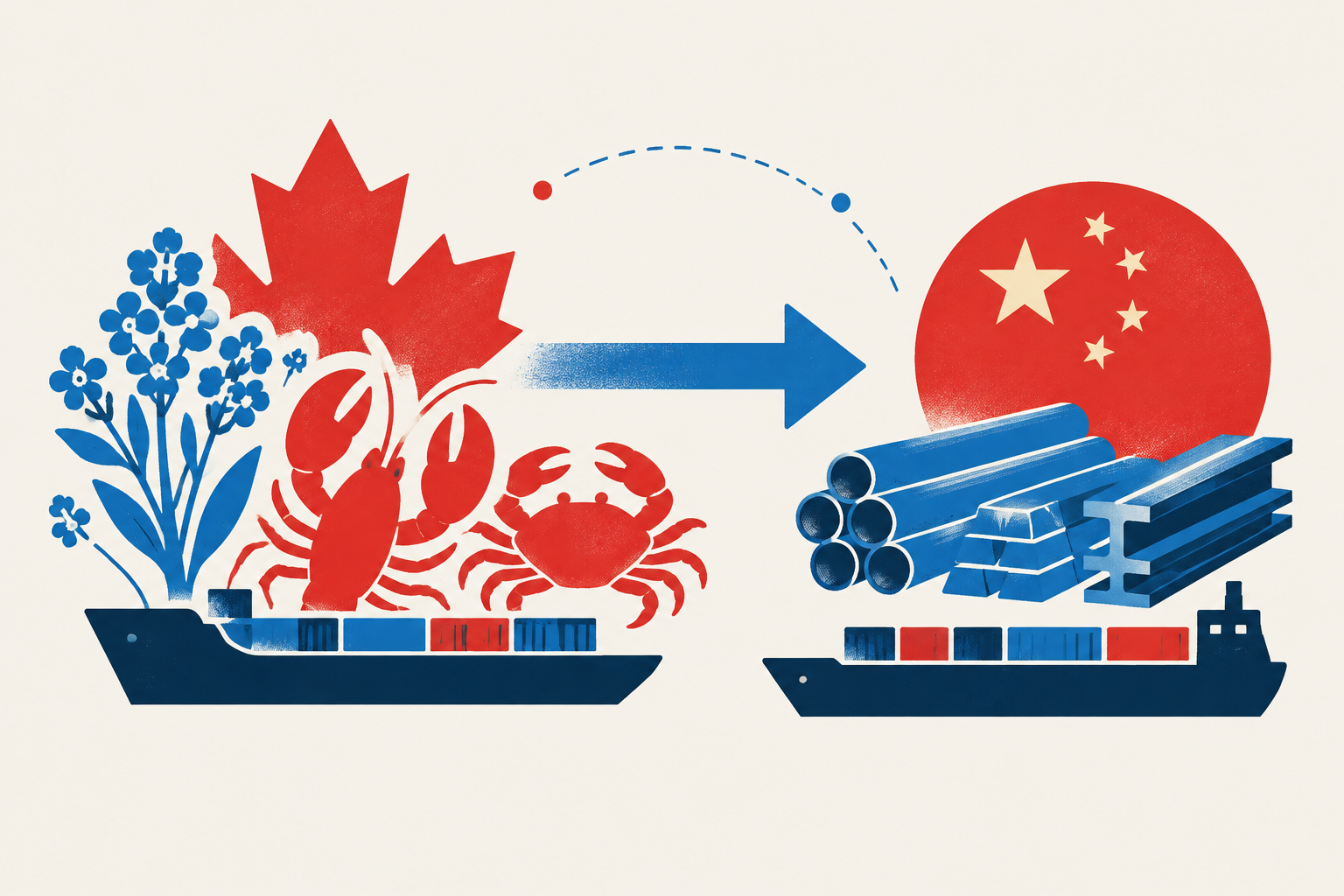
China’s two-year extension preserves duty-free access for selected Canadian farm and seafood exports, while Canada prolongs reciprocal access for specified Chinese metals.
Canada announced on Nov. 4 that China will continue tariff-free treatment for selected Canadian agricultural and seafood exports for a further two years, carrying the relief through the end of 2028. The extension covers canola meal, peas, lobster and crab, removing an approaching end-2026 deadline for the arrangement. [1]
The relief traces to an agreement reached during Prime Minister Mark Carney’s January visit to Beijing. Under that deal, China paused 100 per cent tariffs on Canadian canola meal and peas and 25 per cent tariffs on lobster and crab beginning in March, but the pause had initially been scheduled to last only until year-end 2026. The new extension therefore does not establish a new product list or tariff rate; it extends the duration of the existing pause. [1]
For agricultural exporters, the announcement provides a longer planning window in a major overseas market. CBC reports that Canada is the world’s leading canola exporter and that China is its second-largest canola market after the United States. International Trade Minister Maninder Sidhu said the extension would give farmers, producers and harvesters more predictable Chinese-market access, while the government linked the arrangement to its objective of increasing exports to China by 50 per cent by 2030. [1]
The action also applies to Canadian seafood exporters that had faced China’s 25 per cent tariffs on lobster and crab. Fisheries Minister Joanne Thompson characterized the additional two years of relief as support and greater certainty for the fishing industry. The arrangement is consequential for the affected exporters because it avoids the scheduled return of tariffs, but the source does not quantify expected export volumes, revenue gains or domestic price effects. [1]
Canada is extending a related concession through the end of 2028. The federal government will maintain improved market access for certain Chinese steel and aluminum products that are in short supply in Canada and cannot be produced domestically, according to CBC. That access originated in the January understanding, alongside Canada’s agreement to permit up to 49,000 Chinese electric vehicles annually at a 6.1 per cent tariff. [1]
The announcement is a targeted Canada-China market-access extension rather than a change to the current Canada-U.S. tariff measures tracked by this dashboard. It may support diversification for the covered agriculture and seafood exporters and preserve supply options for Canadian buyers of the specified Chinese metals, but the available evidence does not establish a material change in the broader U.S.-related conditions or forecast ratings for agriculture or steel and aluminum. [1]
Significance is moderate because the Nov. 4 action removes a near-term expiry risk for covered Canadian canola meal, pea, lobster and crab exports and extends Canada’s reciprocal access for certain Chinese steel and aluminum products through 2028. Exposure is limited to specified product categories, and the source provides no quantified evidence of broader sector-wide volume, price or employment effects, keeping the rating below a major market-wide trade shift. [1]