Democratic Congress Could Test Trump’s Canada Tariffs, but Immediate Relief Is Uncertain
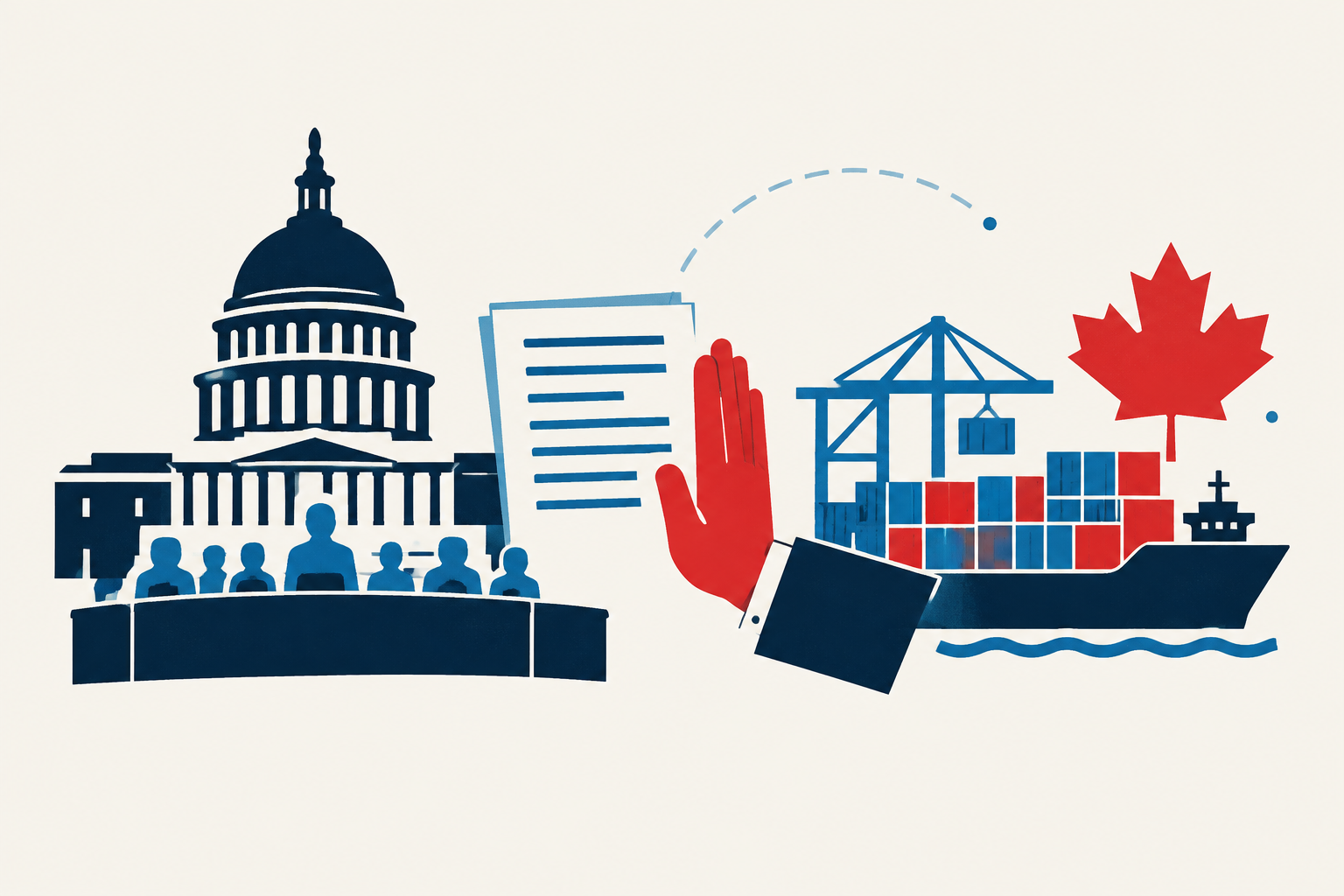
Democratic control of Congress may create a new avenue to challenge Canada tariffs, though presidential veto power limits near-term business relief.
Democrats are set to take control of both chambers of the U.S. Congress in January following the midterm elections, creating a potential new congressional check on President Donald Trump’s tariff policy toward Canada. BNN Bloomberg reports that lawmakers could pursue legislation intended to restrain the tariffs, which featured in campaigning in border-state battlegrounds including Michigan and Maine. That prospect is not itself a change in trade policy: no bill has been introduced or tariff action reversed. [1]
The practical constraint for Canadian exporters and importers is the president’s veto authority. Any congressional measure limiting the tariffs could be blocked by Trump, while an override would require two-thirds support in both the House and Senate. Trump indicated after the election that he was open to working with Democrats but also stressed his veto power. The result is a potentially altered political environment for tariff negotiations rather than a confirmed path to lower border costs. [1]
The assessment comes after a series of Canada-U.S. trade escalations described by the report. Following the collapse of talks in August, the United States imposed 50 per cent tariffs on an array of Canadian goods and prohibited imports of certain products; Canada responded with retaliatory tariffs on specified U.S. imports. The report says further U.S. import bans subsequently covered products including motorcycles and some liquor and whey items, while some Canadian tariffs were lifted last month and new tariffs were added to dozens of products. [1]
For businesses in exposed supply chains, the election outcome may increase attention on congressional oversight and provide another political channel for pursuing a trade agreement. It does not remove the existing exposure created by duties and import restrictions, and the incoming Congress will not take office until January. The Canadian government’s broader trade-diversification push is also expected to continue: Trade Minister Dominic LeBlanc said recent discussions with the Trump administration had been productive, while Prime Minister Mark Carney said official trade discussions had taken place in recent days. [1]
The near-term commercial significance is therefore limited by uncertainty. A U.S. food importer has challenged the use of Section 338 of the Tariff Act of 1930 for the heavy duties and embargoes, but the report does not establish an outcome from that case. Canadian and U.S. business advocates argue that reducing tariffs would lower business costs and consumer prices, while former ambassador Bruce Heyman called for a formal reconciliation process once the new Congress takes office. Those are policy positions and prospective effects, not evidence that costs or trade barriers have already changed. [1]
The development is a prospective political shift rather than a tariff rollback: Democratic control of Congress could create legislative pressure on U.S. tariffs and support renewed Canada-U.S. engagement, but presidential veto power and the January transition mean immediate effects on Canadian exporters remain uncertain. Businesses exposed to the existing duties and import restrictions may gain a new advocacy channel, yet the report confirms no enacted relief. [1]