Latest U.S. lumber review leaves Canadian softwood exports facing nearly 35% in combined import taxes
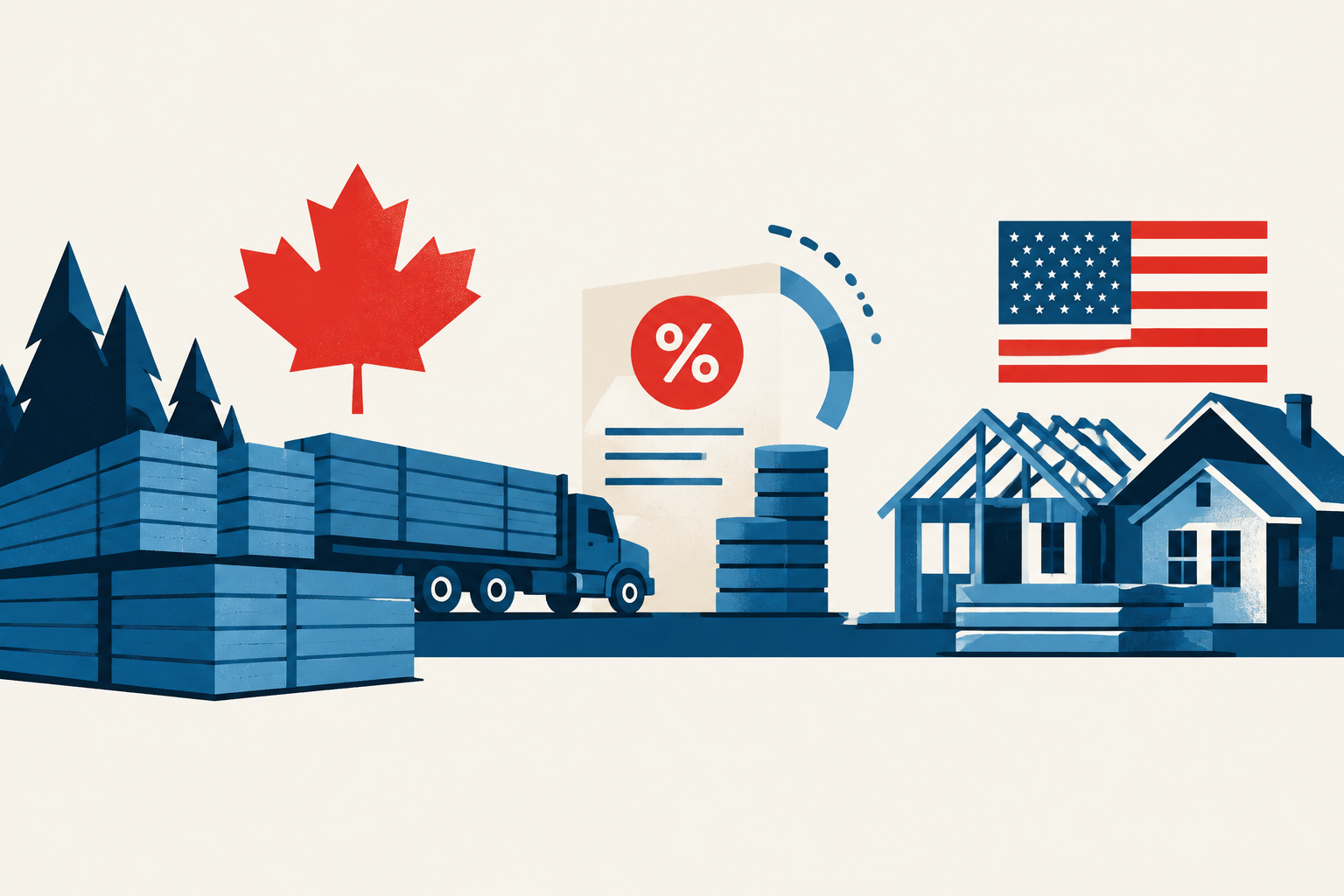
A revised U.S. duty stack lowers the combined charge on Canadian softwood lumber but keeps a substantial cost burden on producers and cross-border housing supply.
Canadian softwood lumber shipments to the United States face combined import taxes of about 34.75% following the latest U.S. Commerce Department review, according to the BC Lumber Trade Council. The total consists of a 14.11% countervailing duty, a 10.64% anti-dumping duty and an additional 10% tariff imposed on national-security grounds. [1]
The revised burden is lower than the roughly 45% combined rate announced in August of the previous year, the council said. That reduction offers some relief relative to the prior duty stack, but the organization said the remaining duties and tariff continue to impose a significant cost on Canadian lumber producers. [1]
The development is particularly relevant to British Columbia producers and forest-dependent communities, where the prolonged Canada-U.S. softwood lumber dispute continues to weigh on mill-linked businesses. The council characterized the measures as unjustified and punitive, while noting that the dispute has persisted for nearly a decade. [1]
The effects are not limited to Canadian exporters. The council said U.S. families bear costs through higher homebuilding expenses, while U.S. firms supplying equipment and services to Canadian mills are also affected by the trade barriers. Those outcomes remain the council's assessment, rather than a quantified estimate of current market-wide price effects. [1]
For the dashboard, the latest review changes the reported combined lumber-tax level from the earlier approximately 45% figure to nearly 35%. The new rate still indicates material trade friction, but the source does not establish a fresh industry-wide production, employment or pricing outcome that would warrant revising the current forestry outlook. [1]
Significance is moderate because the latest Commerce Department review resets the combined U.S. import-tax burden on Canadian softwood lumber to about 34.75%, directly affecting exporters and forest-dependent communities. The rate is nonetheless below the approximately 45% level previously announced, and the source provides no quantified new market-wide effect, limiting the case for a higher rating. [1]