Montana Farm Bureau Flags Farm Equipment Exposure Ahead of Canadian Counter-Tariffs
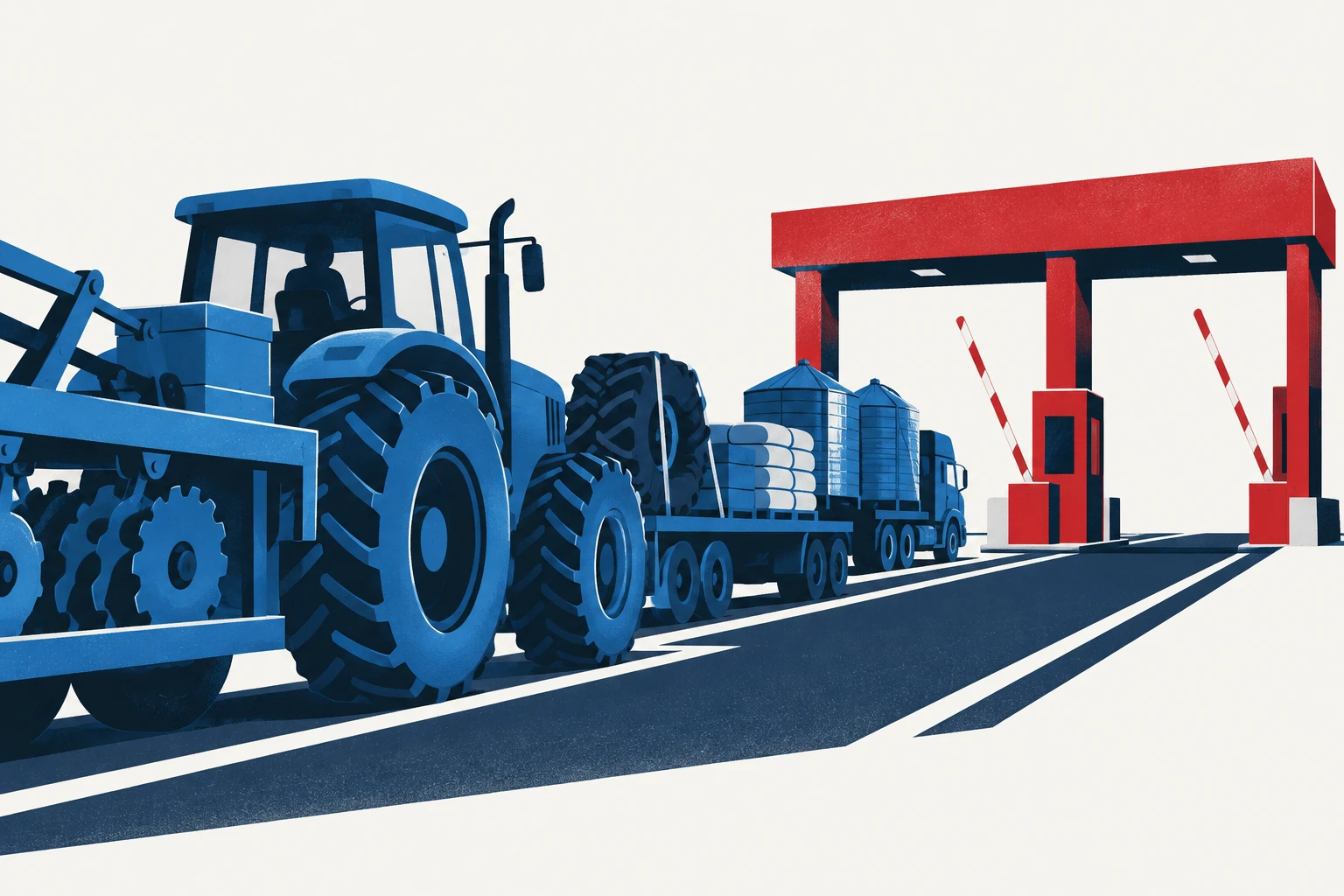
Montana producers face higher costs for Canadian machinery as pending counter-tariffs threaten trade with the state’s largest foreign market.
Montana Farm Bureau Federation says Canadian counter-tariffs due to take effect Tuesday will apply a 15% duty to farm equipment, including harvesting machinery. The group said the added import cost could further strain farmers and ranchers that buy equipment across the border, following the collapse of U.S.-Canada trade talks and additional U.S. tariff action. [1]
Canada was Montana’s largest international goods destination in 2025, receiving US$958 million in state exports, equal to 45% of Montana’s total goods exports, according to U.S. Trade Representative figures cited by the federation. That trade concentration leaves Montana businesses comparatively exposed to disruptions in cross-border commerce, although the report does not quantify the share of those exports directly subject to the pending Canadian duties. [1]
The federation identified used Canadian machinery as a practical exposure for some producers. Its president, Cyndi Johnson, a wheat farmer, said her operation regularly purchases used equipment from Canada and pointed to Canadian purchases of lower-grade Montana wheat for animal feed as an example of reciprocal agricultural trade that could be disturbed. [1]
The warning is tied to the unresolved CUSMA/USMCA review. Montana Farm Bureau said the agreement’s North American market-access rules have generally enabled most U.S. agricultural products to enter Canada and Mexico without tariffs or quotas, and argued that the governments should restore negotiations rather than fundamentally remake the pact. The source describes July 1, 2026 as the first formal six-year review since the agreement entered force in 2020. [1]
American Farm Bureau Federation also urged the two governments to resume negotiations, specifically citing the failure to resolve the Section 338 tariff dispute. It said further escalation and Canadian retaliation would damage U.S. agriculture, where export markets support farm income and activity beyond the farm gate. [2]
For Montana agricultural businesses, the immediate consequence is prospective machinery-cost pressure alongside renewed uncertainty for sales into Canada. This is an industry-group assessment ahead of implementation, not evidence that tariffs have already reduced Montana shipments, changed farmgate prices, or altered equipment purchasing patterns. [1][2]
The report provides a concrete 15% duty exposure for farm machinery and shows Montana’s substantial dependence on Canada as an export market. Its significance is limited to a regional warning before implementation: it does not establish realized losses, price effects, or a new government measure beyond the already announced Canadian retaliation. [1][2]