New Brunswick tightens public purchasing rules as Ontario broadens tariff aid
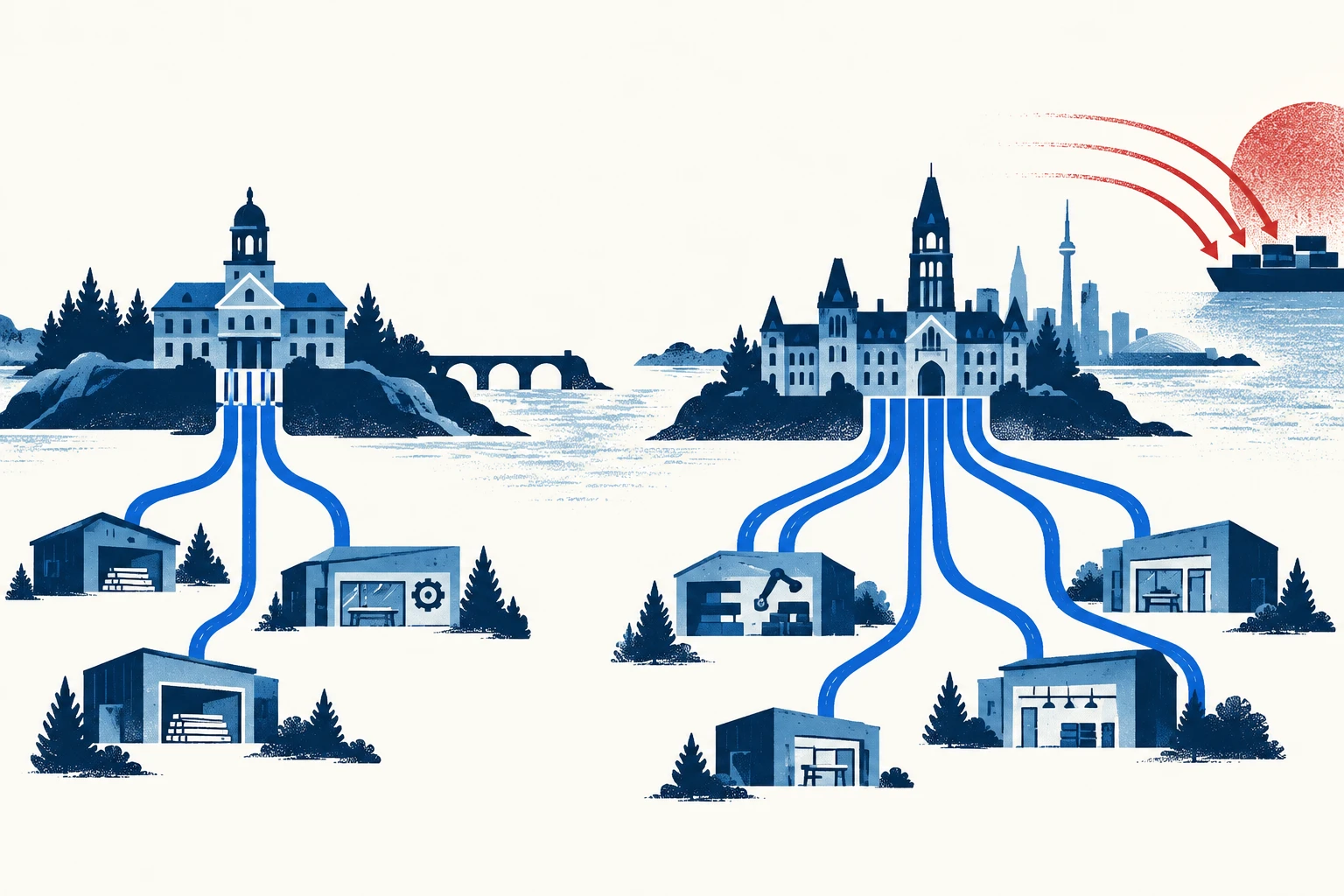
New Brunswick will restrict major U.S. public contracts while Ontario expands tariff-program eligibility, increasing pressure for firms to localize procurement and finance adjustments.
Canadian governments are adding procurement and business-support measures as the latest U.S. trade actions approach their effective date. New Brunswick Premier Susan Holt directed the province’s public sector to stop buying U.S. products where Canadian replacements are available, and the province will prohibit purchases of U.S. goods and services in public contracts worth more than C$5 million beginning Oct. 1. [1]
The New Brunswick policy gives suppliers a concrete incentive to demonstrate Canadian sourcing or domestic alternatives when bidding for provincial work. It applies beyond goods alone, covering services in contracts above the C$5-million threshold, while its preference for Canadian products is conditional on substitutes being available. The provincial government is also examining whether it has authority to restrict U.S. access to fishing and hunting licences and mining claims. [1]
Ontario is pairing its political response with broader access to provincial assistance. Premier Doug Ford said companies hit by the new U.S. tariffs and import bans due later in September will be eligible for expanded tariff-support programming. The Protect Ontario Financing Program provides loans for costs including payroll, leases and utilities, while the Ontario Together Trade Fund supplies grants or loans to small and medium-sized businesses seeking to reduce reliance on U.S. supply chains. [1]
These measures arrive amid a further set of U.S. executive orders scheduled to take effect Sept. 29. The orders will bar imports of specified Canadian products, including motorcycles, some dairy goods and alcoholic beverages; remove certain products, including toilet paper and cement, from the tariff list; and add products, including additional dairy items, to the list facing tariffs. The report says the orders followed tariffs imposed in August and Canadian retaliatory tariffs that took effect Tuesday. [1]
At the federal level, Prime Minister Mark Carney said Canada remains ready to reach a fair agreement with the United States and that he had spoken with President Donald Trump in recent days. Carney said an agreement could not compromise Canadian sovereignty or Canada’s ability to protect and promote official languages and culture. The combination of provincial procurement shifts, Ontario financing support and continued federal openness to talks leaves businesses facing both a stronger domestic-sourcing signal and an unresolved bilateral policy environment. [1]
The development is significant because New Brunswick has set a dated procurement restriction affecting U.S. goods and services in public contracts above C$5 million, while Ontario is extending financing and supply-chain adjustment support to businesses newly exposed to U.S. measures. Exposure is broad rather than confined to a single dashboard industry, and the source does not quantify contract volumes, company-level effects or sector-specific price impacts; no industry forecast change is therefore supported. [1]