Newfoundland and Labrador firms adjust as tariffs and alcohol ban disrupt customer plans
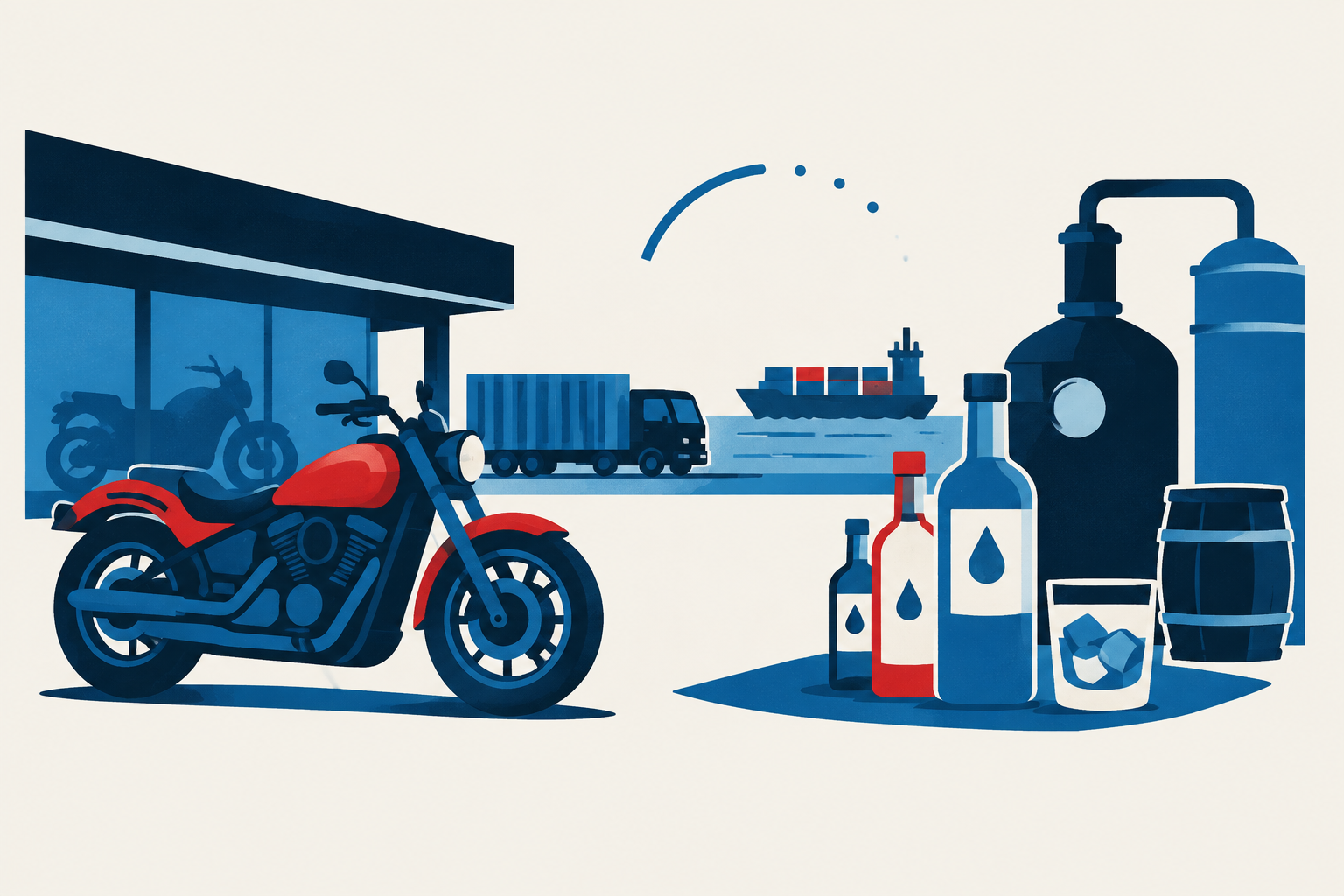
A motorcycle dealer and vodka producer are holding prices where possible while redirecting sales efforts amid cross-border trade uncertainty.
Newfoundland and Labrador businesses are adjusting to a new round of Canada-U.S. trade disruption by trying to preserve customer prices, manage inventory and find replacement demand. CBC reported that failed bilateral trade talks last month were followed by 50 per cent U.S. tariffs on certain Canadian exports and Canada’s dollar-for-dollar counter-tariffs on U.S. goods, including large gas-powered motorcycles. [1]
Rugged Rock Harley-Davidson in Mount Pearl, the province’s sole dealership for the brand, said the counter-tariff particularly affects Harley-Davidson models with engines above 800cc. Its current stock was imported before the tariff and remains priced as originally planned, according to general manager Sean LeFresne. The dealership expects no further motorcycle deliveries this year and is relying on its available inventory to limit immediate exposure. [1]
The dealer’s position illustrates the gap between current consumer pricing and prospective cost pressure. LeFresne said a 50 per cent tariff applied to its products would be difficult to pass on to buyers, while absorbing the cost would also be damaging for the business. Rather than announcing a price increase, the dealership said it and the manufacturer would seek to support customers, leaving the eventual allocation of tariff costs uncertain. [1]
Iceberg Vodka faces a different disruption after U.S. President Donald Trump banned imports of Canadian alcohol and some other goods in response to Canada’s retaliatory action, CBC reported. The Newfoundland producer is distributed in 12 U.S. states, but its president, Steve Ciccolini, said the ban has cut off a significant market and requires continual operational adjustments. [1]
The company plans to keep production steady by pursuing other international outlets, increasing domestic sales and working with liquor-board partners across Canada. Ciccolini said Iceberg Vodka does not intend to raise its product prices, instead looking to Canadian customers and new markets to offset lost U.S. revenue. These are company-level mitigation efforts rather than evidence that the underlying market-access disruption has been resolved. [1]
This is a localized but tangible business-response development: a Newfoundland motorcycle dealer is managing exposure to Canadian counter-tariffs, while a spirits producer is seeking replacement sales after a U.S. alcohol-import ban. The immediate exposure is concentrated in dealership inventory and one producer’s U.S. distribution rather than demonstrating a broad, independently corroborated shift in sector-wide conditions, which supports a moderate significance assessment rather than a higher rating. [1]