Plastic manufacturers seek Canadian counter-tariffs as U.S. Section 338 list shifts
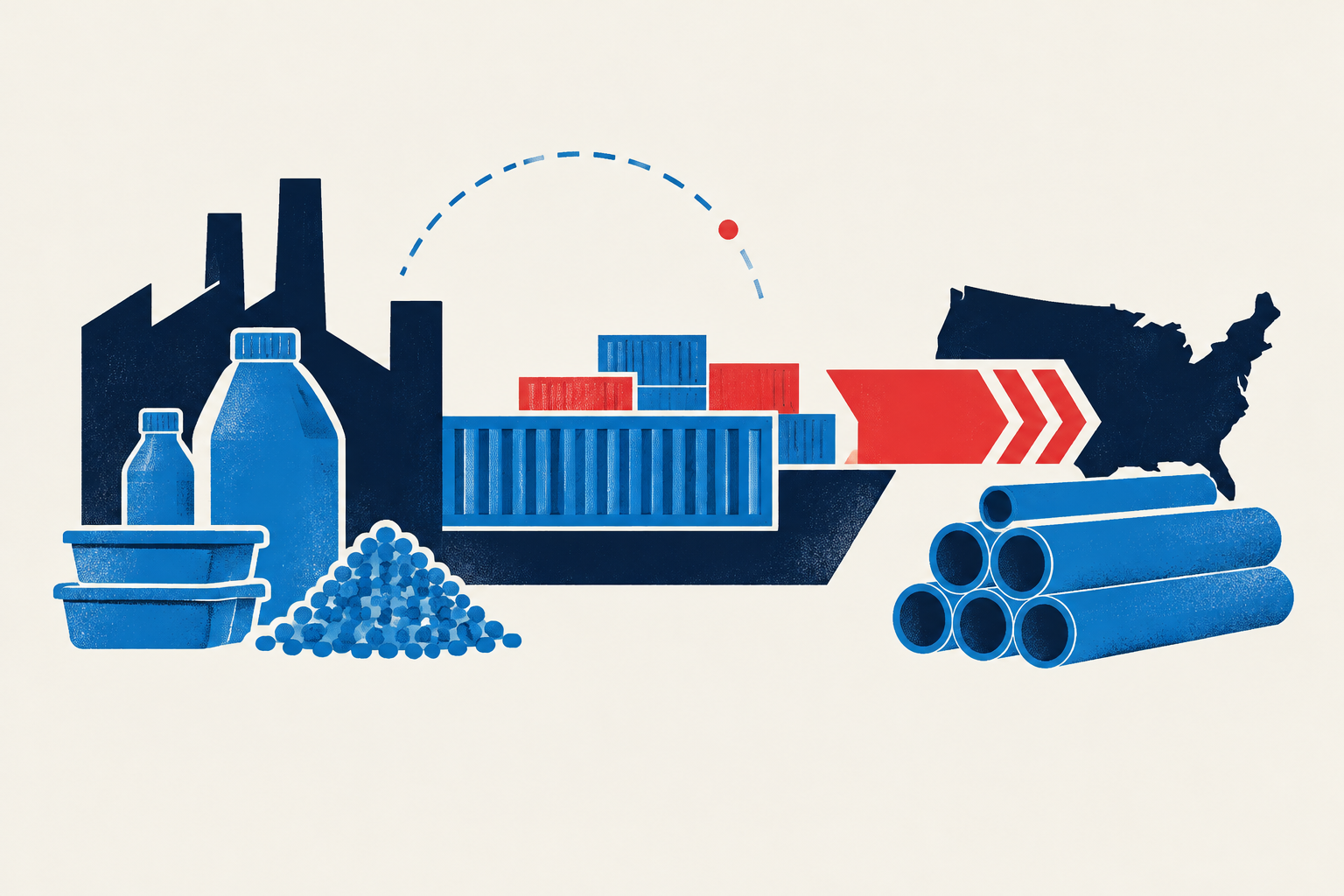
Canadian plastics representatives say tariff gaps leave C$1.83 billion in exports exposed, increasing pressure on Ottawa for a targeted response.
Canadian manufacturers say the U.S. midterm result has not altered the immediate commercial effects of tariffs already in place. The Chemistry Industry Association of Canada (CIAC) says 14 plastic-product classifications remain subject to 50-per-cent U.S. duties, warning that prolonged tariffs raise risks for employment, investment and competitiveness. [1]
The U.S. revised its Section 338 tariff list effective Oct. 30, removing 22 Canadian products while adding 100. CIAC says nine of the 14 plastic classifications facing the U.S. tariff are not covered by Canadian counter-tariffs, including self-adhesive plastic sheets and certain plastic containers. Those nine uncovered categories account for roughly C$1.83 billion in Canadian exports to the United States and C$2.3 billion in imports from the United States, according to the association. [1]
CIAC is asking Ottawa to apply an interim 25-per-cent surtax to the nine uncovered finished-plastic categories. It also identified two packaging-product classes and two lubricant classifications that face U.S. duties without reciprocal Canadian tariffs, and asked the federal government to assess a calibrated response for those products. The proposal is an industry request rather than an announced Canadian policy change. [1]
The revised U.S. list also reshuffled exposure for forest products. The Forest Products Association of Canada says 13 wood and paper categories were removed, representing about C$600 million in annual shipment categories, while 17 newly added wood and paper categories represent roughly C$650 million. Its president characterized the outcome as a mix of relief and new exposure, with continued uncertainty complicating customer relationships and business planning. [1]
Sector representatives continue to press for a durable resolution through Canada-U.S. talks while seeking domestic measures that could improve predictability. The Canadian Chamber of Commerce similarly said frequent tariff changes add uncertainty for firms making decisions on payroll, investment, equipment and expansion. [1]
This is a moderate-significance industry-impact development because it quantifies an uncovered Canadian tariff-response gap in plastic products: nine classifications exposed to 50-per-cent U.S. duties represent about C$1.83 billion in exports to the U.S. CIAC’s proposed 25-per-cent surtax could affect bilateral costs if adopted, but it remains an advocacy request rather than a government action, and the report provides only one source for the underlying assessment. [1]