Potential Canadian mineral-export limits could narrow Rupert rare-earth hub’s battery-material output
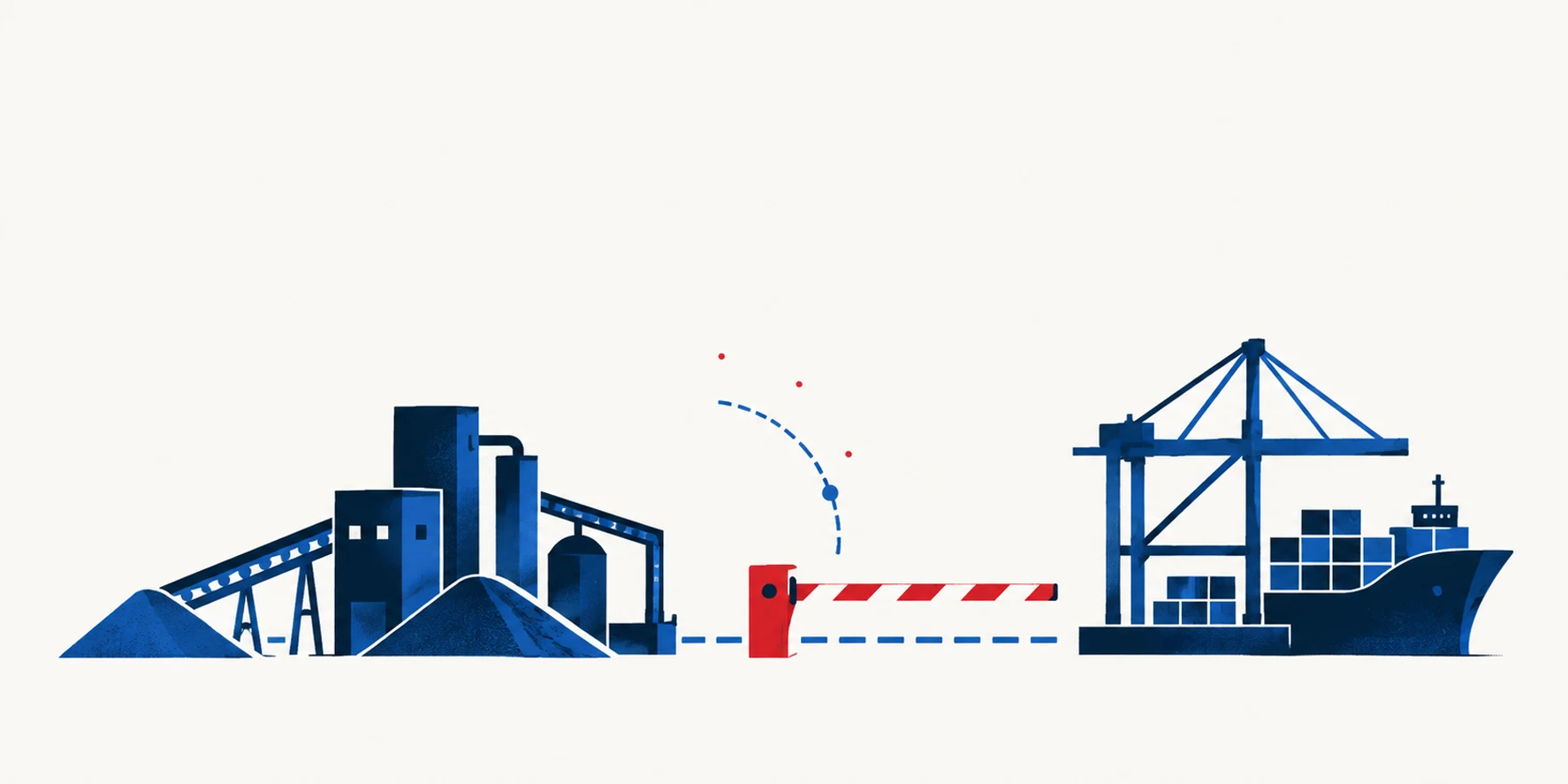
A possible Canadian restriction on manganese exports could constrain a planned U.S. processing hub’s battery-material stream, though alternative feedstock sources offer continuity.
A potential Canadian restriction on critical-mineral exports has emerged as a supply-chain risk for the planned US$150 million GreenMet Rupert Rare Earth Project, according to reporting published September 11. The project is designed as a “hub and spoke” processing operation: it would handle coal waste at its West Virginia site while receiving additional material from Canada, Cameroon and Greenland. [1]
The Canadian component is distinct from the project’s other inputs. The report says Canadian feedstock would produce high-purity manganese used to strengthen steel and support aerospace alloys, as well as manganese sulfate, a precursor chemical for electric-vehicle, lithium and nickel-cobalt batteries. That means an interruption would affect the project’s battery-related and manganese-processing capabilities rather than necessarily halt the entire facility. [1]
The risk remains prospective, not an announced export measure. Critical minerals were reported to be exempt from the 50% U.S. tariff cited in the article, but British Columbia Premier David Eby had called for blocking U.S. access to Canadian critical minerals in response to U.S. tariffs, while Ontario Premier Doug Ford warned that Canada could cut off critical-mineral supply chains. The report also says Canada’s refusal to grant the United States a blanket right of first refusal on critical minerals contributed to an August impasse in bilateral talks. [1]
For GreenMet, the operational buffer is its diversified feedstock model. Material from West Virginia, Cameroon and Greenland would still be available if Canada prohibited raw manganese exports, and those sources are expected to yield rare-earth elements for magnets, semiconductors, microchips, cathodes and defence-related materials. The company could therefore continue operating, but without Canadian manganese it would have a smaller role in battery-material supply and a reduced overall commercial footprint, the report assessed. [1]
The immediate implication is a targeted exposure within an emerging North American critical-minerals project rather than evidence of a broad disruption to Canadian energy or metals trade. GreenMet had not responded to a request for comment by press time, and no Canadian export ban was identified in the report. The development instead highlights how potential retaliatory controls on mineral inputs could reach downstream U.S. projects even where the underlying materials remain exempt from the U.S. tariff referenced by the article. [1]
Significance is limited because the reported risk concerns one planned processing hub and remains conditional: no Canadian critical-mineral export restriction has been announced in the source. GreenMet’s Canadian manganese stream could be lost, reducing prospective battery-material output, but feedstock from West Virginia, Cameroon and Greenland could allow the facility to continue operating. [1]