U.S. dairy tariffs squeeze Canadian cheese sales and shelf access
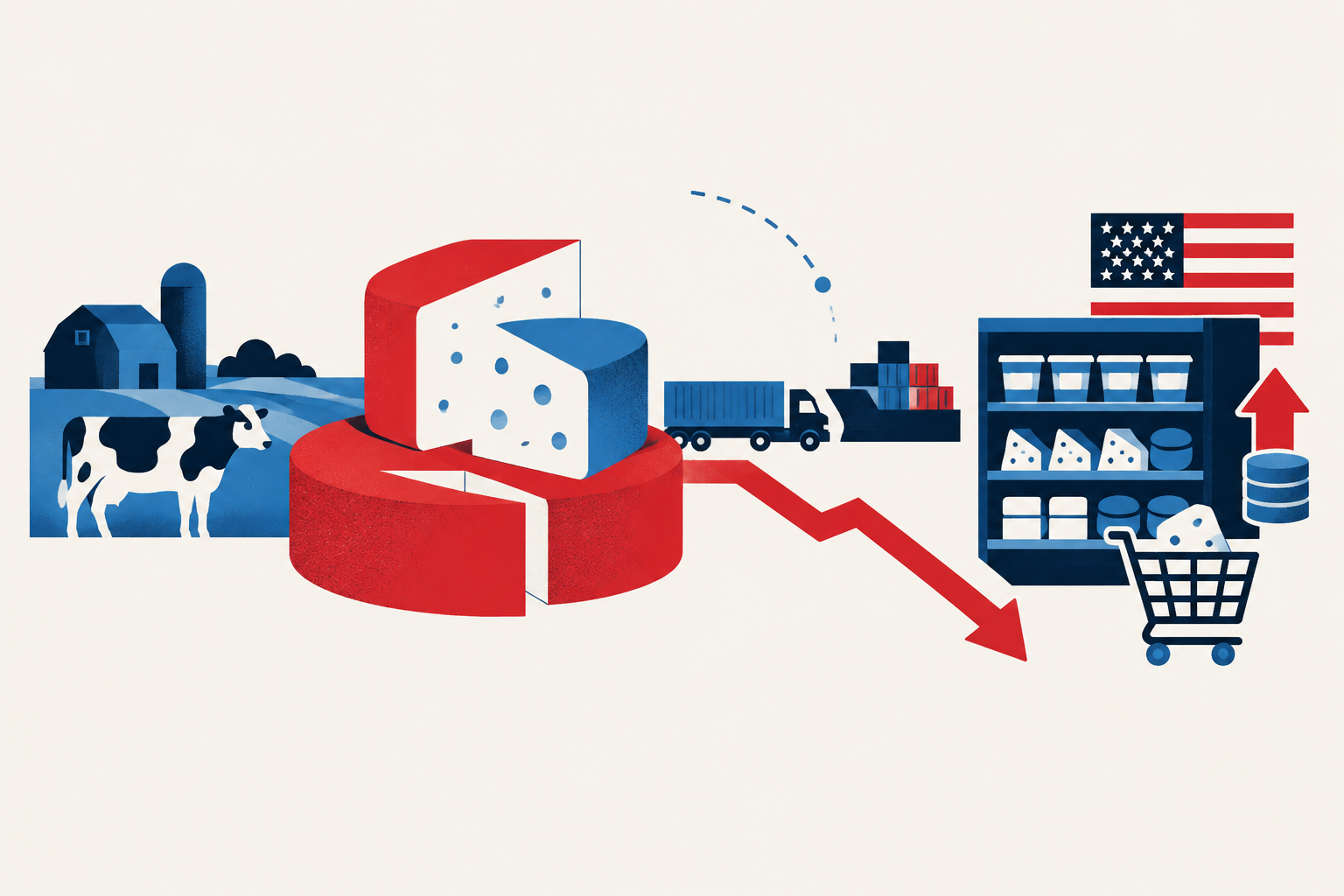
Higher U.S. prices are weakening demand for Canadian cheese, putting export-dependent producers and their farm suppliers under added strain.
A U.S. importer of Canadian cheese says demand has fallen since 50 per cent tariffs on certain dairy products, including cheese, took effect in August. James Hanly of Vermont-based Provisions International said the higher retail price can curb customer purchases and, in turn, lead stores to stop carrying affected products. That creates a risk that Canadian cheeses lose shelf placement in a market where recent competition wins had helped raise their profile. [1]
The reported slowdown follows a period of growing recognition for Canadian specialty cheese in the United States. Quebec’s Fromagerie la Station won best in show at the American Cheese Society competition in 2024 and again in 2025, while Canadian producers also featured prominently among winners this year. Hanly said those results had encouraged importers to seek out unfamiliar artisanal Canadian products, but the tariff is now threatening that commercial momentum. [1]
Exposure is especially acute for producers with concentrated U.S. sales. Mark Anderson, chief executive of Lindsay, Ont.-based Mariposa Dairy, told CBC that nearly 80 per cent of his company’s output is exported to the United States. He said the levies endanger the business and the roughly 200 dairy-goat farmers from whom it buys milk, while alternative markets lack the capacity to absorb comparable volumes. [1]
Mariposa Dairy is attempting to limit consumer price increases by sharing tariff-related costs with its farmers and distributor, Gellert Global Group, according to Anderson. He characterized the burden as unsustainable over time. Gellert, which imports close to US$80 million of Canadian cheese annually and faces nearly US$40 million in tariff costs, is suing the U.S. administration in an effort to end some tariffs on Canadian products and obtain refunds. [1]
The article points to a possible political route to tariff relief rather than an immediate commercial resolution. Following Democratic midterm victories, Hanly and Anderson said they were hopeful that policy could shift, and CBC reported that senior Democrats intend to pursue an end to tariffs on allies including Canada once the party takes control of Congress next year. Until then, the reported demand pullback leaves cheese exporters balancing price absorption against the risk of losing U.S. distribution. [1]
This is a meaningful agriculture-sector impact because a U.S. importer reports that tariff-driven price increases are already reducing purchases of Canadian cheese and could displace products from store shelves. The exposure is concentrated for export-dependent processors and their milk suppliers, but the evidence is company- and importer-based rather than a sector-wide sales dataset, limiting the significance rating to a mid-level assessment. [1]