U.S. Farmers Face Dairy Export, Equipment and Fertilizer Risks Before Canadian Counter-Tariffs
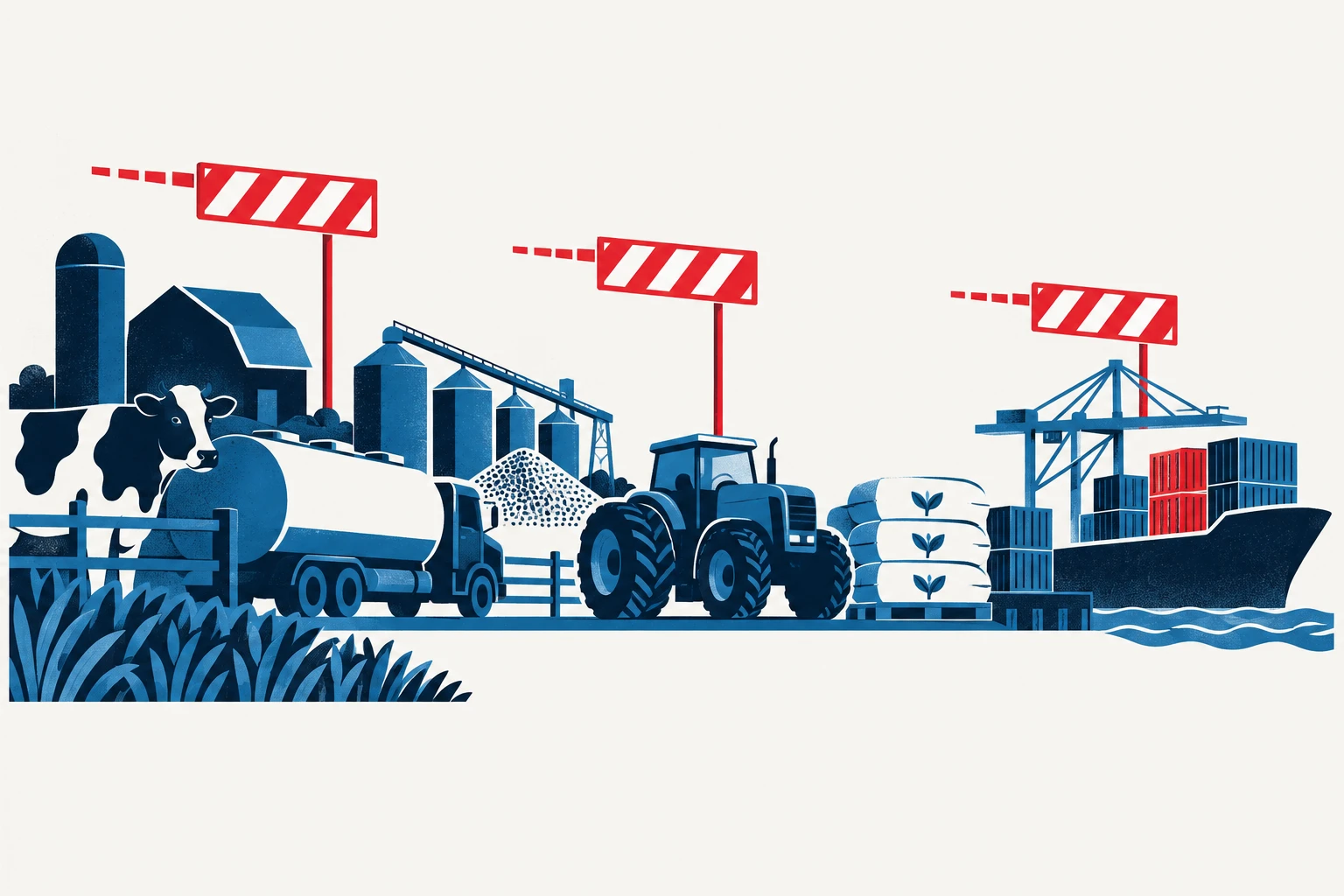
Farm-sector representatives say the escalating tariff exchange threatens dairy sales, machinery affordability and production planning across the United States.
Canada’s scheduled September 8 retaliatory tariffs on U.S. goods are prompting concern among American agricultural producers over both export demand and input costs. The measures follow U.S. 50% tariffs on about US$20 billion in Canadian goods after bilateral trade talks collapsed in late August. Canada bought roughly US$28 billion in U.S. agricultural products last year, making it the sector’s second-largest export market after Mexico. [1]
Dairy is particularly exposed because both countries’ tariff lists include finished dairy products and inputs such as whey. Karen Gefvert of Edge Dairy Farmer Cooperative said reduced or cancelled sales to Canada could leave more dairy products in the domestic U.S. market, adding supply while prices are already weak. She said replacing an established export outlet takes time, leaving farmers and processors vulnerable to lower returns in the interim. [1]
Farmers could also face higher capital costs for machinery and food-processing equipment. University of Oklahoma economist Jayash Paudel said steel and aluminum components frequently move across the border during manufacturing, so tariffs can raise costs at several stages before equipment reaches a buyer. The report noted that the U.S. administration reduced tariffs on certain equipment containing steel, aluminum and copper in June, but industry observers remain uncertain whether that change will prevent higher costs for harvesters, egg-cleaning machines and related equipment. [1]
Access to potash is another vulnerability for U.S. crop growers. Canada is the world’s largest potash producer and exporter, and approximately 85% of the potash used in the United States comes from Canada, according to the Fertilizer Institute. Ontario Premier Doug Ford has urged consideration of export taxes on potash and other critical products as leverage against the United States, although the article reports that other Canadian leaders oppose that approach and no export tax has been imposed. [1]
The article identifies uncertainty as the most immediate farm-level consequence rather than a confirmed loss of fertilizer supply or a measured decline in agricultural shipments. Paudel said uncertainty can affect decisions on equipment purchases, operating loans and next-season production plans before tariffs are fully reflected in market transactions. Dairy representatives continue to press for improved Canadian market access under CUSMA, while also emphasizing the value of predictable bilateral trading conditions. [1]
This is a credible, sector-specific account of prospective exposure to the already announced tariff exchange, including dairy-market risk, machinery costs and reliance on Canadian potash. It rates a 2 because it documents meaningful concerns but no newly adopted agricultural measure, confirmed supply interruption, observed price movement or completed business decision. [1]