U.S. import exclusions for selected Canadian goods take effect, replacing 50% duties
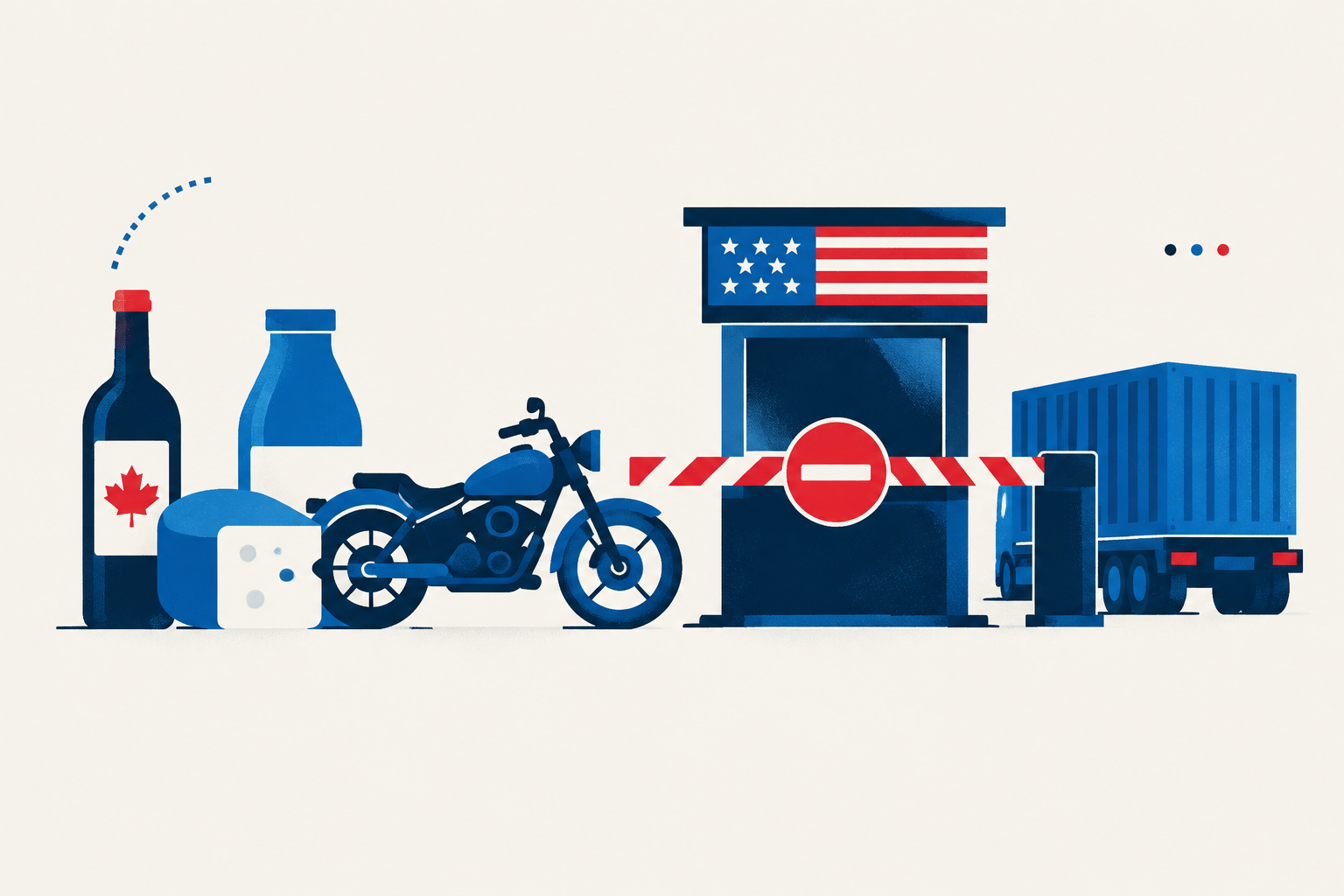
Specified Canadian alcohol, dairy-linked products and large-engine motorcycles now face U.S. import exclusion, cutting off entry rather than raising landed costs.
The United States’ September 8 proclamations became operative at 12:01 a.m. Eastern Time on September 29, shifting specified Canadian products from an additional-duty regime to exclusion from the U.S. market. The covered scope includes selected alcoholic beverages, whey and molasses products, non-alcoholic beer, and large-engine motorcycles, with the applicable tariff classifications and annex limitations determining which imports are barred. [1]
The operational change is material for importers and exporters. Previously, the affected goods could enter the United States if importers paid the applicable additional 50% Section 338 duty and met other legal requirements. Under the new proclamations, products within the listed provisions and scope limitations cannot be imported. Goods imported before the September 29 cutoff but not yet entered for consumption remain subject to the earlier 50% duty under the proclamations’ conditions. [1]
Product descriptions alone do not settle coverage. For alcohol, the measures span beer, wine, fermented beverages and a range of spirits, while some classifications are restricted to packaged goods in containers such as bottles, cans, boxes or kegs. The dairy-related action covers several whey products, molasses classifications and non-alcoholic beer; the motorcycle measure is confined to HTSUS 8711.50.00, covering motorcycles and similar cycles with reciprocating internal-combustion engines above 800 cubic centimeters. The source says the annexes’ HTSUS classifications and stated limitations control. [1]
Washington is relying on Section 338 of the Tariff Act of 1930 as its domestic-law mechanism for the exclusions. The U.S. administration has described the actions as responses to what it considers continuing Canadian discrimination against U.S. alcohol, dairy and vehicle commerce, but those are executive-branch positions rather than independent findings on Canada’s international obligations. The source also distinguishes Section 338 authority from separate questions about consistency with USMCA and WTO commitments. [1]
The restrictions arrive amid broader reciprocal trade action. The source reports that Canada’s counter-tariffs, effective September 8, apply rates of 15%, 25% and 50% to products accounting for C$27.6 billion of U.S. imports, and were framed by Ottawa as a dollar-for-dollar response to incoming U.S. Section 338 tariffs. An estimate cited by the source puts the affected Canadian imports at roughly US$967 million based on 2025 trade data, with alcoholic beverages representing most of that total. [1]
For affected supply chains, the immediate issue is no longer whether a shipment can absorb a high tariff but whether it falls inside the exclusion’s legally controlling tariff scope. The source notes that an import prohibition is the kind of measure addressed by GATT Article XI and USMCA Article 2.11, while also cautioning that a full treaty-compliance assessment would require wider legal analysis. [1]
This is a high-significance implementation change because specified Canadian alcohol, whey, molasses, non-alcoholic beer and large-engine motorcycles moved from a 50% duty to exclusion from U.S. importation, directly disrupting covered cross-border sales and distribution. The rating is not higher because the exclusions are limited to defined HTSUS provisions and scope limitations rather than all Canadian grocery or agricultural trade. [1]