Wellness businesses flag tariff pressure on whey and gluten-free supply chains
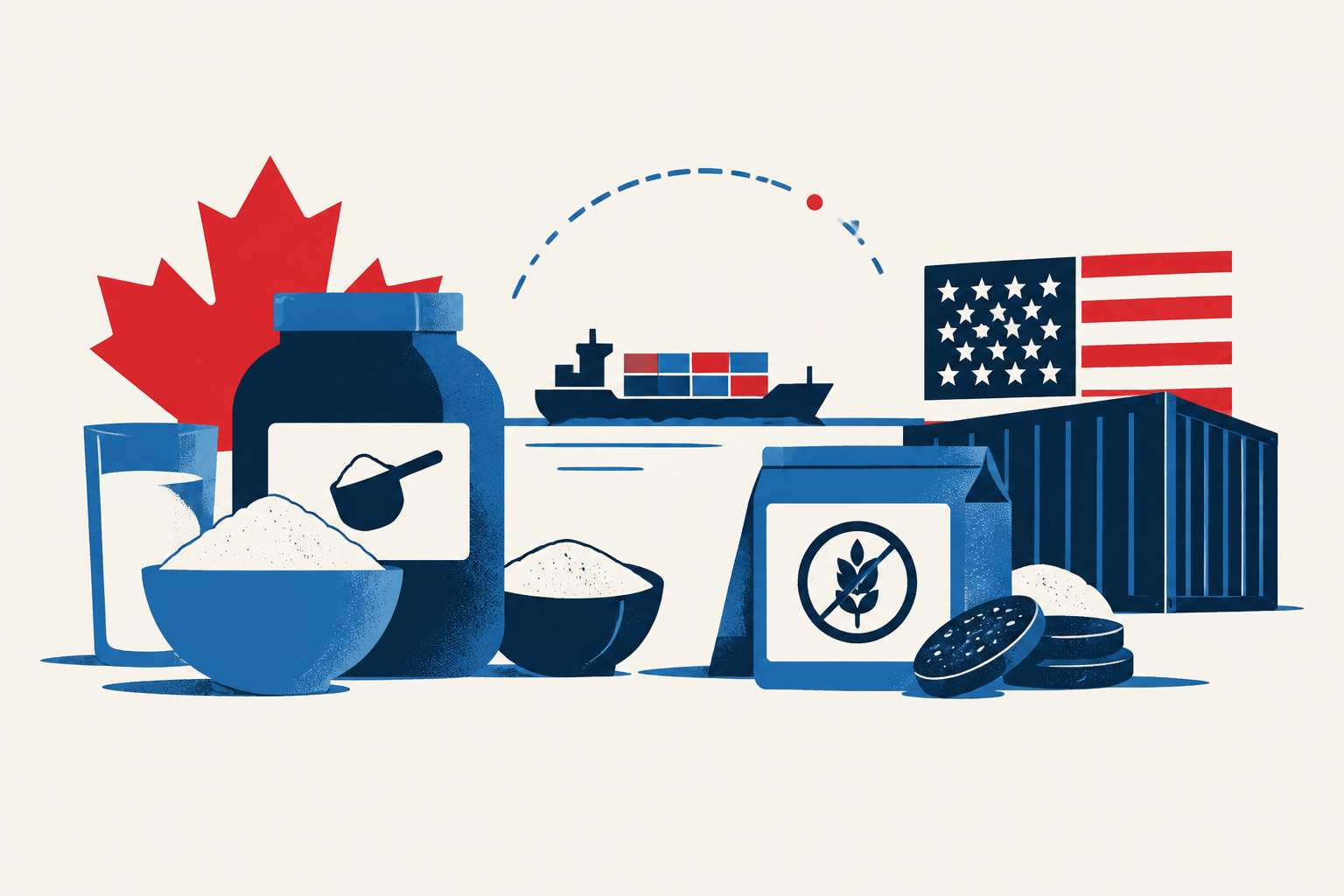
Canadian wellness businesses report rising sourcing, pricing and market-access risks as tariffs squeeze cross-border whey and specialized food trade.
Canada’s natural, organic and wellness sector is reporting growing strain from Canada-U.S. tariff measures, particularly where businesses depend on specialized U.S. inputs or sell products into the United States. The Canadian Health Food Association (CHFA) says the sector produces about $39.7 billion in economic output, contributes $18.7 billion to GDP and supports roughly 147,100 full-time-equivalent jobs, citing MNP research. [1]
Gluten-free food suppliers are among the most exposed businesses, according to CHFA president and chief executive Aaron Skelton. He said affected products can already carry a premium for consumers with celiac disease or gluten intolerance, while tariff costs may force businesses without comparable Canadian or non-U.S. alternatives to raise prices or discontinue products. The association characterized these products as dietary necessities for some consumers rather than discretionary purchases. [1]
Whey illustrates the bilateral exposure. CHFA said affected U.S. whey shipped into Canada faces a 50% tariff, while affected Canadian whey sent to the United States is subject to a 50% duty and will face new U.S. import restrictions beginning September 29. Over the 12 months to July 2026, whey and protein tariff codes represented about $628.7 million of Canadian imports from U.S. partners, compared with about $58 million in Canadian whey exports to the United States. [1]
The association warned that barriers affecting this integrated supply chain could raise costs and reduce sourcing choices for protein powders, bars, supplements and functional foods. It identified businesses reliant on specialized U.S. ingredients, limited supplier options or U.S. sales as facing the greatest pressure, with small and medium-sized firms particularly constrained by limited working capital to absorb a 50% tariff, build inventory or redesign supply chains quickly. [1]
CHFA said companies are monitoring potential changes to sourcing, orders, inventory and prices, but that the full effects on businesses and consumers remain uncertain. Switching ingredients may require testing, reformulation or manufacturing adjustments, adding cost and time. The organization is seeking removal of affected gluten-free and whey products from Canada’s 50% counter-tariffs where alternative supply is unavailable, as well as expedited relief for firms already incurring the costs. [1]
This is a meaningful agriculture and food-supply-chain impact report because it quantifies two-way whey exposure and identifies immediate risks to specialized food availability, ingredient sourcing and consumer prices. The rating is not higher because the report is an industry-association assessment, says the full impact is still too early to determine, and provides no verified evidence of broad realized price increases or production losses. [1]