Wet harvest conditions and elevated fuel costs squeeze Prairie farm margins
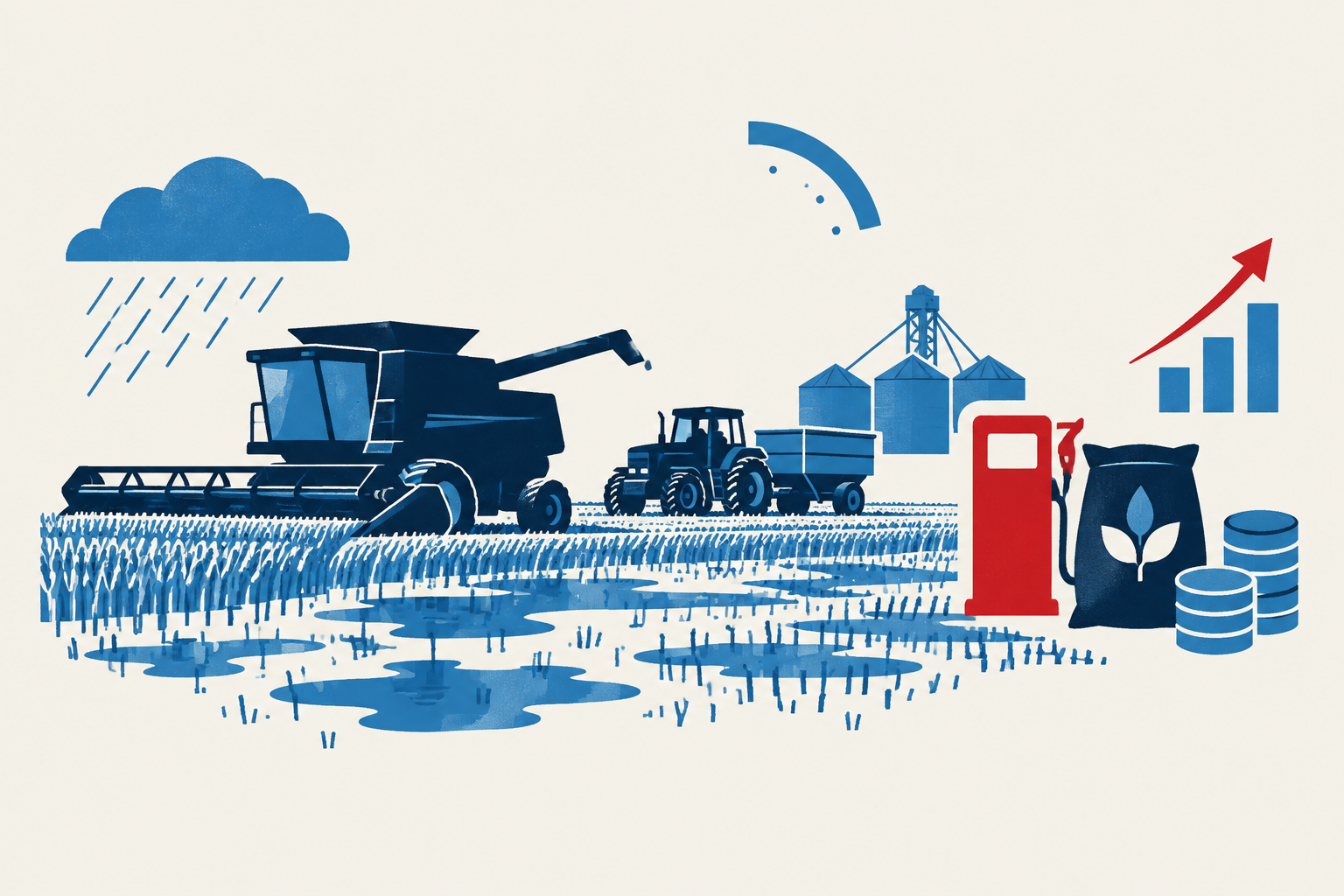
Delayed Prairie harvests and sharply higher diesel and fertilizer costs are increasing cash-flow pressure for farmers despite stronger expected 2026 revenues.
Prairie growers are contending with delayed fieldwork and an unusually expensive harvest season, according to farm-industry representatives cited in a Sept. 20 report. A wet spring postponed seeding in many areas, while renewed rain during harvest has left farmers struggling to access fields and pushed crop progress behind recent average timing. Prolonged time in the field could also reduce crop quality, adding operational risk to an already costly production year. [1]
Fuel has become an immediate pressure point. Natural Resources Canada data cited in the report put the national average retail diesel price above $2.75 per litre late last week, compared with roughly $1.50 at the same point a year earlier—an increase of more than 80 per cent. Grain Growers of Canada said the rise has arrived during one of farming’s most fuel-intensive periods and called for a targeted, temporary per-litre rebate. [1]
Fertilizer costs are also weighing heavily on profitability. The report links higher input prices to supply disruptions associated with the wars in Ukraine and the Middle East, while a southern Alberta wheat grower described fertilizer prices as exceptionally high. For producers facing an average or weaker crop, the combination of elevated inputs and harvest delays may leave limited margin even where commodity prices remain supportive. [1]
Cross-border trade uncertainty remains part of the business backdrop, although the report says agricultural commodities and inputs have largely been exempt from the latest Canada-U.S. tariff measures. Farm Credit Canada’s monthly sentiment tracking showed farmer concern rose after the 2025 U.S. tariff announcement, then levelled off for more than a year before edging upward again in its latest poll as policy expectations became less predictable. Canada’s counter-tariffs included U.S.-sourced farm-machinery parts, though industry groups expect some producers may obtain relief through the remission process. [1]
Export logistics and overseas market access add further uncertainty. Agricultural associations cited bottlenecks at the Port of Vancouver, including problems involving the Second Narrows bridge serving bulk terminals, as well as the effects of repeated rail and port labour stoppages. Separately, the temporary suspension through year-end of China’s 100 per cent tariffs on Canadian canola meal and peas has reduced one source of pressure, but pulse-sector representatives said buyers may remain cautious until longer-term tariff certainty is established. [1]
The report nevertheless indicates that 2026 full-year farm revenues are expected to exceed 2025, supported by sales from the prior year’s strong crop and higher commodity prices. That outlook tempers the near-term assessment: the principal issue is not a confirmed sector-wide revenue decline, but a concentrated squeeze on farm operating margins and harvest execution during a critical seasonal window. [1]
This is a moderate agriculture-sector development because delayed harvesting and materially higher diesel and fertilizer costs directly affect Prairie producers’ seasonal operating margins and crop-quality risk. The rating is not higher because the report says farm revenues for 2026 are still expected to exceed 2025, agricultural goods have largely been exempt from the latest cross-border tariff measures, and the evidence is a single-source assessment rather than independent corroboration of a sector-wide deterioration. [1]