Canada keeps U.S. trade approach steady after Democratic midterm win
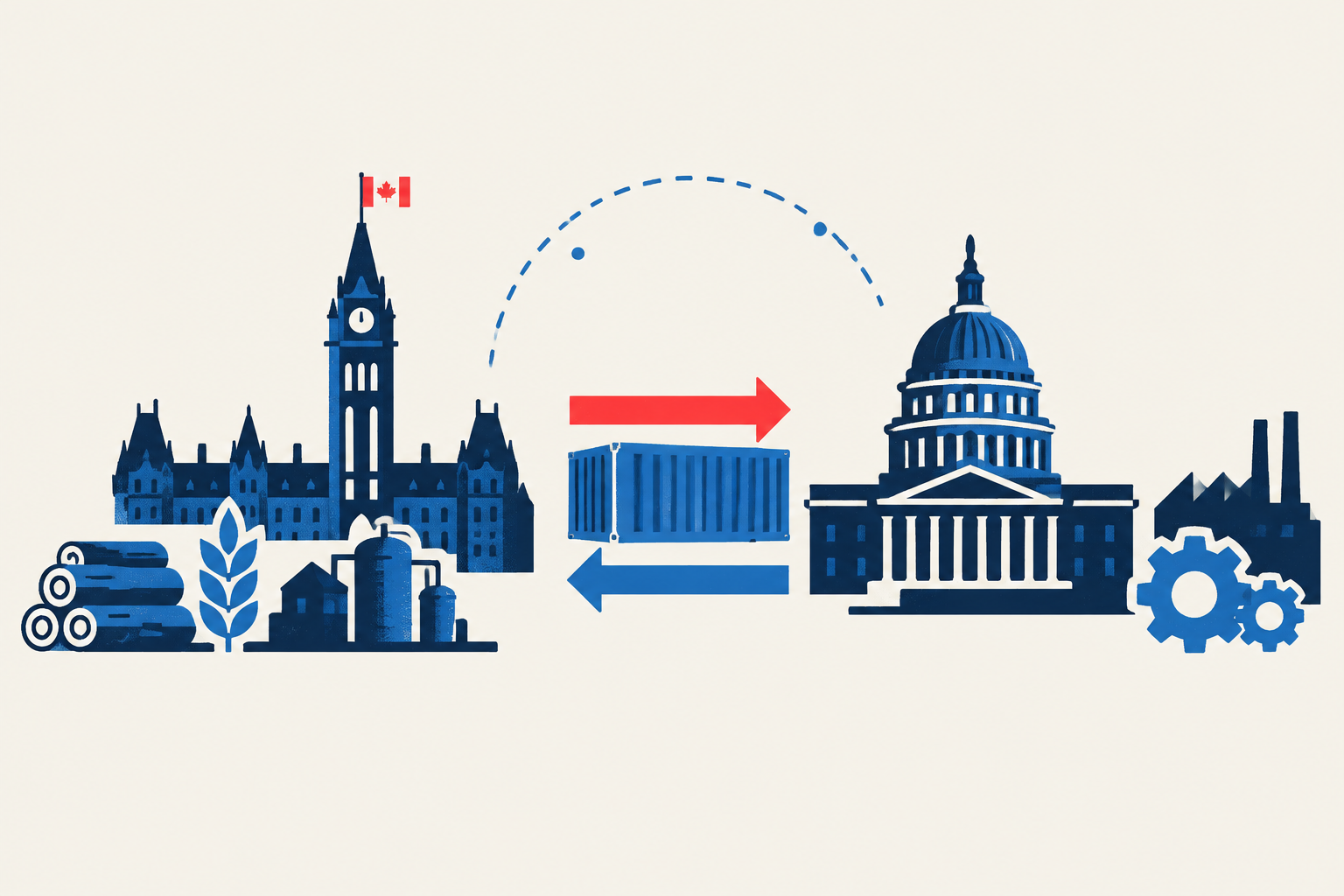
Ottawa will continue dealing with the Trump administration despite the Democratic congressional sweep, leaving tariff-exposed Canadian sectors without immediate policy relief.
Canada-U.S. Trade Minister Dominic LeBlanc said Ottawa’s near-term approach to trade negotiations will not change following the U.S. midterm elections, which delivered control of both congressional chambers to Democrats. Speaking in Ottawa on Nov. 4, LeBlanc said Canada’s task is to work with the officials Americans elected, including President Donald Trump and his cabinet, who remain responsible for the current negotiations. [1]
The statement signals continuity rather than a tactical shift in Canada’s effort to secure an arrangement that lowers U.S. tariffs on Canadian goods. CBC reported that Canada is seeking a deal affecting heavily exposed sectors including automobiles, steel, aluminum and softwood lumber. The government’s immediate focus remains on discussions with the administration rather than trying to draw conclusions from the election outcome. [1]
The election does not create an immediate new congressional route for tariff relief. Newly elected U.S. representatives and senators will not take office until January, while Trump retains executive authority and veto power. LeBlanc said possible actions by the next Congress are a longer-term question and will not alter the work Canada must undertake in the coming two weeks. [1]
There are signs that the bilateral talks themselves are active. Trump said on election day that he was close to a deal, while Prime Minister Mark Carney said the White House had moved on some Canadian priorities, including language requirements and Canada’s ability to conclude trade agreements with other countries. Carney said more work was required before any agreement could be finalized, however. [1]
Automotive trade remains a potential obstacle to an agreement. CBC reported that autos had been a central sticking point during August discussions, when talks collapsed and new tariffs were imposed by both countries. That leaves manufacturers and related suppliers exposed to continued uncertainty even as Ottawa maintains engagement with Washington. [1]
Provincial and opposition voices are pressing for a more assertive response to the changed U.S. political landscape. Ontario Premier Doug Ford said he would contact governors and direct his cabinet to engage members of Congress and senators, while Conservative Leader Pierre Poilievre called on the federal government to use the election result to pursue a tariff-free deal. Those positions do not change the federal government’s stated short-term strategy of negotiating with the sitting administration. [1]
This is a modest but concrete Canadian policy signal: Ottawa says its immediate negotiating approach will continue despite a major change in control of the U.S. Congress. Auto, steel, aluminum and softwood lumber businesses remain exposed because tariff relief has not been secured, but the rating is limited because LeBlanc announced no new tariff, countermeasure, agreement or sector-specific support program. [1]