Canada tariff retaliation prompts U.S. procurement warning and Bombardier sales threat
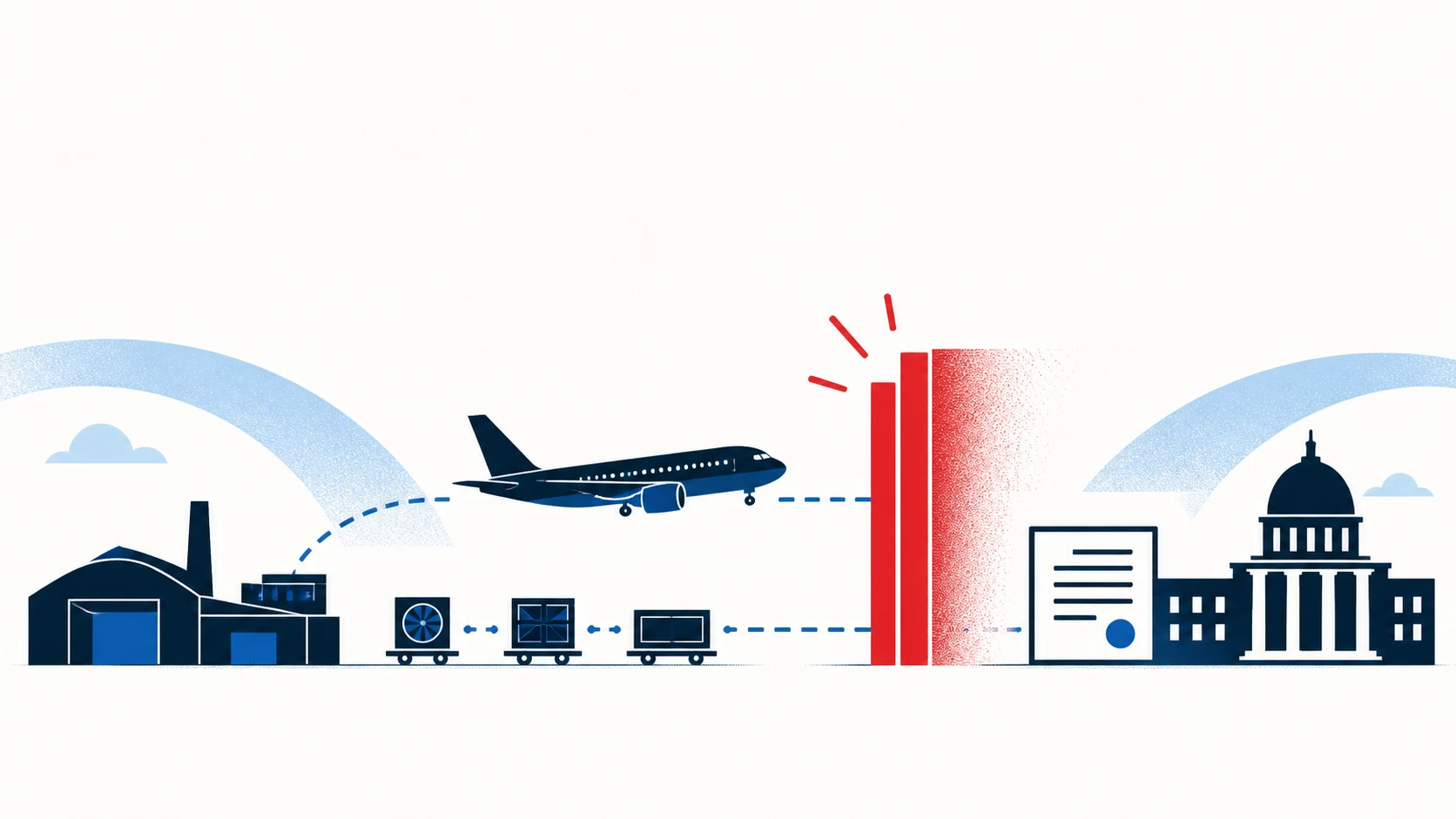
Canada has imposed retaliatory tariffs on nearly $20bn of US imports, escalating pressure on integrated North American supply chains.
Canada’s retaliatory tariffs on nearly $20bn of US imports took effect at 12:01am Eastern Time on September 8, applying rates of 15% to 50% across more than 700 products. The measures cover steel, household appliances, agricultural equipment and dairy, and match US levies on Canadian machinery, textiles and consumer products. [1]
The action follows a breakdown in bilateral talks after President Donald Trump announced 50% tariffs on Canada in July. The countries entered trade talks in August, but no final agreement was reached before Trump’s deadline after Ottawa said it had walked away from a bad deal. US tariffs on Canadian goods took effect on August 22. [1]
On the day Canada’s measures began, Trump directed the General Services Administration to coordinate with the US Trade Representative to remove Canadian-origin products from the agency’s Multiple Award Schedules unless Canada restored what he called full and fair reciprocity for American farmers and companies. The source does not identify affected products or suppliers, or confirm that any removals have occurred. [1]
Trump also threatened to block Canada-based aircraft manufacturer Bombardier from selling aircraft in the United States unless it began manufacturing them there. Bombardier has said it employs thousands of workers in the US, while APMA Canada said the company uses US-made GE and Honeywell jet engines, highlighting cross-border aerospace supply-chain exposure. [1]
Canada said it would provide a $5.42bn support package for affected small and medium-sized businesses and workers. The retaliatory tariffs could burden US automakers because Canada is the largest buyer of US-manufactured cars. Separately, the source cites a Kiel Institute for the World Economy report finding that US importers and consumers absorb 96% of the tariff burden. [1]
This is a moderate-significance escalation because Canada’s counter-tariffs are in force across more than 700 products, affecting industries including steel, appliances, agricultural equipment and automotive supply chains. The US procurement and Bombardier threats add uncertainty for Canadian suppliers, but the source does not confirm that procurement removals or aircraft-sales restrictions have been implemented. [1]