Canada’s $28B Counter-Tariffs Take Effect Without Broad CUSMA Relief
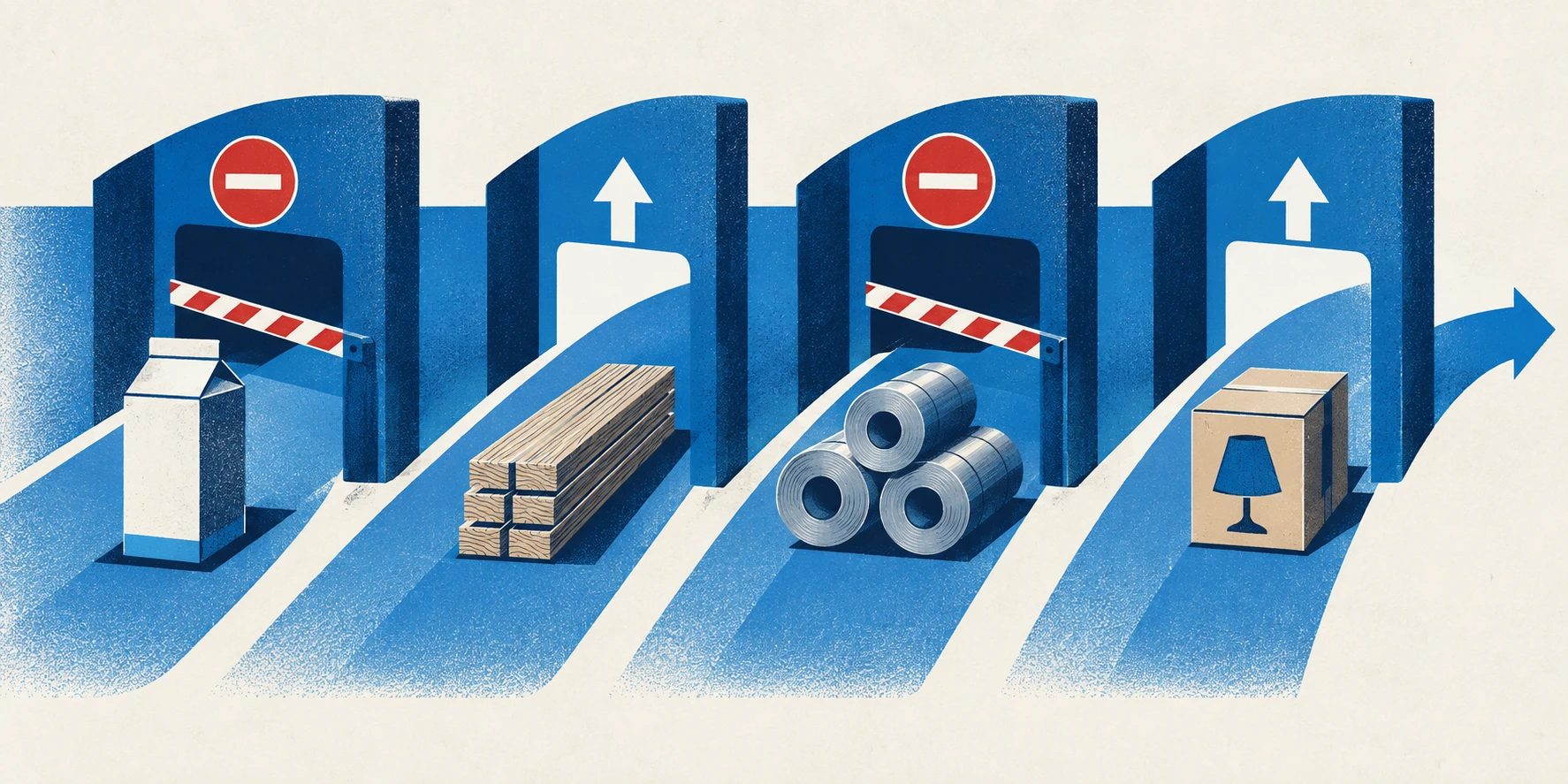
Canada’s new retaliatory duties now raise costs for a wide range of U.S. exports, while Washington signals possible further action.
Canada’s retaliatory tariff package took effect at 12:01 a.m. Eastern Time on September 8, applying duties to nearly US$28 billion in U.S. goods. The measures range from 15% to 50% and were designed to match, dollar for dollar, duties Washington imposed on Canadian products in August. [1]
The highest-profile element is a 50% Canadian tariff on U.S. steel and aluminum exports. The list also covers dairy products, household appliances, cosmetics, agricultural equipment, motorcycles, paper, electronics and video-game consoles, spreading exposure across industrial, food and consumer-goods supply chains. For U.S. exporters, the immediate issue is not only the tariff rate but whether contracts and pricing arrangements can absorb or pass through the additional cost. [1]
A key implementation detail is that Canada has not provided a general exemption for goods qualifying as originating under CUSMA. U.S. suppliers therefore cannot rely on preferential-origin status alone to avoid the new duties, increasing compliance and landed-cost pressure for cross-border supply chains that have long operated under the agreement’s tariff preferences. The stated exemptions are limited to energy, potash, fish, critical minerals and goods already subject to earlier Section 232 steel and aluminum tariffs. [1]
The package also concentrates pressure unevenly across the United States. According to a Fasken bulletin cited by the source, some listed products were selected because of their connection to swing states, including in the Midwest. That creates particular exposure for manufacturers, agricultural businesses and consumer-goods companies with facilities or export customers in those regions, rather than imposing a uniform burden across all U.S. sectors. [1]
The risk of further escalation remains elevated. U.S. Trade Representative Jamieson Greer said Washington was considering additional tariffs on Canadian goods, indicating that the September 8 implementation may not establish a stable endpoint for the dispute. Canadian steel and aluminum producers remain exposed to a worsening bilateral tariff cycle, while dairy and other agricultural supply chains face continued uncertainty around market access and costs. [1]
The measures apply to covered goods of U.S. origin rather than every import in the named product categories. Importers therefore need to check both product classification and origin when calculating the new duty. [2]
Significance is rated at the highest level because Canada implemented a broad, nearly US$28 billion tariff package with rates up to 50%, including steel, aluminum and dairy. The absence of a general CUSMA-origin exemption materially widens exposure for cross-border supply chains, while the U.S. Trade Representative’s signal of possible additional tariffs raises the likelihood of further escalation. [1]