Canadian manufacturing sales rose in August before latest U.S. tariffs took full effect
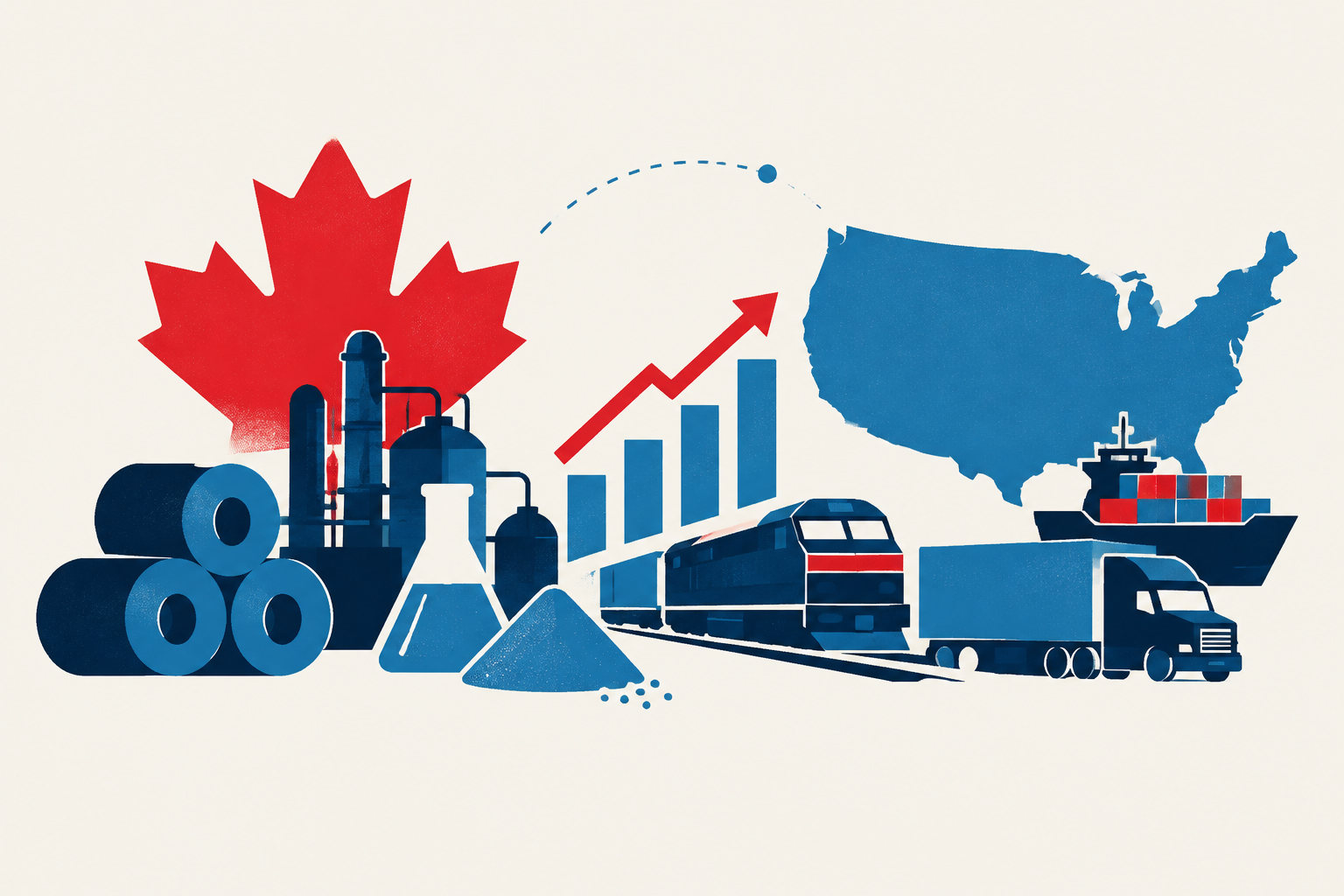
Broad gains in metals and chemicals lifted August manufacturing sales, while weaker transportation equipment and pending tariff effects cloud the next data release.
Canadian manufacturing sales rose 1.5 per cent from July to $79.9 billion in August, reversing a 0.3 per cent decline in the prior month. Twelve of 21 manufacturing subsectors recorded monthly gains, indicating that the increase extended beyond a single industry. [1]
Primary metal sales increased 14 per cent and chemical sales rose 4.4 per cent, leading the August advance. Those gains were partly offset by a 2.6 per cent drop in transportation-equipment sales; excluding motor vehicles and parts, total manufacturing sales were up 2.1 per cent month over month. [1]
The release also showed a 14.2 per cent year-over-year increase in total manufacturing sales. Manufacturing inventories edged up 0.2 per cent to $127.7 billion, with higher fabricated-metal and machinery inventories driving the increase. [1]
Wholesale activity moved in the other direction. Total wholesale sales fell 1.6 per cent to $91.6 billion in August, led by a 3.8 per cent decline in motor vehicles and motor-vehicle parts and accessories and a 12.4 per cent fall in agricultural supplies. In volume terms, wholesale trade was down 1.8 per cent for the month. [1]
The figures cover a period before the full implementation of newly announced 50 per cent U.S. tariffs, which took effect on Aug. 22. Statistics Canada’s September data, due in mid-November, are expected to provide a more complete reading of those measures’ effects on Canadian manufacturing and trade flows. [1]
For now, the release presents a mixed sector picture: metals and chemicals supplied near-term momentum, while transportation-related manufacturing and wholesale vehicle sales weakened. Economists cited in the report expect slower third-quarter Canadian growth amid trade uncertainty and threats of further U.S. tariffs. [1]
This is a meaningful but preliminary read on trade-exposed manufacturing conditions: primary metals and chemicals strengthened in August, while transportation equipment declined and wholesale sales of vehicles and parts also fell. The significance is limited because the dataset precedes full implementation of the new 50 per cent U.S. tariffs, so it does not establish their realized sector effects. [1]