Michigan Manufacturers Flag Potential Exposure to Canada’s September 8 Counter-Tariffs
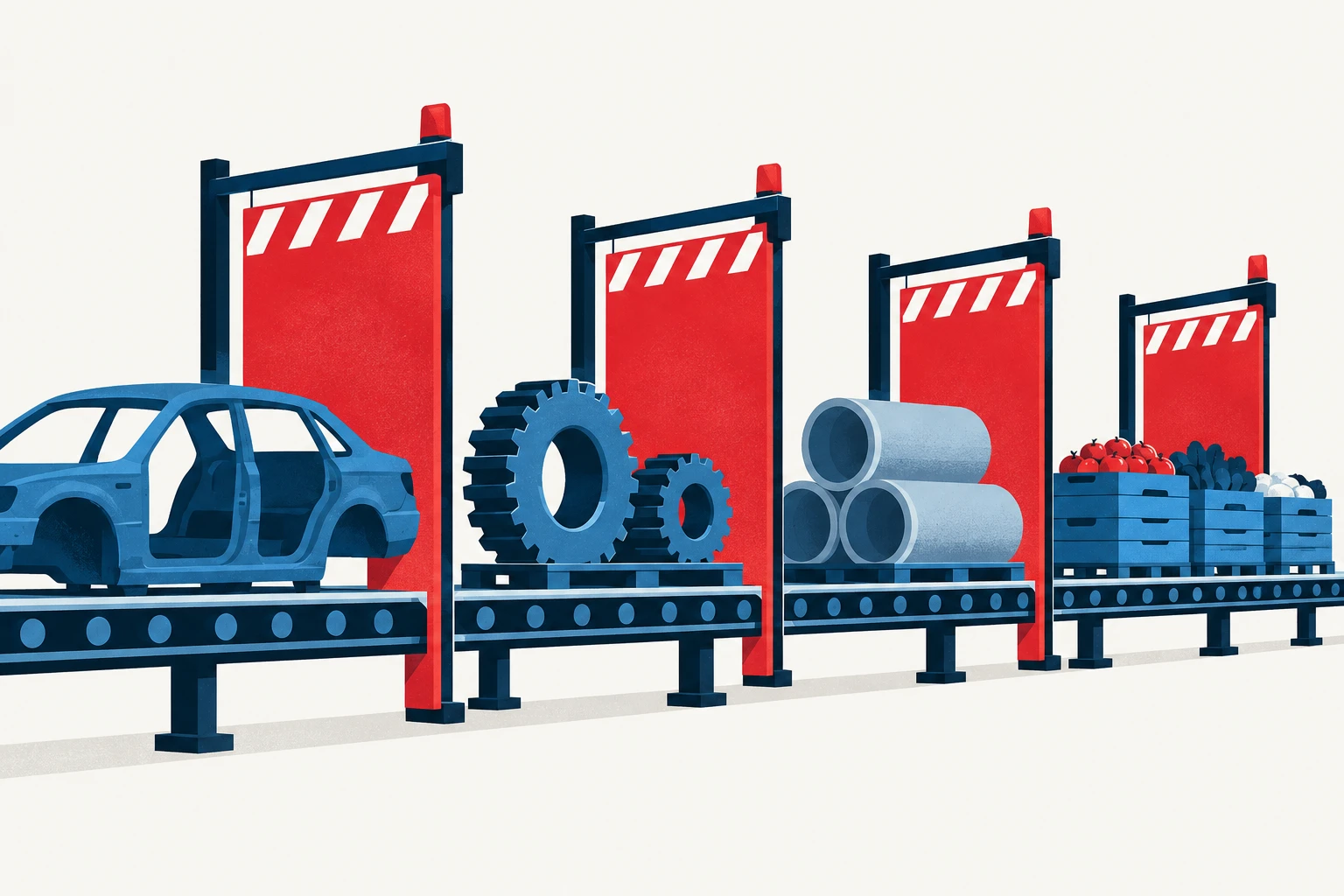
Michigan manufacturers are preparing for Canadian counter-tariffs scheduled to take effect September 8, with the Michigan Manufacturing Association warning that the state’s broad industrial supply chains could make it unusually exposed. WJR cited a Detroit News estimate that roughly US$1.5 billion in Michigan exports could be affected and identified automotive, cement and food-related activity as areas of concern.[1]
Canadian counter-tariffs on selected U.S. goods are scheduled to take effect on September 8, and a Michigan radio report says manufacturers in the state are assessing the likely effects. WJR describes the planned duties as ranging from 15% to 50% and reports that they will cover a range of U.S. goods, including products in steel, aluminum, dairy, fish and seafood, perfume, and clothing categories.[1]
The principal new information is the report’s Michigan-specific assessment of exposure. WJR cited a Detroit News analysis estimating that approximately US$1.5 billion in Michigan exports could be affected when the Canadian duties begin. This is an estimate of trade potentially exposed to the tariffs, rather than evidence of realized lost sales, reduced output, layoffs, or higher consumer prices.[1]
Michigan Manufacturing Association executive vice president Mike Johnston told WJR that the state’s manufacturing base could be affected across multiple supply-chain stages. He cited automotive production, cement, and food as examples, arguing that Michigan’s diverse industrial base leaves it vulnerable to tariff effects that can arise through inputs, intermediate goods, and final products rather than a single export category.[1]
Automotive exposure is especially relevant because the report identifies the industry as a major concern in the bilateral trade dispute. However, the source does not provide a product-level list of Michigan automotive goods covered by the September 8 package, quantify vehicle or parts exports at risk, or establish a specific operational response by an automaker or supplier. The cited estimate should therefore be treated as an indication of prospective exposure, not a measure of the eventual impact on Michigan auto production or employment.[1]
This report does not announce a new Canadian trade measure or alter the scheduled implementation date. Instead, it supplies a localized estimate and industry perspective on the counter-tariff package already announced by Canada, highlighting the potential downstream effects on a U.S. manufacturing state closely tied to Canadian markets and North American production networks. The ultimate scale of the disruption will depend on the tariff treatment of particular goods, commercial sourcing decisions, and whether shipments continue at comparable volumes after September 8.[1]
The report adds a decision-useful, Michigan-specific estimate of roughly US$1.5 billion in exports potentially exposed to Canada’s forthcoming counter-tariffs and identifies manufacturing supply chains, including automotive activity, as vulnerable. The significance is limited to 3 because the Canadian tariff package and its September 8 start date were already announced, while the new estimate is prospective and does not document product-level coverage, company actions, or realized economic losses.[1]