Ontario and Ottawa Commit $250 Million to Sault Ste. Marie Port Project
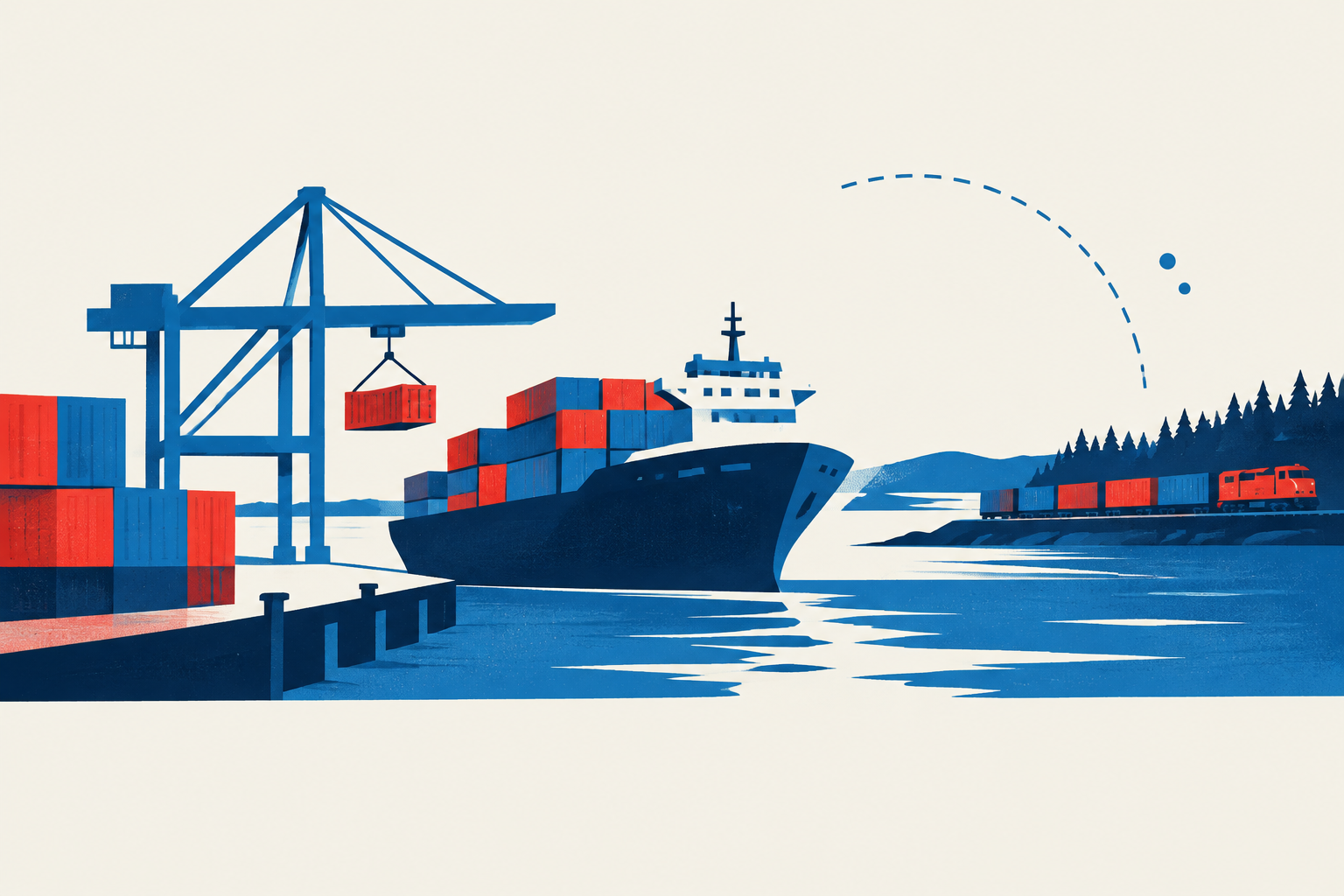
A jointly financed Great Lakes port project aims to expand northern Ontario freight capacity and give exporters more routes beyond U.S. markets.
Ontario and the federal government have announced a combined $250 million commitment for a new HOPA-developed port facility in Sault Ste. Marie. Ontario will provide a $125 million repayable financing loan, while the federal contribution of $125 million will come through the Trade Diversification Corridors Fund. The announcement was made November 20, 2026, with the project positioned as a new Great Lakes gateway for domestic and international freight. [1]
The proposed facility would redevelop roughly 98 hectares of industrial and brownfield land into a multimodal transportation hub. Plans include two Seaway-draft berths, a rail transload yard and associated infrastructure intended to connect marine, rail and highway networks. Ontario says the completed port would raise cargo capacity from 627,400 metric tonnes to 2.4 million metric tonnes, improving freight links among northern and southern Ontario, Quebec and overseas markets. [1]
The governments and the Hamilton-Oshawa Port Authority are framing the project as trade-diversification infrastructure rather than an immediate change in border measures. The release identifies mining, steelmaking, manufacturing and critical-mineral development as prospective users, including activity associated with the Ring of Fire region. It also says the port is intended to strengthen supply chains and reduce reliance on the United States by providing businesses with additional market access. [1]
Forestry is another intended beneficiary. Ontario says approximately 96 per cent of its wood-product exports currently go to the United States and that the new gateway could support routes to the United Kingdom and Europe. HOPA has also committed to prioritize Canadian materials during construction, according to the province. These are project objectives and anticipated opportunities; the facility is not expected to reach substantial completion until 2031. [1]
The release estimates annual employment support of 700 direct and 460 indirect jobs during construction, followed by 2,150 direct and 2,120 indirect jobs annually across the province once the project is operating. For firms in exposed resource, industrial and manufacturing supply chains, the practical significance is longer-term: the investment adds potential shipping and transloading capacity, but its trade-diversification benefit depends on construction, future operations and businesses developing commercially viable routes and customers. [1]
The $250 million commitment is a material long-term Canadian trade-diversification response because it funds a multimodal Great Lakes gateway with planned capacity growth to 2.4 million metric tonnes and potential relevance for steel, forestry, mining, manufacturing and critical minerals. The significance is limited to a mid-range rating because the port is planned for substantial completion in 2031, so the announcement does not immediately alter tariff exposure, trade flows or sector conditions. [1]