U.S. narrows Section 338 tariff list for selected Canadian exports
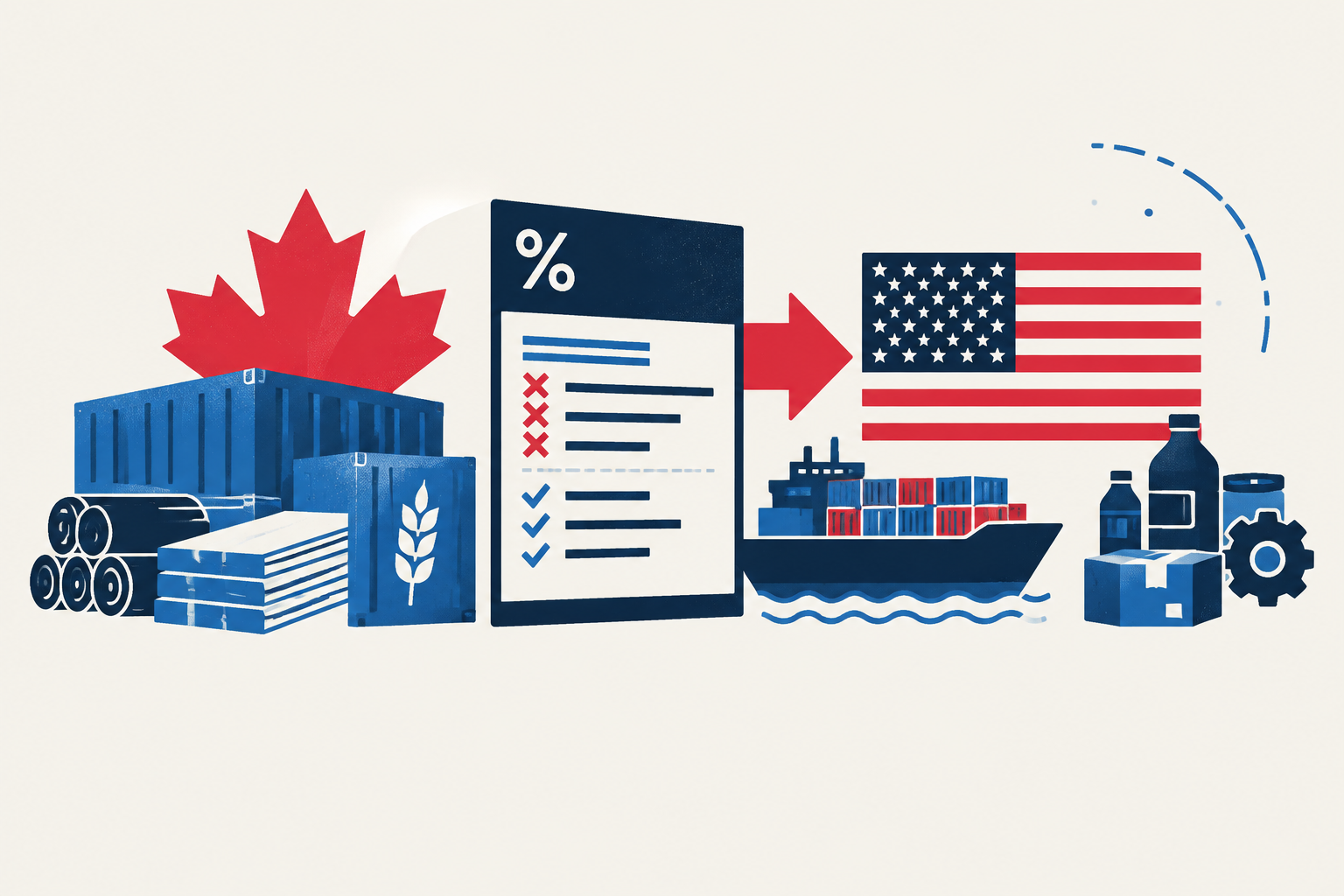
Washington will lift 50% duties on specified Canadian goods from October 30 while shifting tariff exposure to other product categories.
The United States confirmed on Oct. 23 that selected Canadian goods will be removed from the scope of its 50% Section 338 tariffs, with the revised product coverage scheduled to begin Oct. 30. The change does not end the measure: the White House simultaneously replaced some exemptions with tariffs on other goods, preserving uncertainty for Canadian exporters whose products may fall within the amended list. [1]
Products identified for relief include plywood sheets, some paper products, certain machinery and refrigeration equipment, and specified packing crates and boxes. The replacement tariff coverage includes certain valves, carpets and waste products, among other items. CityNews reported that Maine Senator Susan Collins said nine export categories would receive exemptions, including corrugated paper, plastic boxes and machinery used by agricultural industries in her state. [1]
The announced relief is relevant to forestry-linked trade because plywood and paper products are expressly named among the goods leaving the 50% tariff scope. It may also matter for agricultural supply chains where machinery, refrigeration equipment and packaging are involved, although the source does not quantify Canadian export volumes, company exposure or the value of the tariff relief. The article indicates that the exemptions followed Collins’s engagement with U.S. administration officials over products used by blueberry, potato, apple and seaweed producers in Maine. [1]
A key operational constraint is that the revised tariffs are to apply to all goods regardless of whether they are covered by the Canada-United States-Mexico Agreement, according to the White House fact sheet described by CityNews. Canadian businesses therefore need to assess product-specific classifications rather than assume CUSMA coverage removes the new tariff exposure. The report says the U.S. had imposed 50% tariffs on nearly US$20 billion of Canadian goods in late August after trade talks with Ottawa broke down. [1]
The change represents a targeted adjustment rather than a broad settlement of the bilateral dispute. CityNews reported that Ottawa had responded to earlier U.S. actions with retaliatory tariffs on specified American imports, while the U.S. later escalated by banning imports of certain Canadian goods, including motorcycles and some dairy products. The Oct. 30 revision offers relief for named goods but adds tariff exposure elsewhere, leaving the net commercial effect dependent on individual exporters’ product mix. [1]
This is a meaningful but limited de-escalation for exporters of named plywood, paper, machinery, refrigeration and packaging products, while firms selling newly covered valves, carpets, waste products and other goods may face new costs. The significance is moderate rather than high because the action modifies product coverage within Section 338 instead of resolving the wider Canada-U.S. tariff dispute, and the source provides no quantified trade-value or sector-wide impact estimate. [1]