Canada’s retaliatory tariff schedule targets U.S. dairy, wood, metals and consumer goods
Canada’s retaliatory tariffs took effect Tuesday, imposing duties of up to 50 per cent on specified U.S. imports.
Canada’s new retaliatory tariff measures took effect Tuesday, applying product-specific duties to a broad range of U.S. imports. The federal government says the package is aimed at sectors most affected by U.S. tariffs, with rates generally set at 25 or 50 per cent and lower rates assigned to selected goods. [1]
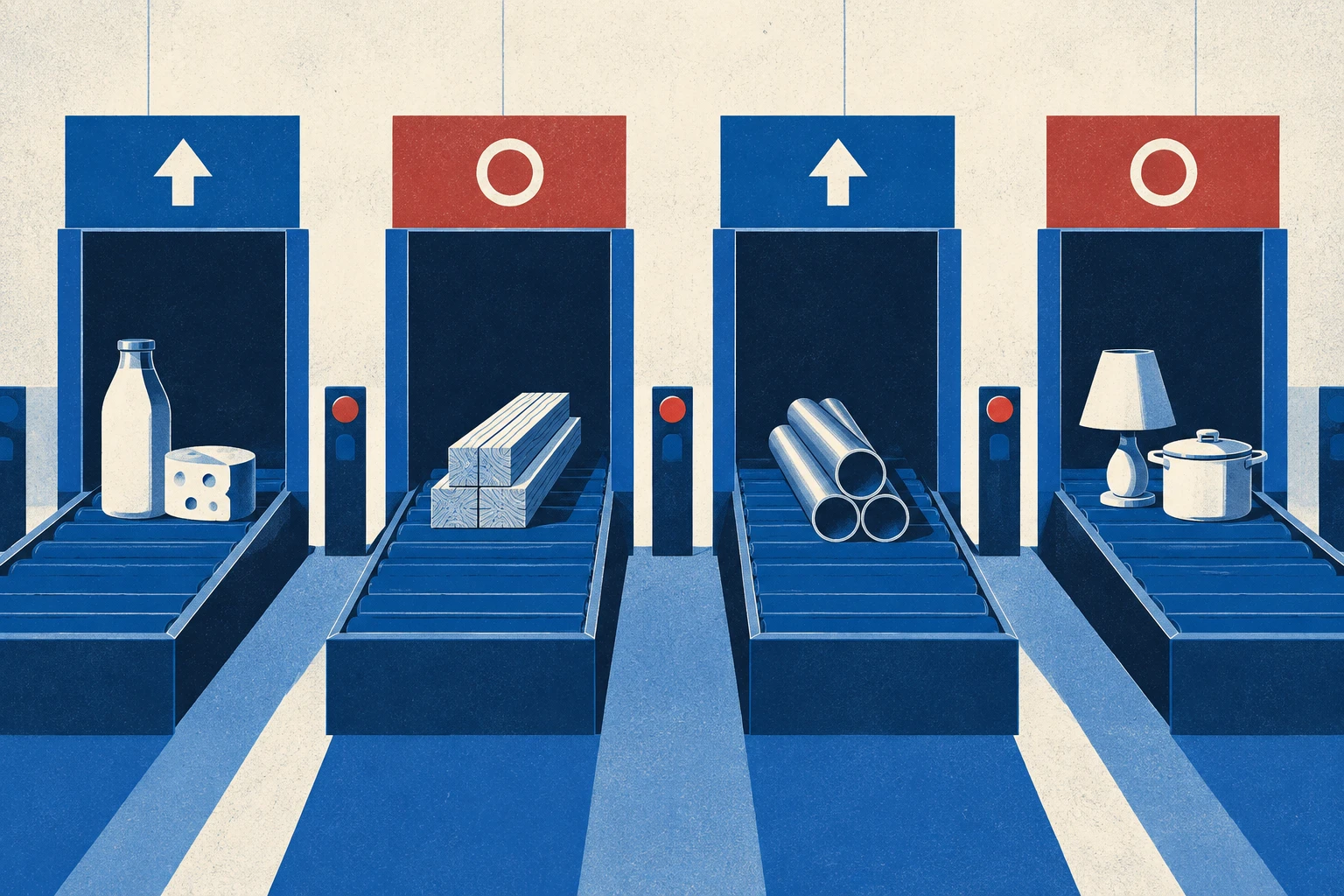
Dairy is among the most prominent targets. A 50 per cent tariff now applies to various U.S. milk, cream, whey, and milk- and whey-protein products, while fresh cheese and curd products face a 25 per cent duty. The Finance Department said the new 50 per cent dairy tariff applies whether imports are within or above CUSMA tariff-rate quotas; imports over those quotas had already faced duties exceeding 200 per cent. [1]
The schedule also reaches forestry-related goods. U.S. sawn softwood is subject to a 25 per cent tariff, while many plywood and veneered panels face a 50 per cent rate. Paper, paperboard, corrugated boxes, envelopes, tissue products and wooden household furniture are covered at either 25 or 50 per cent depending on the item. Ottawa added a 50 per cent tariff on imported wood charcoal on Aug. 26. [1]
For metals, Canada raised tariffs on multiple U.S. steel and aluminum goods to 50 per cent from 25 per cent, covering products such as rods, bars, sheets, foil, wire and prefabricated steel structures. A 50 per cent duty on specified copper-wire imports was also added on Aug. 26. Canada had first imposed 25 per cent retaliatory tariffs on U.S. steel and aluminum in March 2025 after U.S. tariffs on Canadian metals, which were subsequently raised to 50 per cent on steel. [1]
The retaliation extends beyond industrial inputs. Cosmetics including sunscreen, perfume and makeup, along with a wide range of clothing, face 50 per cent duties. The same rate applies to smartphones, sporting goods, video-game consoles, selected plastics, natural honey and molasses. Appliances, rail equipment and various machinery are generally assigned 15 or 25 per cent rates. [1]
Seafood is notably absent from the final list. Canada had initially proposed a 25 per cent duty on many U.S. fish and seafood products, but removed those products on Aug. 26 after receiving feedback from fishing and processing sectors. The change narrows direct exposure for seafood importers while leaving the broader retaliation in force across dairy, wood products, metals and consumer goods. [1]
This implementation update confirms that Canada’s retaliatory schedule is in force and identifies affected products and duty rates. Canadian importers and businesses sourcing covered U.S. dairy, wood, paper, metals and consumer goods may face higher tariff costs. The source identifies tariff coverage and rates but does not report verified price, production, employment or supply-chain effects. [1]